
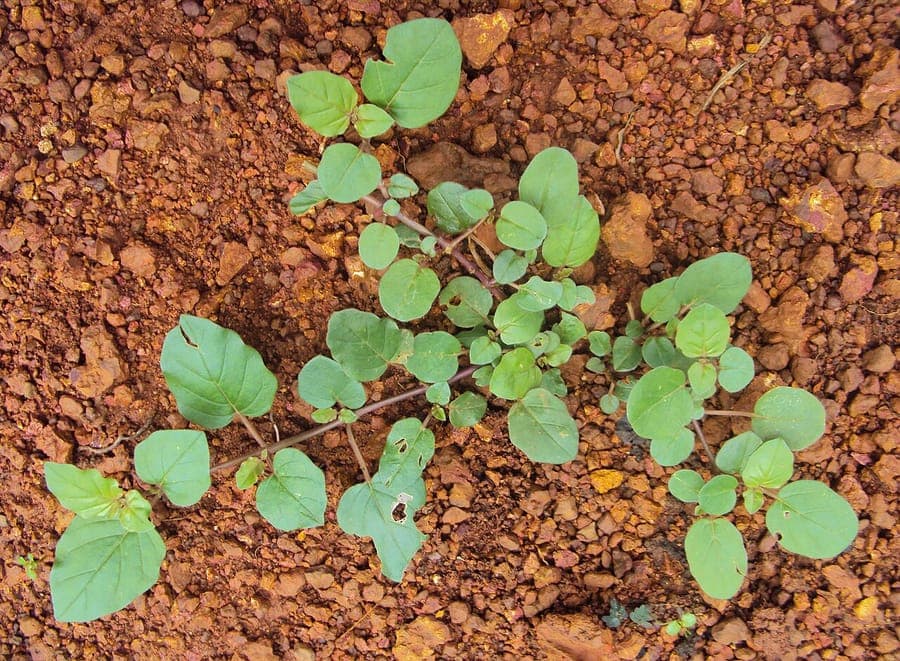
Vinayaraj / CC BY-SA 3.0, via Wikimedia Commons
Red spiderling: complete guide
Boerhavia diffusa
Want to see Red spiderling: complete guide in your garden?
1 minute, no credit card
Red spiderling is a remarkable tropical plant widely used in traditional Indian and Ayurvedic medicine across the Indian subcontinent. The plant originates from tropical and subtropical regions across Africa, Asia, and South America. In many traditional medicine systems, it is valued for its purported health-promoting properties, though scientific validation remains ongoing. The plant has also found its way into ornamental cultivation in warm-climate gardens, where it serves both decorative and practical purposes.
Overview and background Boerhavia diffusa belongs to the Nyctaginaceae family, commonly known as the four o'clock or bougainvillea family. It is known for its rapid growth and remarkable versatility across diverse growing conditions. In many tropical countries, the plant is cultivated for both medicinal and ornamental value in domestic gardens. The plant features thin, much-branched stems with small green leaves and characteristic trailing growth habits. Its rapid growth rate makes it an excellent filler plant in warm-climate gardens where quick coverage is desired. The species is extremely adaptable to various soil types and moisture regimes, demonstrating why it has naturalized in tropical regions worldwide.
Appearance and bloom characteristics The plant forms low, spreading growth habits with thin stems that can extend horizontally across 30-60 centimeter distances. The stems are somewhat succulent and reddish in color, contributing to the common name red spiderling. The leaves are small to medium-sized, opposite each other on the stems, and have a fine texture characteristic of tropical species. Flowers are very small, usually white to pale pink with delicate structure, appearing in dense, tiny clusters along the stems. The individual flowers are barely 2-3 millimeters across but appear in such abundance that they create visible displays. Blooming can occur almost year-round in warm climates, making this an excellent plant for continuous ornamental interest. Following flowering, small, sticky fruits develop that aid in seed dispersal and plant propagation.
Ideal location and site selection Red spiderling grows best in full sun, where it develops the most compact form and heaviest flowering. However, the plant tolerates partial shade reasonably well, though this results in less branching and sparse blooming. For optimal growth and flowering, provide at least 6 hours of direct sunlight daily. In very hot climates above 35 degrees Celsius, afternoon shade may help prevent excessive water stress. The plant is equally suited to ground-level cultivation or container growing in warm regions. Rooftop gardens, patio pots, and hanging baskets all showcase this plant effectively.
Soil requirements and preparation The plant is highly tolerant regarding soil type, demonstrating why it thrives in diverse habitats globally. It grows equally well in sandy, clay, and loamy soils, adapting its root system accordingly. Good drainage is important to prevent root rot during rainy seasons or in waterlogged conditions. The plant also tolerates soils with lower nutrient levels, making it suitable for marginal sites. Pre-planting soil preparation should focus on drainage improvement rather than nutrient enrichment. Compacted urban soils can be loosened with additions of coarse sand or perlite.
Watering and moisture management Red spiderling is drought-tolerant once established, typically within 6-8 weeks of planting. Water regularly and thoroughly until the plant has developed strong roots and visible new growth. After that initial establishment period, water only when the soil feels dry to the touch, usually allowing 4-5 days between waterings in hot climates. The plant actually prefers slightly dry conditions and may develop root rot if constantly waterlogged. During monsoon or rainy seasons, reduce supplemental watering and ensure excellent drainage. Container-grown plants require more frequent watering than garden-planted specimens.
Pruning and shaping strategies The plant can be cut back to maintain a more compact form, typically to half its height to encourage fuller branching and more abundant flowering. This promotes better lateral development and bushier appearance. Pruning should occur in early spring or late autumn for best results. Remove dead or diseased stems at any time. Regular pinching of growing tips encourages branching and compact growth suitable for ornamental purposes. Severely leggy plants can be cut back dramatically near ground level; they will regenerate with impressive vigor.
Maintenance calendar and seasonal care January-March: Prune in early spring to establish desired form; remove winter-damaged material; apply balanced fertilizer April-June: Regular watering, peak growth period; monitor for pests; deadhead if tidiness is preferred July-August: Occasional watering in dry periods; continue to pinch tips for branching; feed biweekly if desired September-October: Reduce fertilizer frequency; prepare for dormancy in cool-winter regions November-December: Minimal maintenance; reduce watering; prepare for potential frost protection
Winter hardiness and cold tolerance Red spiderling is not winter-hardy and does not tolerate frost or freezing temperatures. The plant is killed by temperatures below 5 degrees Celsius, making it unsuitable for outdoor year-round cultivation in temperate climates. The plant is grown as an annual in cold climates with seeds sown directly into gardens after all frost danger has passed. In subtropical regions with occasional frost, grow plants in containers that can be moved to protected locations. Over-wintering indoors in cool greenhouses or bright windows maintains plants through cold seasons.
Companion plants and garden combinations Good combinations include Portulaca for similar heat tolerance and trailing form, Sedum species for succulent contrast, Zinnia for upright flowering accent, Verbena for continuous blooming, and Tagetes for warm color tones. In warm climates, combine with tender perennials like Salvia species, Plumbago, and Lantana. Trailing varieties work well with upright forms for tiered planting. Ornamental grasses provide textural contrast to the fine foliage of Boerhavia.
Propagation and multiplication Red spiderling propagates readily from seed, which can be sown directly into warm soil in spring or started indoors 4-6 weeks before the last frost. Mature plants also self-seed prolifically in favorable conditions. Cuttings root easily in water or moist potting mix within 2-3 weeks. Established plants can be divided when multiple stems emerge from the base. Seeds can be saved from mature plants for use in future seasons.
Closing remarks Red spiderling is a versatile tropical plant remarkable for its rapid growth, minimal care requirements, and ability to thrive in diverse conditions. With its persistent flowering and delicate blooms attracting pollinators throughout warm seasons, it offers continuous ornamental value. For gardeners in warm regions seeking low-maintenance color and rapid coverage, this plant delivers exceptional performance. Many specialty nurseries in warm climates stock seeds and plants. For more information on warm-climate garden design, visit gardenworld.app.
Want to see Red spiderling: complete guide in your garden? Make a free design now.
Upload a photo, pick a style, and get a photorealistic design with plant list in under a minute.
No credit card required


Similar plants
Colorado four o'clock: complete guide
Mirabilis multiflora
Complete guide to Mirabilis multiflora: a showstopping perennial with magenta blooms opening at dusk, highly drought-tolerant and pollinator-friendly.
Sand-verbena: complete guide
Abronia umbellata
Discover sand-verbena, a beautiful pink flower from California perfect for sunny, dry gardens and groundcover with low maintenance needs.
Bougainvillea spectabilis: complete guide
Bougainvillea spectabilis
Great bougainvillea from Brazil with spectacular colored bracts. Climbing plant for warm climates. Care and propagation techniques.