
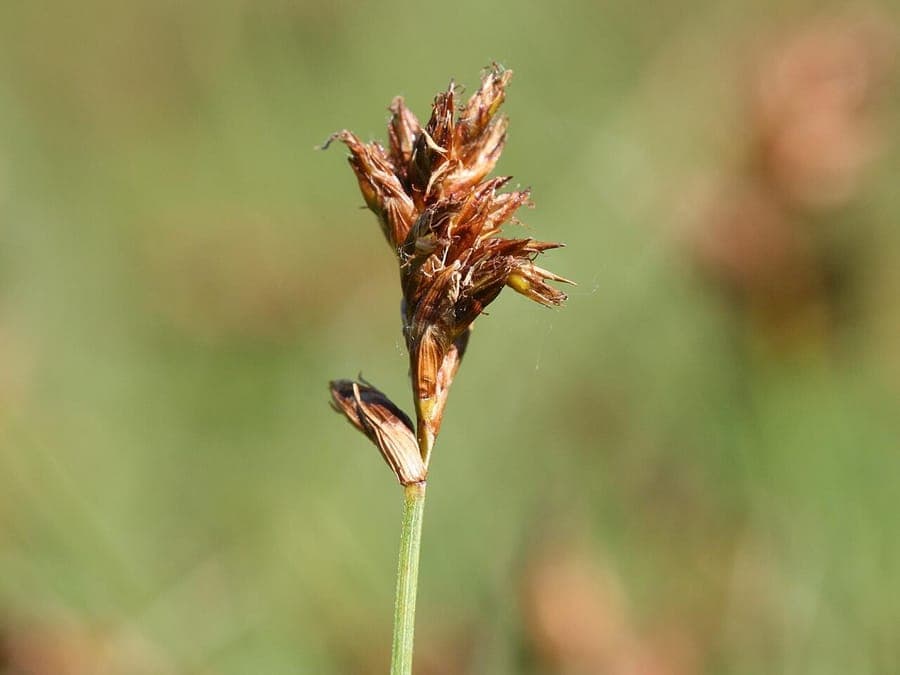
Kristian Peters -- Fabelfroh 14:40, 27 June 2007 (UTC) / CC BY-SA 3.0, via Wikimedia Commons
Flat sedge: complete guide
Blysmus compressus
Want to see Flat sedge: complete guide in your garden?
1 minute, no credit card
Overview
Flat sedge, or Blysmus compressus, is a slender, grass-like perennial from the Cyperaceae family that thrives in damp, marginal zones. Native to central and eastern Europe, it's become a reliable choice for UK and North American gardeners seeking a low-maintenance, natural-looking plant for wet areas. It grows well in USDA zones 5–9 and typically reaches 15–30 cm in height, forming tight clumps through creeping rhizomes.
This plant excels in pond margins, rain gardens, or bog beds where soil stays consistently moist. It's not a flashy specimen, but its clean lines and texture add subtle structure to water features. Flat sedge is also valuable for stabilising soil and supporting local wildlife.
On gardenworld.app you can design a custom planting scheme that integrates flat sedge with other moisture-loving plants for a balanced, ecological edge.
Appearance & bloom cycle
Flat sedge earns its name from its distinctly flattened stems - a rare trait among sedges. The leaves are narrow, upright, and bright green, growing in dense tufts. From May through August, it produces small, brownish flower spikes at the stem tips. These aren't showy, but they add fine-textured interest and attract pollinators like hoverflies and small beetles.
The blooming period peaks in June and July. As seeds mature, they disperse via wind and water, allowing slow naturalisation in suitable conditions. The plant maintains its foliage through autumn, turning straw-brown in winter, which adds seasonal texture.
Ideal location
For best results, plant flat sedge in full sun (a light rating of 8) to light shade. It needs at least 6–8 hours of direct sunlight daily to form compact growth. In deep shade, it becomes leggy and sparse.
Ideal spots include shallow pond edges (up to 10 cm deep), damp borders, or low-lying areas prone to pooling. It can tolerate occasional submersion but performs best with consistently moist - not waterlogged - soil. In dry summers, hand-water weekly to prevent stress.
Soil requirements
Flat sedge prefers heavy loam or clay soils with a pH of 7.0–7.5. It benefits from rich organic matter, so mix in compost or well-rotted manure when planting. Avoid fast-draining sandy soils unless you commit to frequent irrigation.
The plant does not like drought, so if your garden has sandy or gravelly soil, amend it with peat-free compost to increase water retention. A 5–10 cm mulch layer of leaf mould or reed canes helps conserve moisture.
Free design
Want to see Flat sedge: complete guide in your garden? Make a free design now.
Watering
Consistent moisture is key. Flat sedge can handle standing water but grows just as well in wet soil. During active growth (spring through summer), ensure the root zone never dries out. Young plants need weekly watering in dry spells until established.
In container plantings near water features, check moisture daily. If using in a rain garden, position it in the lowest zone where water collects after storms.
Pruning
Minimal pruning is needed. In late winter or early spring, cut back old foliage to 5 cm above ground to make room for fresh growth. Use sharp, sterilised shears to prevent disease.
Every 3–4 years, divide overcrowded clumps in early spring. Replant divisions 20–30 cm apart to allow room for spread. This keeps the plant vigorous and prevents central dieback.
Maintenance calendar
- Jan: inspect for frost damage; leave old growth for insulation
- Feb: prepare tools, plan divisions
- Mar: cut back old stems, divide clumps if needed
- Apr: plant new specimens, monitor moisture
- May: flowering begins; increase watering if dry
- Jun: peak bloom; check for pests
- Jul: maintain consistent moisture
- Aug: seed heads mature; reduce fertilisation
- Sep: no pruning; allow natural dieback
- Oct: stop feeding, leave foliage for winter
- Nov: protect root zone with mulch in colder zones
- Dec: minimal care; avoid disturbing dormant plants
Winter hardiness
Flat sedge is hardy to USDA zone 5 (-20°C). In zones 6–9, it remains semi-evergreen, with foliage turning tan in winter. In colder areas, mulch lightly around the base to protect rhizomes from freeze-thaw cycles. In pond plantings, submerging the crown slightly provides natural insulation.
Avoid cutting back in autumn - the old growth protects new buds. In milder climates, the plant stays green year-round with little intervention.
Companion plants
Pair flat sedge with other moisture-tolerant species: common reed (Phragmites australis), tussock sedge (Carex elata 'Aurea'), or water forget-me-not (Myosotis scorpioides). For contrast, add moisture-loving perennials like marsh marigold (Caltha palustris) or ligularia.
In a wildlife pond, it works well with yellow flag iris or water mint. The combination creates layered planting that supports insects and birds. For design inspiration, check gardenworld.app's wetland planting templates.
Closing
Flat sedge isn't a headline-grabber, but it's a reliable, understated workhorse for wet areas. With little effort, it stabilizes soil, supports biodiversity, and adds year-round texture. Buy it from garden centres like those stocking marginal plants, or order online. Once settled, it asks for almost nothing - just damp feet and a bit of sun. Let it do its quiet job at the water's edge.
Want to see Flat sedge: complete guide in your garden? Make a free design now.
Upload a photo, pick a style, and get a photorealistic design with plant list in under a minute.
No credit card required


Similar plants
Flat-stemmed club-rush: complete guide
Bolboschoenus planiculmis
Everything about Bolboschoenus planiculmis: growing conditions, watering, care, and use as a pond margin or wetland plant in garden design.
Great Plains flatsedge: complete guide
Cyperus lupulinus
Everything about Great Plains flatsedge (Cyperus lupulinus): growing conditions, care, garden uses, and ecological value. Tips for pond margins and dry sandy soils.
Golden beak sedge: complete guide
Rhynchospora corymbosa
Everything about golden beak sedge (Rhynchospora corymbosa): a dramatic tropical marginal for pond edges, bog gardens, and wet habitats.