
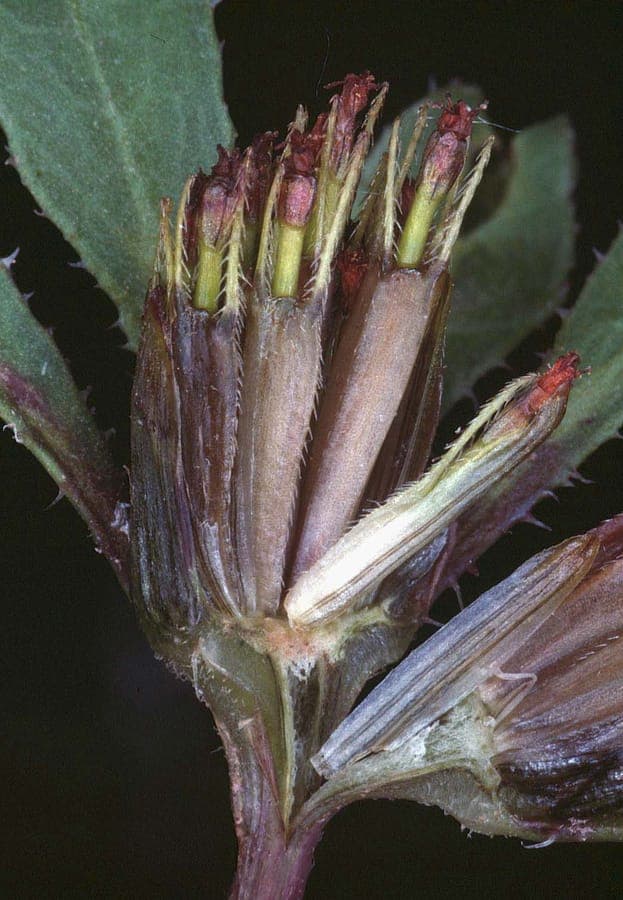
Wikimedia Commons / CC BY-SA 3.0, via Wikimedia Commons
Bidens connata: complete guide
Bidens connata
Want to see Bidens connata: complete guide in your garden?
1 minute, no credit card
Overview
Bidens connata, commonly called London bur-marigold, swamp beggar-ticks, or purple-stemmed beggarticks, is a native North American plant belonging to the Asteraceae family. This annual or short-lived perennial grows naturally in moist, disturbed habitats along waterways, in marshes, and in wet fields. The plant is particularly notable for its tiny yellow flowers and characteristic barbed seed pods that readily adhere to clothing and animal fur.
While often considered a weed, Bidens connata provides ecological benefits and can serve important roles in native plant gardens and wetland restoration projects.
Appearance and bloom
Bidens connata is a slender, upright plant reaching 20-60 centimeters in height. The stem is distinctively purple-red, giving rise to the common name "purple-stemmed." Leaves are opposite, lance-shaped, and finely serrated with a bright green color. The overall appearance is airy and branched.
Flowers: Flowers are small, approximately 6-8 millimeters across, with yellow ray florets and yellow disk florets. Blooming occurs from July through October. The flowers are inconspicuous but numerous, appearing in loose clusters.
Fruits: Following flowers, characteristic barbed achenes (seeds) develop with 2-3 bristles bearing backward-facing barbs that catch on fabric and hair.
Ideal location
Bidens connata thrives in partial shade to full sun:
- Full sun: 6-8 hours of sunlight, especially in cool climates
- Partial shade: 3-5 hours of sun, preferable in hot summers
- Moist habitats: Ideal in wetlands and marshes
- Soil moisture is more critical than light availability
Soil
This plant thrives in moisture-retentive to wet soil:
- Moist to wet soils, ideally
- Can tolerate periodic flooding
- Grows in poor to moderately fertile soil
- Avoids dry situations
- Tolerant of disturbance
Recommendation: Plant in moist meadows, slope bases, and wetland margins.
Free design
Want to see Bidens connata: complete guide in your garden? Make a free design now.
Watering
Watering is minimal in most situations:
Growing season:
- Natural rainfall usually suffices
- During dry periods, supplemental water may be needed
- Plant prefers consistently moist soil
Winter:
- Plant remains dormant; minimal watering needed
- In some regions, plants may grow in early fall or winter
Feeding and maintenance
This plant requires minimal maintenance:
- No fertilizing needed; grows in poor soils
- Little pruning required; plant dies after seed set
- Deadheading can produce some additional flowers
- Leave seeds to support future generations
Maintenance calendar
March-April: Seedlings germinate from natural seed bank. First leaves emerge.
May-June: Vegetative growth. Plant builds leaf biomass.
July-August: Flowering begins. Small yellow flowers appear.
September-October: Peak bloom. Barbed seeds mature. Ready for dispersal.
November-December: Plant dies after seed set. Seeds overwinter.
Winter hardiness
Bidens connata is an annual in many climates:
- USDA hardiness zones: Typically zones 3-10 (varies by location)
- In southern zones can overwinter as short-lived perennial
- In northern zones is strictly annual
- Very cold-hardy as seed
Companion plants
Bidens connata grows well with:
- Other native wetland plants
- Marsh marigold (Caltha palustris)
- Water mint (Mentha aquatica)
- Joe-Pye weed (Eutrochium)
- Native sedges
- Other Bidens species
Ecological benefits
Despite its "weed" reputation:
- Provides wildlife food source
- Offers seeds for birds
- Supports native pollinators
- Pioneer species in disturbed landscapes
- Common in native plant restoration
Final thoughts
Bidens connata is a valuable native plant for moist habitats and wetland restoration. While often dismissed as a weed, it plays an important ecological role. With its tiny flowers and distinctive seed pods, it adds texture and botanical interest. For gardeners wanting to support native plant communities, Bidens connata can be a worthwhile addition to wetland-oriented gardens.
Want to see Bidens connata: complete guide in your garden? Make a free design now.
Upload a photo, pick a style, and get a photorealistic design with plant list in under a minute.
No credit card required


Similar plants
Calendula stellata: complete guide
Calendula stellata
Complete guide to Calendula stellata, the star-flowered marigold from Sicily: location, soil, watering and companion planting tips.
Korean chrysanthemum: complete guide
Chrysanthemum x rubellum
Chrysanthemum x rubellum is a hardy autumn perennial with single pink to copper flowers from August to November. Care and combinations.
Helianthus divaricatus: complete guide
Helianthus divaricatus
Helianthus divaricatus is a North American woodland sunflower with yellow summer blooms, ideal for naturalistic borders and shady edges.