
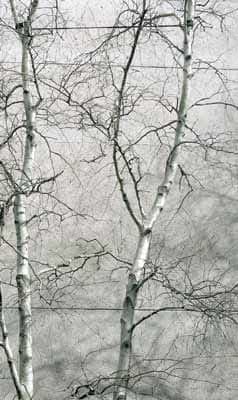
© Sue Sweeney / CC BY-SA 3.0, via Wikimedia Commons
White birch: complete guide
Betula populifolia
Want to see White birch: complete guide in your garden?
1 minute, no credit card
Overview
Betula populifolia, commonly known as the white birch or gray birch, is a slender, fast-growing deciduous tree native to the northeastern United States and southeastern Canada. Often mistaken for the paper birch (Betula papyrifera), this species stands out with its distinctive triangular leaves and open, airy crown. It typically reaches 10–15 meters in height and 4–6 meters in spread, making it suitable for smaller gardens or as a specimen tree in larger landscapes.
One of the lesser-known facts about this birch is its resilience in poor soils and urban environments. It's not picky about soil type as long as drainage is good. Hardy to USDA zone 4 (-34°C), it handles cold winters with ease. On gardenworld.app, you can design a garden layout that incorporates white birch as a focal point, ensuring proper spacing and light exposure for long-term health.
Appearance & bloom cycle
The white birch has a multi-stemmed, somewhat irregular growth habit, often branching low to the ground. The bark is smooth and chalky white when young, developing grayish tones and dark triangular marks at the base of branches as it matures. These markings are actually bud scale scars and give the tree its unique, almost patterned appearance.
In late spring, catkins emerge-male catkins are 3–5 cm long, pendulous, and brown, while female ones are shorter, upright, and greenish. After pollination, they develop into small cone-like strobiles that release tiny winged seeds in late summer and autumn. These seeds disperse easily in the wind, so keep that in mind if you're planting near wild areas.
Foliage is bright green in summer, turning golden yellow in fall from late September to mid-October. The leaves are 3–6 cm long, triangular with a pointed tip and finely serrated edges. They're arranged alternately on the stems and flutter attractively in even light breezes. Leaf drop is usually complete by mid-November in temperate zones.
Ideal location
Full sun is best-aim for at least 6 hours of direct sunlight daily. While it tolerates partial shade, too much shade leads to sparse foliage and weak growth. Choose an open site with room for the crown to expand. Wind protection is helpful in exposed gardens, especially for young trees, as their root systems are shallow.
This birch works well in naturalistic designs, woodland edges, or as a standalone feature near patios. Its elegant branching pattern adds year-round interest. On gardenworld.app, you can simulate how a white birch would look in your yard at different seasons, helping you decide on placement and companion planting.
Soil requirements
Prefers acidic to slightly acidic soils (pH 3.5–6.5), but it's adaptable. Sandy or loamy soils are ideal because they drain well. Avoid heavy clay unless you amend it with compost or grit to improve drainage. Poor, compacted soils are tolerated, but growth will be slower.
When planting, dig a hole twice as wide as the root ball but no deeper. Backfill with native soil-don't enrich it heavily, as this can discourage root expansion. Mulch with 5–8 cm of wood chips or pine needles to retain moisture and suppress weeds, keeping the mulch 10 cm away from the trunk to prevent rot.
Free design
Want to see White birch: complete guide in your garden? Make a free design now.
Watering
Water deeply once a week during the first growing season, about 10–15 liters per tree. Reduce frequency after the first year, but continue supplemental watering during prolonged dry spells, especially for trees under 5 years old. Established trees are moderately drought-tolerant but perform better with occasional deep watering in summer.
Use a soaker hose or drip irrigation to deliver water slowly to the root zone. Avoid overhead watering, which can encourage fungal issues.
Pruning
Pruning is minimal. Only remove dead, damaged, or crossing branches, preferably in late winter when the tree is dormant. Avoid pruning in early spring to prevent excessive sap bleeding. If you want a single-trunk form, prune out competing leaders when the tree is young.
Never remove more than 20% of the crown in one season. Use clean, sharp tools and make clean cuts just outside the branch collar.
Maintenance calendar
- January–February: Inspect for broken or diseased branches. Light pruning if needed.
- March: Replenish mulch. Check soil moisture after thaw.
- April: New growth begins. No fertilizer required.
- May–June: Monitor for pests like aphids or birch leafminer. Water during dry periods.
- July–August: Continue watering in droughts. Watch for leaf discoloration.
- September–October: Fall color develops. No pruning.
- November–December: Leaf drop complete. Leave fallen leaves as natural mulch unless diseased.
Winter hardiness
Extremely cold-hardy, thriving in USDA zones 4–8. In zone 4, protect young trunks from sunscald with a light wrap or paint the south-facing side with white latex paint. Mature trees require no winter protection.
Companion plants
Underplant with shade-tolerant species like hostas (Hosta spp.), ferns (Dryopteris spp.), or wild ginger (Asarum canadense). Spring bulbs such as crocus and daffodils do well in the dappled light before full leaf-out. Grasses like Carex or Pennisetum add texture.
Avoid invasive groundcovers like Vinca minor, which can outcompete roots. Instead, use native sedges or foamflower (Tiarella cordifolia) for a natural look.
Closing
The white birch is a graceful, low-maintenance tree that brings elegance and seasonal change to any garden. Its striking bark, fluttering leaves, and golden fall color make it a standout. Plant it in a sunny spot with well-drained soil, and it will reward you for decades. Find healthy saplings at garden centres across the UK and US, or order online. With the right care, your Betula populifolia will become a living landmark in your garden. For inspiration, explore planting schemes on gardenworld.app that feature this beautiful birch.
Want to see White birch: complete guide in your garden? Make a free design now.
Upload a photo, pick a style, and get a photorealistic design with plant list in under a minute.
No credit card required


Similar plants
Heart-leaf birch: complete guide
Betula cordifolia
Heart-leaf birch is an attractive North American birch tree for large gardens. Discover growth, white papery bark and winter hardiness.
Tropical hornbeam: complete guide
Carpinus tropicalis
Everything about Carpinus tropicalis, the tropical hornbeam from Central America. Growing tips, location, care, and garden use explained.
Japanese Alder (Alnus firma): complete guide
Alnus firma
Learn everything about Japanese Alder in our complete guide. Discover care, growth, and applications for larger gardens.