
Greg Hume / CC BY-SA 4.0, via Wikimedia Commons
Red birch: complete guide
Betula nigra
Want to see Red birch: complete guide in your garden?
1 minute, no credit card
Overview
Betula nigra, commonly known as Red birch, is a resilient and visually striking tree that thrives in moist to wet soils where many other trees struggle. Native to the eastern United States-from Alabama up through Illinois and into Connecticut-this deciduous tree is particularly well-suited to riparian zones, floodplains, and poorly drained garden areas. In the UK and northern Europe, it's gaining popularity among gardeners dealing with soggy patches or looking to create a naturalistic, wildlife-friendly landscape.
Red birch grows at a moderate to fast rate, adding 30–50 cm in height annually under good conditions. It typically reaches 15–20 meters tall with a spread of 8–12 meters at maturity, forming a broad, oval crown. Unlike many birches, it's highly resistant to the bronze birch borer, making it a long-lived and low-fuss option.
On gardenworld.app, you can design a garden layout that highlights the Red birch's unique bark and seasonal changes, ensuring it stands out in your space.
Appearance & bloom cycle
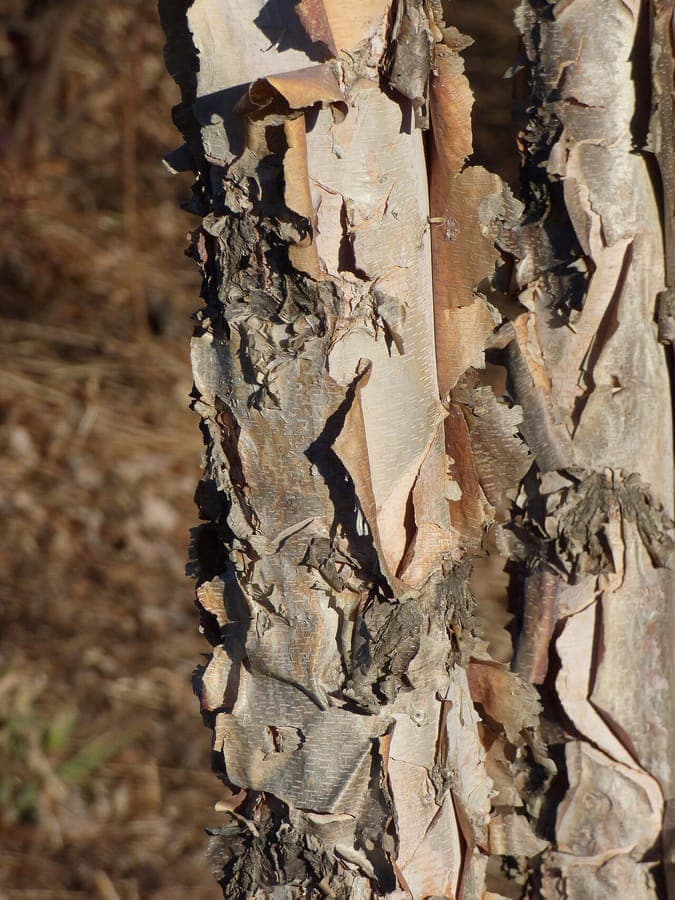
The bark is the star of the show. Young stems are cinnamon-brown and begin exfoliating in thin, papery curls. As the tree ages, the trunk develops a striking patchwork of grey, reddish-brown, and black-earning it the nickname 'crocodile bark'. This texture provides year-round interest, especially in winter when the canopy is bare.
The foliage emerges in spring as soft green, ovate leaves 5–8 cm long with a finely serrated edge. They turn a brilliant golden yellow in autumn, sometimes with hints of orange or russet, lasting well into November in USDA zones 5–7. The bloom cycle starts in late March to early April with the appearance of catkins. Male catkins are 3–5 cm long, brown, and pendulous, while female ones are shorter, upright, and greenish. After pollination, small winged seeds ripen by late summer and disperse in autumn.
Ideal location
Plant your Red birch in full sun to light shade. It performs best with at least 6 hours of direct sunlight daily. While it tolerates partial shade, dense shade results in sparse foliage and weaker growth. Allow at least 4 meters of clearance from buildings or paved areas-its surface roots can lift patios or damage foundations if planted too close.
This tree excels in damp conditions. It's ideal for planting near ponds, drainage ditches, or low-lying areas that collect water. In urban gardens, it can tolerate compacted soils better than most birches, though growth will be slower. Avoid hot, dry, south-facing sites unless you commit to regular watering.
Soil requirements
Red birch prefers acidic to slightly acidic soils with a pH between 3.0 and 6.5. It handles clay, loam, and even sandy soils as long as moisture is consistent. It does not tolerate alkaline conditions-above pH 7, iron chlorosis (yellowing leaves with green veins) may develop. If your soil is neutral or alkaline, consider growing it in a large container with ericaceous compost or planting in a raised bed with amended soil.
When planting, backfill with native soil. Do not add fertilizer or rich compost to the planting hole, as this can discourage root expansion. A 5 cm mulch layer of pine bark or wood chips helps retain moisture and keeps the root zone cool.
Free design
Want to see Red birch: complete guide in your garden? Make a free design now.
Watering
Young trees need consistent moisture for the first two growing seasons. Water deeply twice a week during dry spells, applying 10–15 liters per session. Once established, Red birch relies mostly on rainfall but benefits from supplemental watering during prolonged droughts, especially in zones 6 and above.
Avoid overhead watering, which can encourage fungal leaf spots. Instead, use a soaker hose at the base. Mulching is essential-keep the mulch 10 cm away from the trunk to prevent rot.
Pruning
Pruning is rarely needed. The tree's natural form is elegant and upright with a strong central leader. Remove only dead, damaged, or crossing branches during late winter (January to early March). Avoid pruning in spring when sap flow is high-birches bleed heavily if cut during this period.
Use clean, sharp tools and make clean cuts just outside the branch collar. Never top the tree or remove lower limbs unnecessarily-this disrupts its natural shape and stresses the plant.
Maintenance calendar
- January–February: Inspect for damaged branches; prune if needed
- March: Final winter check; remove garden debris around the base
- April–May: Monitor for aphids on new growth; no feeding required
- June–August: Water young trees weekly in dry weather; refresh mulch
- September–October: Let fallen leaves decompose naturally-they enrich the soil
- November–December: No action needed; tree enters dormancy
Winter hardiness
Red birch is hardy to USDA zone 4 (-23°C), making it suitable for most temperate climates. In colder zones, young trees may suffer bark splitting on the south side due to rapid temperature swings. Wrap the trunk with tree tape or burlap for the first 2–3 winters to prevent sunscald.
Companion plants
Pair Red birch with moisture-loving perennials like Carex vulpinoidea, Eutrochium maculatum, or Iris versicolor. Underplant with native ferns such as Dryopteris goldiana or Polystichum acrostichoides. For seasonal color, add spring ephemerals like Trillium or bloodroot (Sanguinaria canadensis). Avoid aggressive groundcovers that compete for water.
Garden centres across the UK and Europe now stock Betula nigra, often as 1.2–1.5 m bare-root or container-grown trees. For inspiration on plant pairings, visit gardenworld.app and generate custom designs that incorporate Red birch into your garden plan.
Closing
The Red birch is a tough, beautiful tree that brings texture, seasonal interest, and ecological value to the garden. It solves wet soil problems, supports biodiversity, and ages gracefully. With minimal care and the right site, it can thrive for 50+ years. Plant one where it has room to grow, and enjoy the show for decades.
Want to see Red birch: complete guide in your garden? Make a free design now.
Upload a photo, pick a style, and get a photorealistic design with plant list in under a minute.
No credit card required


Similar plants
Heart-leaf birch: complete guide
Betula cordifolia
Heart-leaf birch is an attractive North American birch tree for large gardens. Discover growth, white papery bark and winter hardiness.
Tropical hornbeam: complete guide
Carpinus tropicalis
Everything about Carpinus tropicalis, the tropical hornbeam from Central America. Growing tips, location, care, and garden use explained.
Japanese Alder (Alnus firma): complete guide
Alnus firma
Learn everything about Japanese Alder in our complete guide. Discover care, growth, and applications for larger gardens.