
Jean-Pol GRANDMONT / CC BY 3.0, via Wikimedia Commons
Medwediew's birch: complete guide
Betula medwediewii
Want to see Medwediew's birch: complete guide in your garden?
1 minute, no credit card
Overview
Betula medwediewii, commonly known as Medwediew's birch, is a graceful small to medium-sized tree native to the Transcaucasus, northern Iran, and northeastern Turkey. It's rarely seen in UK or US gardens, but it deserves more attention. With a slow, upright growth habit and attractive bark, it adds vertical interest without dominating the space. In cultivation, it typically reaches 8–12 meters tall and 5–7 meters wide over 20–30 years, making it ideal for smaller gardens where space is limited.
On gardenworld.app, you can simulate how Betula medwediewii fits into your garden layout, accounting for future spread and seasonal shade patterns.
Appearance & bloom cycle
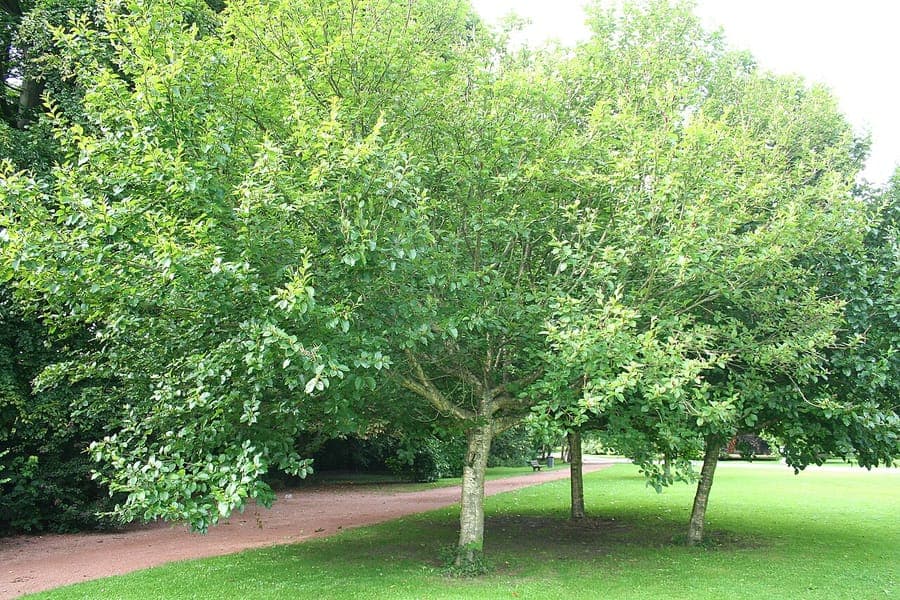
The tree has a narrowly conical shape when young, gradually becoming broader and more open with age. The bark is smooth and silvery-gray with subtle darker horizontal bands, developing slight fissures on older trunks. It's not as dramatically peeling as Betula utilis, but it has an elegant subtlety that improves with maturity.
Leaves are ovate, 4–8 cm long, with serrated margins and a glossy dark green upper surface. They turn bright yellow in autumn, usually around late October to early November, offering a short but vibrant display. The fall color can vary depending on seasonal conditions - dry summers may reduce intensity.
Flowering occurs in March to April. Male catkins hang down, reaching up to 6 cm, while female catkins are shorter and more upright. After pollination, the female catkins develop into small cone-like structures that release seeds in late autumn. Wind disperses the tiny seeds, which may germinate in bare soil spots the following spring.
Ideal location
This birch thrives in full sun to partial shade. In cooler climates (USDA zones 6–7), it handles full sun well, especially with consistent soil moisture. In hotter regions (zone 8), afternoon shade helps prevent leaf scorch. Avoid exposed, windy sites - young trees can suffer from desiccation, especially in winter.
Give it at least 3 meters of clearance from buildings or large shrubs to allow for proper air circulation and to avoid root competition. It works well as a focal point, near a patio corner, or as part of a woodland edge planting.
Soil requirements
Betula medwediewii prefers moist, well-drained loam or clay-loam soils with a pH between 5.5 and 7.0. It tolerates slightly acidic to neutral conditions but struggles in highly alkaline or compacted soils. Sandy soils are acceptable only if amended with organic matter to improve water retention.
When planting, dig a hole twice as wide as the root ball and the same depth. Backfill with native soil mixed with 30% compost or well-rotted leaf mold. Avoid high-nitrogen fertilizers at planting - they can burn young roots.
Free design
Want to see Medwediew's birch: complete guide in your garden? Make a free design now.
Watering
Water deeply once a week during the first two growing seasons. Aim for 20 liters per tree per session, especially during dry spells. Use a slow soaker hose or watering spike to encourage deep root development.
Once established, it becomes moderately drought-tolerant but performs best with consistent moisture. During prolonged summer droughts, supplemental watering prevents stress symptoms like leaf curling or early drop.
Pruning
Minimal pruning is required. Only remove dead, damaged, or crossing branches in late winter (February). Avoid pruning in late summer or early autumn, as this may stimulate new growth vulnerable to winter kill.
Never top or heavily prune the main leader - it ruins the tree's natural form. Use clean, sharp tools and disinfect between cuts to prevent disease spread.
Maintenance calendar
January: Inspect for structural issues, remove dead wood February: Light pruning if needed March: Check for insect signs, especially birch leaf aphids April: Apply organic mulch around base, keep 10 cm from trunk May: Monitor for yellowing leaves or stunted growth June: No action unless drought occurs July: Water during dry periods August: Observe seed dispersal and natural regeneration September: Admire developing autumn color October: Leaves drop; replenish mulch layer November: Optional soil pH test December: No maintenance - tree dormant
Winter hardiness
This species is hardy to USDA zone 6 (-23°C to -18°C). In zone 7 and above, it thrives with minimal winter care. Young trees benefit from a 10–15 cm mulch layer of bark or leaf litter to insulate roots and retain moisture.
In colder zones, protect first-year trees from harsh winter winds with burlap wraps, but avoid covering the entire crown. Mature trees are resilient and rarely suffer winter damage if sited correctly.
Companion plants
Underplant with shade-tolerant perennials like Epimedium, Alchemilla mollis, or Carex oshimensis 'Evergold'. Early spring bulbs such as Chionodoxa or Scilla siberica emerge before leaf-out and thrive beneath the light canopy.
Avoid aggressive groundcovers like ivy or mint, which can compete for water and nutrients. Instead, opt for low-maintenance companions that don't require frequent soil disturbance.
Closing
Betula medwediewii is a quiet standout - not flashy, but full of character. It brings year-round structure and seasonal interest with minimal demands. Its rarity in cultivation makes it a conversation starter and a smart choice for thoughtful gardeners.
You won't find it at every garden centre, but specialist nurseries and larger retailers like OBI or Hornbach sometimes stock it. In the UK and US, check online growers or order ahead.
On gardenworld.app, you can model its growth over time, plan companion planting, and visualise how it shapes your garden's microclimate. It's not guesswork - it's intelligent gardening.
Want to see Medwediew's birch: complete guide in your garden? Make a free design now.
Upload a photo, pick a style, and get a photorealistic design with plant list in under a minute.
No credit card required


Similar plants
Heart-leaf birch: complete guide
Betula cordifolia
Heart-leaf birch is an attractive North American birch tree for large gardens. Discover growth, white papery bark and winter hardiness.
Tropical hornbeam: complete guide
Carpinus tropicalis
Everything about Carpinus tropicalis, the tropical hornbeam from Central America. Growing tips, location, care, and garden use explained.
Japanese Alder (Alnus firma): complete guide
Alnus firma
Learn everything about Japanese Alder in our complete guide. Discover care, growth, and applications for larger gardens.