
Lynk media / CC BY-SA 3.0, via Wikimedia Commons
Cherry birch: complete guide
Betula lenta
Want to see Cherry birch: complete guide in your garden?
1 minute, no credit card
Overview
Betula lenta, commonly known as cherry birch, is a stately deciduous tree native to the eastern United States, thriving from Maine down to Georgia. It's a medium-sized tree, typically reaching 15 to 20 meters in height with a spread of 8 to 12 meters, making it a solid choice for larger gardens, parklands, or naturalised areas. Unlike the paper birch, it doesn't peel, but its dark, cherry-like bark adds year-round interest. It grows at a moderate to fast rate-about 30 to 50 cm per year-with optimal conditions.
The tree is well-suited to temperate zones and performs reliably in USDA hardiness zones 3 to 7. While not commonly found in every garden centre, it's increasingly available through specialist nurseries. It's a great option if you're aiming for a woodland feel or want to support local wildlife. On gardenworld.app, you can map out a garden design that works with the cherry birch's mature size and shade pattern, helping you plan years ahead.
Appearance & bloom cycle
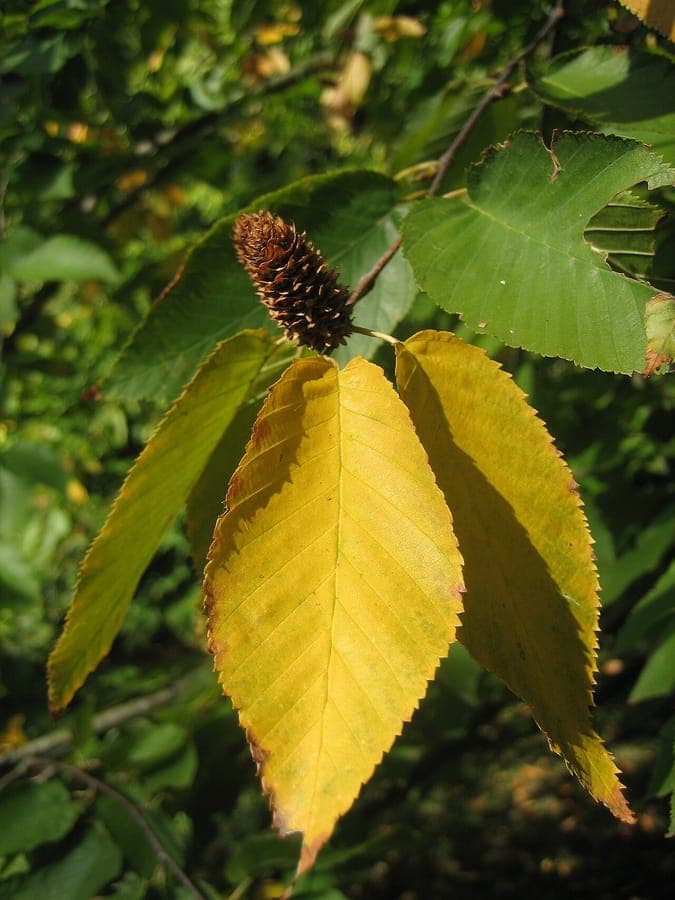
Cherry birch stands out for its smooth, shiny, dark reddish-brown to nearly black bark, which develops shallow fissures with age. Young twigs have a wintergreen scent when scratched or broken-something fun to test with kids. The leaves are simple, alternate, ovate to elliptical, measuring 5 to 10 cm long, with finely serrated margins. They emerge light green in spring, darken in summer, and turn bright yellow in autumn, usually around October.
Flowering occurs in early spring (March to April), before or just as the leaves emerge. The tree is monoecious, bearing both male and female catkins on the same plant. Male catkins are 3 to 5 cm long, pendulous, and dark, while female catkins are smaller, upright, and greenish. After pollination, they mature into small, cone-like strobiles (1.5 cm) that release winged seeds in late fall. These seeds are a food source for finches, chickadees, and other small birds, making the tree a valuable addition to bird-friendly gardens.
Ideal location
Cherry birch grows best in full sun to partial shade. It tolerates full sun in cooler climates but benefits from afternoon shade in hotter regions to prevent leaf scorch. A location near a woodland edge, stream, or naturalised area works well. It can also be used as a specimen tree in large lawns or as a shade tree near patios.
Make sure it has enough space-plant at least 4 meters from buildings or paved surfaces to avoid root pressure and excessive shade. It doesn't compete well with dense ground covers or lawn grass right up to the trunk, so keep a 1-meter mulched ring around the base. On gardenworld.app, you can simulate growth patterns and shade coverage over time, helping you visualise how the tree will fit into your space.
Free design
Want to see Cherry birch: complete guide in your garden? Make a free design now.
Soil requirements
This birch prefers moist, well-drained loamy or clay-loam soils with a slightly acidic to neutral pH (5.5 to 7.0). It struggles in dry, sandy, or compacted soils. At planting, amend the soil with compost or well-rotted manure to improve structure and nutrient content. A 5 to 10 cm layer of organic mulch (like wood chips) helps retain moisture and suppress weeds-just keep it 10 cm away from the trunk to prevent rot.
Avoid waterlogged conditions. While it tolerates occasional wet feet, it won't survive in permanently saturated soils. If your garden has poor drainage, consider planting on a slight mound or improving drainage with gravel or organic matter.
Watering
Young trees need consistent watering for the first 2 to 3 years. Provide 10 to 15 liters per week during dry spells, using a slow soak at the base. A soaker hose or gator bag works well. Mature trees are moderately drought-tolerant but perform better with occasional deep watering during extended dry periods (over 3 weeks without rain).
Use rainwater when possible-cherry birch is sensitive to high calcium levels in tap water, which can cause leaf yellowing over time.
Pruning
Pruning is rarely needed. Only remove dead, damaged, or diseased branches. If shaping is desired, prune in late fall or winter (November to February) when the tree is dormant. Avoid pruning in spring when sap is flowing, as this can lead to excessive bleeding.
For a cleaner trunk, you can gradually remove lower branches as the tree matures. Start once it reaches about 3 meters in height, removing no more than 20% of the canopy in a single season.
Maintenance calendar
- Jan: Inspect for broken branches, light pruning if needed
- Feb: Final pruning window before bud swell
- Mar: Monitor for aphids or fungal spots on young trees
- Apr: Apply mulch, check leaf emergence
- May: No routine care, water during dry spells
- Jun: Observe for pests or discoloration
- Jul: Deep water if drought persists
- Aug: Same as July
- Sep: Leave fallen leaves as natural mulch
- Oct: Watch for fall color and seed dispersal
- Nov: Top up mulch, protect young trees from rodents
- Dec: Winter check, inspect bark for damage
Winter hardiness
Cherry birch is hardy in USDA zones 3–7, enduring winter lows down to -40°C. In the UK and much of northern Europe, it handles winter conditions without protection. Young trees may benefit from a thick mulch layer to insulate roots during extreme cold. Wind protection is helpful in exposed areas, especially for saplings.
Companion plants
Pair cherry birch with shade-tolerant perennials like wood anemone (Anemone nemorosa), wild ginger (Asarum europaeum), or epimedium. Ferns such as Dryopteris or Polystichum add texture. For autumn interest, plant asters (Symphyotrichum) or heuchera nearby. Avoid invasive ground covers like ivy or aggressive spreaders such as bamboo.
Closing
Cherry birch is a long-lived, low-maintenance tree that brings elegance and ecological value. Its glossy bark, wildlife appeal, and clean growth habit make it a standout. While it needs space, the payoff is decades of beauty and habitat. You might find young specimens at garden centres like B&Q or Wyevale, but for larger stock, specialist nurseries are better. Plan your planting wisely-use gardenworld.app to model your garden's evolution and ensure the cherry birch has room to thrive.
Want to see Cherry birch: complete guide in your garden? Make a free design now.
Upload a photo, pick a style, and get a photorealistic design with plant list in under a minute.
No credit card required


Similar plants
Heart-leaf birch: complete guide
Betula cordifolia
Heart-leaf birch is an attractive North American birch tree for large gardens. Discover growth, white papery bark and winter hardiness.
Tropical hornbeam: complete guide
Carpinus tropicalis
Everything about Carpinus tropicalis, the tropical hornbeam from Central America. Growing tips, location, care, and garden use explained.
Japanese Alder (Alnus firma): complete guide
Alnus firma
Learn everything about Japanese Alder in our complete guide. Discover care, growth, and applications for larger gardens.