
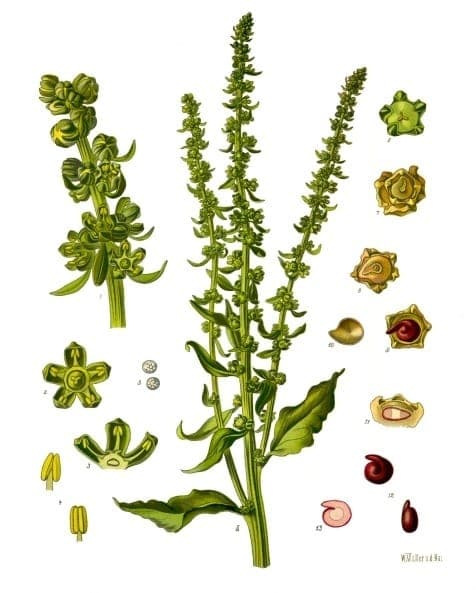
Walther Otto Müller / Public domain, via Wikimedia Commons
Beet: complete guide
Beta vulgaris
Want to see Beet: complete guide in your garden?
1 minute, no credit card
Overview
Beet, or Beta vulgaris, is a staple in vegetable gardens across temperate zones. Whether you're growing it for its sweet root, leafy greens like chard, or even for historical sugar production, this plant thrives in sunny, open spots with fertile, well-drained soil. Native to coastal regions of Southern Europe, beet is a versatile crop that performs well in USDA hardiness zones 3 to 10, though it's typically grown as an annual. In milder climates, it can survive into a second year, but most gardeners harvest within 50 to 70 days of sowing.
The plant belongs to the Amaranthaceae family, making it a relative of spinach and amaranth. Its growth habit is herbaceous and upright, reaching 30–50 cm in height with a spread of about 20–30 cm. The root, which can grow up to 10 cm in diameter, is the main harvest, though the leaves are also edible and nutritious.
Garden centres across the UK and US carry beet seeds and seedlings in spring. You can also plan your beet rows efficiently using gardenworld.app, where you can visualize spacing and sunlight exposure for maximum yield.
Appearance & bloom cycle
Beet develops broad, dark green leaves with prominent red or purplish veins and stems. The foliage forms a dense rosette above ground, while the root swells beneath. Depending on the variety, roots can be deep red, golden, or white. The plant reaches maturity in about 2 months, though baby beets can be harvested as early as 5 weeks.
Beet rarely flowers in the first year. If overwintered, it may send up a tall flower stalk in the second spring, blooming from May to July with small, greenish-brown flowers. These are not showy but can produce viable seed. To prevent bolting in warm climates, plant in early spring or late summer.
Ideal location
Beet thrives in full sun, scoring a 7/10 for light requirements. This means at least 6 hours of direct sunlight daily. Choose a south-facing spot in your garden with minimal shading from trees or structures. Avoid low-lying areas that collect cold air, especially in early spring.
Raised beds work exceptionally well for beets, as they warm up faster and improve drainage. On gardenworld.app, you can design your raised bed layout to include companion plants like onions or lettuce for optimal space use.
Soil requirements
Beet prefers loose, loamy soil rich in organic matter. The ideal pH is between 7.5 and 8 - slightly alkaline. Heavy clay soils should be amended with compost or well-rotted manure to improve texture. Compacted soil leads to misshapen or stunted roots, so work the soil deeply before planting, ideally to a depth of 30 cm.
Avoid fresh manure, as it can cause root branching. If your soil is too acidic, apply lime to raise the pH gradually. Test your soil annually to maintain proper balance.
Free design
Want to see Beet: complete guide in your garden? Make a free design now.
Watering
Consistent moisture is key for beet success. Aim for 2.5 cm of water per week, especially during germination and root development (June to August). Use drip irrigation or soaker hoses to deliver water directly to the roots and avoid wetting the foliage, which can encourage fungal diseases.
Mulching with straw or compost helps retain moisture and keeps soil temperatures stable. During dry spells, increase watering frequency, but don't let the soil become waterlogged.
Pruning
Beet doesn't require traditional pruning, but thinning is essential. Once seedlings reach 5 cm tall, thin them to 8–10 cm apart to prevent crowding. You can eat the thinnings - both leaves and tiny roots are delicious.
For chard varieties, harvest outer leaves regularly to encourage new growth. Never remove more than one-third of the foliage at once, as this stresses the plant.
Maintenance calendar
- January: Prepare compost, plan crop rotation
- February: Start seeds indoors if starting early
- March: Sow chard and early beet varieties under cover
- April: Direct sow beets in prepared beds, protect from frost
- May: Thin seedlings, apply balanced fertilizer
- June: Monitor for pests, keep soil moist
- July: Harvest early beets, sow late varieties
- August: Harvest main crop, watch for leaf spot
- September: Collect seeds from overwintered plants
- October: Final harvest, amend soil with compost
- November: Mulch beds, protect from frost
- December: Review season, plan next year on gardenworld.app
Winter hardiness
Beet is generally not winter-hardy below -2°C. In USDA zones 7 and above, young plants may survive light frosts if covered with fleece or mulch. However, prolonged freezing will damage roots. For overwintering, use row covers and plant in well-drained raised beds.
In colder zones, treat beet as a spring-to-fall crop. Sow successively every 3 weeks for a continuous harvest.
Companion plants
Good companions for beet include onions, lettuce, cabbage, and herbs like mint or thyme. These help deter pests and maximize space. Avoid planting near beans or pole beans, as they may inhibit beet growth. Also keep away from spinach, which competes for similar nutrients.
Marigolds and nasturtiums planted nearby can repel aphids and beetles.
Closing
Beet is a reliable, productive crop that earns its place in any vegetable garden. With proper spacing, consistent watering, and well-prepared soil, you'll enjoy both roots and greens. Whether you're growing red beet for roasting or chard for salads, success starts with smart planning.
Garden centres like those in the UK carry organic beet seeds in spring. You can track sowing dates, harvest windows, and companion layouts using gardenworld.app - a practical tool for gardeners who value both yield and design.
Want to see Beet: complete guide in your garden? Make a free design now.
Upload a photo, pick a style, and get a photorealistic design with plant list in under a minute.
No credit card required


Similar plants
Bassia laniflora (woolly summer-cypress): complete guide
Bassia laniflora
Full guide to Bassia laniflora: origin, appearance, ideal location, soil, watering and care for this drought-tolerant annual.
Suaeda spicata: complete guide
Suaeda spicata
Everything about Suaeda spicata (spiked seablite): a rare salt-tolerant coastal succulent from the western Mediterranean and Macaronesia.
California amaranth: complete guide
Amaranthus californicus
Full guide to California amaranth (Amaranthus californicus): growing tips, ideal location, soil needs, watering, and garden design ideas.