
Wikimedia Commons / CC BY-SA 3.0, via Wikimedia Commons
Darwin's barberry: complete guide
Berberis darwinii
Want to see Darwin's barberry: complete guide in your garden?
1 minute, no credit card
Overview
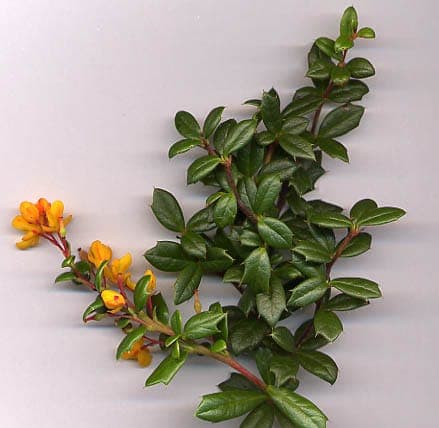
Berberis darwinii, commonly known as Darwin's barberry, is a bold evergreen shrub that brings structure, colour, and a touch of wildness to gardens across the UK and Europe. Native to southern Chile and Argentina, this tough plant thrives in coastal and urban conditions alike. Reaching 1.5 to 2.5 metres in height and spreading about 1.5 metres wide, it's ideal for hedges, screens, or as a standalone specimen in mixed borders.
Its dense, spiny growth deters intruders-both animal and human-while providing shelter for birds. The dark green, holly-like leaves are small, about 2–3 cm long, and edged with sharp teeth. It's fully evergreen in mild climates, though young growth may bronze slightly in winter sun. If you're looking for year-round presence with minimal effort, this shrub delivers.
On gardenworld.app, you can create a garden design that highlights Berberis darwinii as a structural backbone, especially in informal or wildlife-friendly gardens.
Appearance & bloom cycle
The real showstopper is the flowering. From late winter into early spring-typically February to April-Darwin's barberry bursts into clusters of vivid yellow to orange-yellow flowers. They hang in pendulous racemes, almost like tiny chandeliers, covering the stems densely. These early blooms are a lifeline for pollinators like bumblebees and early hoverflies, making this plant a quiet hero in the garden ecosystem.
After flowering, small, round, dark purple berries form, about 5 mm in diameter. They persist into summer and are edible, though intensely tart-better suited to jam than fresh eating. Birds generally leave them alone, but they add visual interest.
The foliage stays dense and glossy all year. In colder zones, the leaves may take on a reddish or bronze tint in winter, enhancing its seasonal appeal.
Ideal location
Plant Berberis darwinii in full sun to partial shade. It performs best in a sunny spot where it will flower most heavily and maintain a compact shape. In deep shade, growth becomes leggy and sparse. It tolerates coastal winds, urban pollution, and light frost, making it a top choice for exposed gardens.
Use it as a security hedge along fences or driveways, or tuck it into a mixed shrub border for year-round texture. Its spiky nature makes it excellent for deterring cats or rabbits from digging. Check gardenworld.app to visualise how this shrub fits into your current garden layout, including spacing and seasonal shadows.
Free design
Want to see Darwin's barberry: complete guide in your garden? Make a free design now.
Soil requirements
This barberry is adaptable. It grows well in sandy, loamy, or clay soils, as long as drainage is good. Avoid waterlogged sites-root rot can set in quickly. The ideal pH range is between 5.5 and 7.5, so it tolerates slightly acidic to slightly alkaline conditions. If planting in heavy clay, mix in grit or compost to improve drainage.
No need for rich soil or frequent feeding. It's well-suited to poor soils, making it ideal for neglected corners of the garden.
Watering
Water regularly during the first growing season, especially in dry spells. Once established, Berberis darwinii is drought-tolerant and rarely needs supplemental watering. Overhead watering in winter should be avoided, as wet foliage in cold weather increases fungal risk.
Pruning
Pruning isn't essential, but it helps maintain shape and density. The best time is right after flowering, in late spring to early summer (May–July). Cut back flowering stems by up to a third, just above a leaf node. Avoid cutting into old, bare wood, as it won't regrow well.
If using as a hedge, trim once a year after blooming. Wear thick gloves-those spines are no joke. Use sharp, clean secateurs to prevent disease transfer.
Maintenance calendar
- Jan: inspect for frost damage
- Feb: flowering begins, watch for pollinators
- Mar: peak bloom, enjoy the colour
- Apr: flowers fade, berries start forming
- May: light pruning possible
- Jun: main pruning window
- Jul: tidy up, remove dead wood
- Aug: low maintenance, monitor for aphids
- Sep: stop feeding, let plant harden off
- Oct: collect fallen leaves for mulch
- Nov: protect young plants if hard frost expected
- Dec: check structure, avoid winter pruning
Winter hardiness
Hardy in USDA zones 7b to 10. In the UK (mostly zone 8), it survives most winters without protection. Young plants may benefit from a mulch of compost or leaf mould in colder areas. Mature shrubs are resilient, though prolonged temperatures below -15°C can cause dieback. Wet winter soil is a bigger threat than cold.
Companion plants
Pair with other evergreens like Skimmia, Mahonia, or Holly for winter interest. For contrast, use silver-foliage plants like Artemisia or Santolina. In borders, it works well with Lavender, Salvia, and ornamental grasses. Avoid moisture-loving plants like Ferns or Astilbe, which prefer damper soil.
Closing
Berberis darwinii is a tough, reliable shrub that earns its place in any garden. It's low-maintenance, wildlife-supportive, and offers months of visual drama. Whether you're creating a defensive hedge or adding spring colour to a dull corner, it's a smart investment. Buy healthy specimens from reputable garden centres-look for compact, bushy plants without signs of mildew. And don't forget to plan your planting scheme: gardenworld.app lets you design a garden that makes the most of Darwin's barberry, season after season.
Want to see Darwin's barberry: complete guide in your garden? Make a free design now.
Upload a photo, pick a style, and get a photorealistic design with plant list in under a minute.
No credit card required


Similar plants
Heavenly bamboo: complete guide
Nandina domestica
Everything about heavenly bamboo (Nandina domestica): planting, pruning, hardiness, and colour impact. Note: berries are toxic to birds and pets.
Colorado barberry: complete guide
Berberis fendleri
Everything about Berberis fendleri, the Colorado barberry with yellow flowers and red berries. Perfect as a thorny hedge or specimen shrub in dry gardens.
Jeffersonia diphylla: complete guide
Jeffersonia diphylla
Discover Twinleaf, a charming woodland plant from North America. White flowers, unique foliage, perfect for shady borders.