
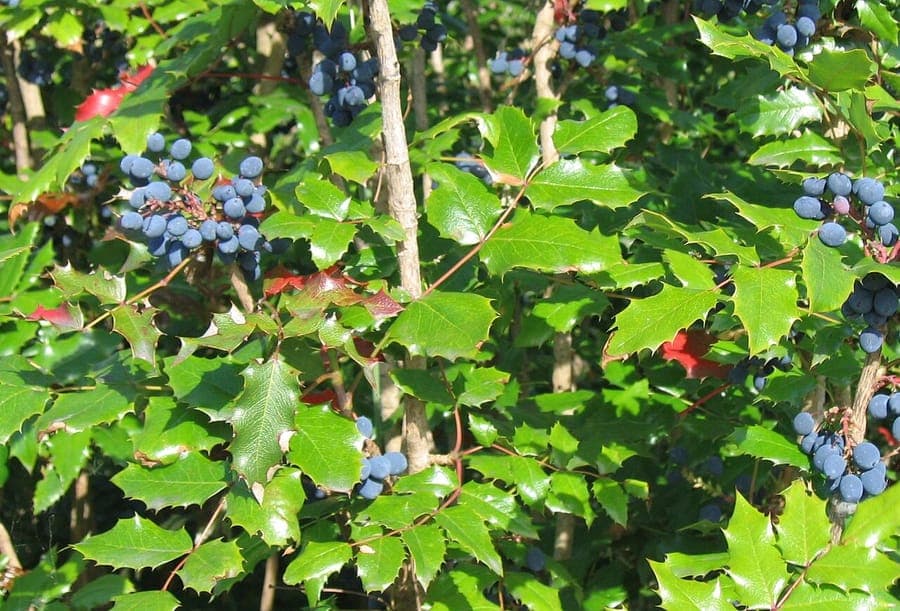
The original uploader was Meggar at English Wikipedia. / CC BY-SA 3.0, via Wikimedia Commons
Mountain-grape: complete guide
Berberis aquifolium
Want to see Mountain-grape: complete guide in your garden?
1 minute, no credit card
Overview
Berberis aquifolium, commonly known as Mountain-grape or Oregon grape, is a tough evergreen shrub that earns its place in any thoughtful garden design. Native to western North America – from British Columbia down through Washington, Oregon, Idaho and into California – it thrives in the cool, moist climates of USDA hardiness zones 5 to 9. In the UK and northern Europe, it adapts well to garden conditions, especially in woodland or shaded borders. Its holly-like foliage, bright yellow flowers and edible blue-black berries make it a year-round performer.
On gardenworld.app you can design a shade garden layout where Mountain-grape acts as a structural anchor, providing texture and early-season interest.
Appearance & bloom cycle
This shrub typically grows 60–120 cm tall and spreads 80–100 cm wide. The leaves are pinnately compound, with 5–9 leathery, spiny-toothed leaflets that resemble holly but are less sharp. They're glossy green in summer, turning rich shades of bronze, purple and red in autumn and winter – a real standout in the dormant season.
Flowering occurs from late winter into early spring, usually February to April, depending on climate. Dense, upright clusters of small, golden-yellow flowers appear at the tips of the stems. These are mildly fragrant, often compared to honey or spice, and attract early pollinators like bumblebees and hoverflies.
After flowering, blue-black, grape-like berries develop by late spring. They're tart but edible and can be used in jellies or syrups. Birds such as thrushes and blackbirds will also eat them, making this shrub a wildlife-friendly choice.
Ideal location
Mountain-grape prefers partial shade (light level 6–8), though it tolerates full shade or light sun. In full sun, especially on dry soils, leaf scorch may occur. The best spot is under open tree canopies, on the north or east side of buildings, or in woodland gardens where dappled light filters through.
It works well as ground-level structure in mixed borders, underplanting for larger shrubs, or as a low, informal hedge. The slightly spiny foliage deters unwanted foot traffic, adding a practical edge to its ornamental value.
Soil requirements
It's adaptable to a range of soils but demands good drainage. The ideal pH is neutral to slightly alkaline: 7.0–7.5. Heavy clay soils should be improved with grit or composted bark. Sandy soils benefit from added organic matter like compost or well-rotted manure to retain moisture.
While it tolerates mildly acidic soils (down to pH 6.0), avoid waterlogged conditions. Raised beds or sloped areas are ideal if drainage is a concern.
Free design
Want to see Mountain-grape: complete guide in your garden? Make a free design now.
Watering
Water regularly during the first growing season after planting – about once a week if rainfall is low. Once established, Berberis aquifolium is drought-tolerant and rarely needs supplemental watering, except during prolonged dry spells in summer. When you do water, soak deeply at the base to encourage deep root development.
Avoid overhead watering, which can promote fungal diseases. Use rainwater when possible, as tap water with high lime content may affect long-term soil pH.
Pruning
Pruning is minimal. This shrub naturally maintains a neat, upright form. If needed, prune after flowering – between May and June – to remove old, congested wood or to control size. Never cut back hard into old wood, as it may not regenerate well.
Wear gloves and long sleeves – the leaf margins are spiny and can scratch skin. Use sharp, clean secateurs and disinfect between cuts if disease is suspected.
Maintenance calendar
- January: Check for winter damage, remove any broken stems
- February: Flowers begin to open, avoid pruning
- March: Peak bloom, support pollinators
- April: Flowers fade, berries start forming
- May: Light pruning if needed, apply compost mulch
- June: Berries ripen, watch for birds
- July: Water only in extended drought
- August: No maintenance required
- September: Let fallen leaves decompose naturally
- October: No action needed
- November: Inspect for pests like scale insects
- December: Fully hardy, no winter protection
On gardenworld.app, you can set up a custom care calendar for Mountain-grape, with seasonal reminders for mulching, watering and pruning.
Winter hardiness
Berberis aquifolium is fully hardy in USDA zones 5–9, meaning it withstands temperatures down to -23°C. In the UK and Ireland (zone 8), it handles winter with no protection. Foliage remains evergreen, often deepening in colour during cold snaps. Older plants tolerate snow load and wind exposure well.
Young plants may benefit from a layer of mulch in their first winter to protect shallow roots.
Companion plants
Pair Mountain-grape with other shade-tolerant, low-maintenance plants:
- Hellebores (Helleborus spp.) – bloom at the same time, complementary colours
- Hostas – provide lush foliage contrast
- Ferns (e.g., Dryopteris filix-mas) – add soft texture
- Snowdrops (Galanthus nivalis) – naturalise beneath the shrub
- Lungwort (Pulmonaria officinalis) – early flowers and spotted leaves
Use it to create depth in borders or as a backdrop for spring bulbs.
Closing
Mountain-grape is a resilient, ornamental shrub that delivers visual interest across all seasons. From its vibrant winter foliage to its honey-scented flowers and wildlife-friendly berries, it's a smart addition to any garden. It asks for little and gives back much. You'll find Berberis aquifolium at garden centres across the UK and Europe, often labelled simply as Mahonia. Look for it in late winter when it's in bloom – that's when its true value becomes clear. Whether you're designing a woodland garden or refreshing a shady corner, this plant earns its place.
Want to see Mountain-grape: complete guide in your garden? Make a free design now.
Upload a photo, pick a style, and get a photorealistic design with plant list in under a minute.
No credit card required


Similar plants
Heavenly bamboo: complete guide
Nandina domestica
Everything about heavenly bamboo (Nandina domestica): planting, pruning, hardiness, and colour impact. Note: berries are toxic to birds and pets.
Colorado barberry: complete guide
Berberis fendleri
Everything about Berberis fendleri, the Colorado barberry with yellow flowers and red berries. Perfect as a thorny hedge or specimen shrub in dry gardens.
Jeffersonia diphylla: complete guide
Jeffersonia diphylla
Discover Twinleaf, a charming woodland plant from North America. White flowers, unique foliage, perfect for shady borders.