
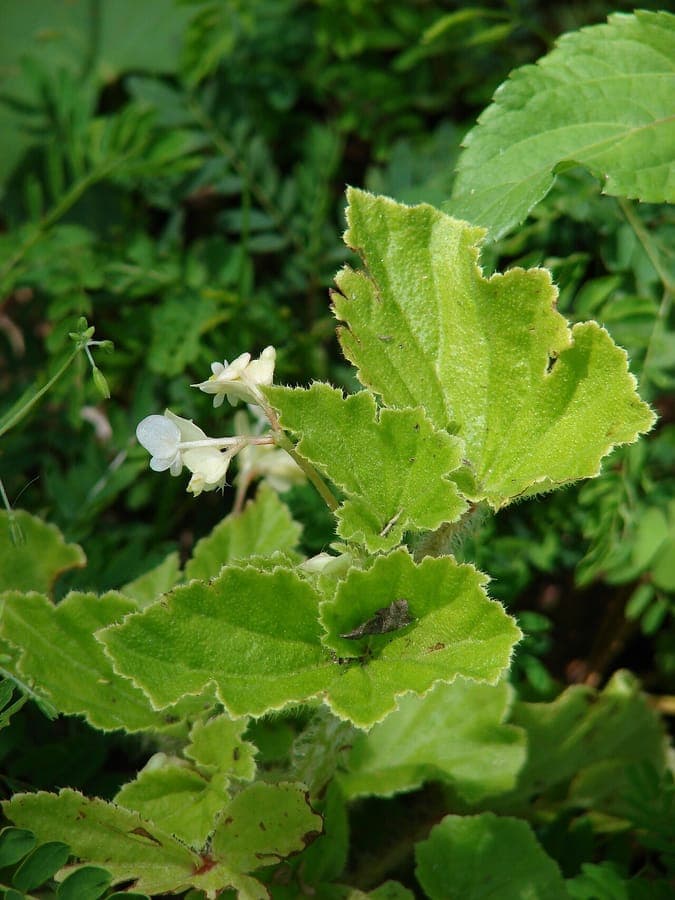
Forest & Kim Starr / CC BY 3.0, via Wikimedia Commons
Begonia hirtella: complete guide
Begonia hirtella
Want to see Begonia hirtella: complete guide in your garden?
1 minute, no credit card
Overview
Begonia hirtella, commonly known as Brazilian begonia, is a stunning tropical plant from the Begoniaceae family. This hairy begonia originates from warm regions of South America, including Jamaica, Peru, Venezuela and Brazil. The plant gets its name from the fine hairy covering on the leaves and stems, giving it a distinctive fuzzy appearance.
This is a popular choice for plant enthusiasts seeking a unique houseplant. Begonia hirtella grows compactly and produces delicate flowers regularly, making it perfect for shelves, windowsills or plant displays.
Appearance and Bloom
Begonia hirtella is a herbaceous plant with a neat, spreading growth habit. The leaves are asymmetrical, heart-shaped and covered with soft, hairy projections that shimmer under artificial light. Leaf color ranges from deep green to reddish-brown depending on light levels and care.
The flowers are small to medium-sized, usually pink to white. They appear during the growing season in regular waves, especially if you provide bright indirect light. While flowers are not large, their delicate form makes them great for close-up photography.
Ideal Location
Begonia hirtella thrives in bright indirect light. An east or north-facing window is perfect. Avoid direct sunlight, especially in summer months, as this can burn the delicate leaves and cause brown spots.
The plant tolerates lower light levels better than many other begonia species, so it works well in living rooms with limited natural light. Artificial grow lights can help if you don't have a well-lit window.
Keep the plant away from heaters, cold drafts and AC units. Stable temperatures between 18-24 degrees Celsius are ideal.
Soil Type
Use light, well-draining potting soil for begonias. A mix of potting soil, orchid bark and perlite works excellently. This ensures water doesn't stay and roots remain healthy.
A homemade mixture of 2 parts universal potting soil, 1 part orchid bark and 1 part perlite gives perfect results. This mimics the natural habitat of begonias in tropical forests where they grow on decaying leaves and bark chips.
Ensure the pot has drainage holes to prevent water stagnation.
Watering
Begonia hirtella likes consistently moist but not waterlogged soil. Water when the top inch of soil feels dry. During the growing season (spring and summer) this might mean watering every 5-7 days.
In winter, when growth slows, you can water less frequently - every 10-14 days is usually sufficient. Use lukewarm water and avoid water on leaves when possible, as this can cause spotting.
The plant is sensitive to dry air, so misting or a humidity tray can help. Begonias generally prefer higher humidity levels, around 50-60%.
Free design
Want to see Begonia hirtella: complete guide in your garden? Make a free design now.
Pruning
Prune Begonia hirtella in spring to encourage a compact, full plant. Remove long, thin stems and any dead or damaged leaves. This stimulates branching and denser growth.
The plant responds well to regular pruning and only becomes fuller and more beautiful. You can use pruned stems for propagation via water propagation.
Also remove spent flowers to encourage further blooming.
Maintenance Calendar
Spring: Growth resumes, increase feeding with biweekly fertilizer. Prune plant as needed. Check for pests.
Summer: Ensure plenty of water and adjust watering schedule. Protect from direct sun. Enjoy full bloom. Collect seeds if interested in propagation.
Fall: Gradually reduce watering as growth slows. Stop feeding in October. Prepare plant for dormancy.
Winter: Minimal watering. Place plant in cooler location if possible (around 15-18 degrees). No feeding needed. Wait for spring.
Winter Hardiness
Begonia hirtella is not winter hardy and must not be exposed to frost. This is purely an indoor plant in temperate climates. The plant dies back at temperatures below 10 degrees Celsius.
Ensure your plant stays indoors when outdoor temperatures drop below 15 degrees. If your plant is accidentally exposed to cold, bring it inside quickly and water carefully - depending on damage extent, the plant may recover.
Companion Plants
Begonia hirtella grows beautifully in mixed displays with other tropical plants. Combine with:
- Peperomia species for interesting leaf shapes
- Small Ficus varieties for structure
- Syngonium for contrasting leaf style
- African violets for complementary blooms
- Episcia for similar growing needs
All these plants enjoy similar light, water and humidity requirements.
Conclusion
Begonia hirtella is a rewarding plant for attentive plant lovers. With its hairy leaves, compact growth and regular blooms, it adds texture and beauty to any interior. Follow this guide and your begonia will flourish for years.
Find Begonia hirtella and other tropical plants at specialty plant retailers. Visit gardenworld.app for design inspiration featuring tropical elements. Explore gardenworld.app for more guides on houseplants.
Want to see Begonia hirtella: complete guide in your garden? Make a free design now.
Upload a photo, pick a style, and get a photorealistic design with plant list in under a minute.
No credit card required


Similar plants
Begonia bowerae: complete guide
Begonia bowerae
The eyelash begonia is a compact, elegant foliage plant with striking embroidered leaves. Perfect for indoor and shade gardens.
Begonia brevirimosa: complete guide
Begonia brevirimosa
Discover the Exotica begonia, a tropical houseplant with spectacular foliage. Learn how to care for this rare plant at home.
Begonia fuchsioides: complete guide
Begonia fuchsioides
Discover the Fuchsia begonia, a stunning houseplant with vibrant red flowers. Learn how to successfully grow and care for this Colombian tropical beauty.