
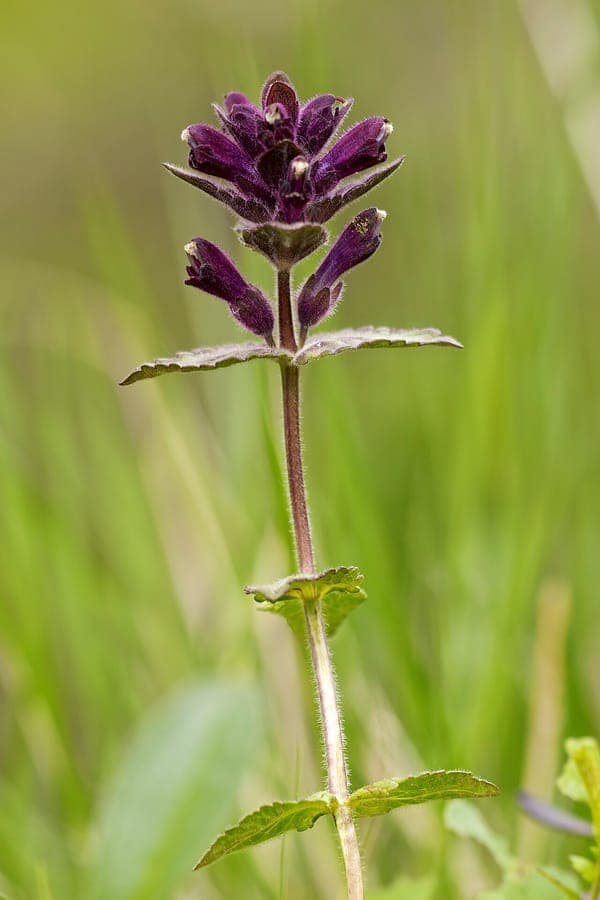
Jörg Hempel / CC BY-SA 3.0 de, via Wikimedia Commons
Velvetbells: complete guide
Bartsia alpina
Want to see Velvetbells: complete guide in your garden?
1 minute, no credit card
Overview
Velvetbells, or Bartsia alpina, is a resilient yet delicate-looking herb native to alpine regions across northern and central Europe. Standing between 15 and 30 cm tall, this forb from the Orobanchaceae family thrives in harsh, exposed environments but adapts well to cultivated gardens when given the right conditions. Though not commonly seen in mainstream gardens, it's a hidden gem for those aiming to create naturalistic, low-maintenance landscapes.
Its natural range includes mountainous areas of Austria, Finland, Iceland, and the Scottish Highlands. It grows at elevations from 1,000 to 2,500 meters, where summers are short and soils are thin and well-drained. In the garden, it performs best in USDA hardiness zones 4 through 8. If you're designing an alpine bed or a gravel garden, Velvetbells brings both structure and subtle color. On gardenworld.app, you can plan a custom layout that integrates this plant with stone features and drought-tolerant companions.
Appearance & bloom cycle
Velvetbells earns its name from its softly hairy, velvety stems and foliage. The leaves are narrow, dark green, and arranged in opposite pairs along upright stems. From July to mid-August, it produces dense spikes of tubular flowers in soft purple with white throats, each about 1.5 cm long. These blooms attract bumblebees and small pollinators, making the plant a quiet but valuable contributor to garden biodiversity.
The flowering period lasts four to six weeks. After blooming, seed capsules form and open in late September, scattering seed for potential self-sowing. While it may spread lightly in ideal conditions, it's not invasive and remains easy to manage. Deadheading spent flowers can reduce self-seeding if desired.
Ideal location
Velvetbells prefers full sun to light shade, scoring an 8 out of 10 on the light scale. Aim for at least six hours of direct sunlight daily. South- or southeast-facing slopes, rock crevices, or raised beds with excellent drainage are perfect. Avoid damp, shaded areas under trees or near dense shrubs where airflow is poor.
In cooler, wetter climates like the UK or Pacific Northwest, growing in a container allows better control over soil moisture. Use a gritty mix and place the pot in a sunny spot. If you're unsure about microclimates in your yard, gardenworld.app lets you map sun exposure and simulate plant performance before planting.
Soil requirements
This plant demands sharply drained, neutral to slightly alkaline soil with a pH between 7.0 and 7.5. Heavy clay or water-retentive soils will lead to root rot. Opt for sandy, gravelly, or rocky substrates. If your soil is too acidic, amend it with horticultural lime - test first with a pH meter.
For container growing, use a mix of 60% loam-based compost, 20% coarse sand, and 20% perlite or crushed grit. Avoid rich, organic-heavy soils; Velvetbells evolved in nutrient-poor alpine conditions and can suffer from overfeeding.
Free design
Want to see Velvetbells: complete guide in your garden? Make a free design now.
Watering
Water moderately during the growing season (May to September). Let the top 2–3 cm of soil dry between waterings. In containers, water once a week during dry spells; in the ground, rainfall is often sufficient. Use rainwater when possible - tap water with high lime content can alter soil pH over time.
Overwatering is the most common cause of failure. In winter, keep the plant almost dry. Never let it sit in soggy soil, especially during freeze-thaw cycles.
Pruning
Pruning is minimal. After flowering, cut back spent stems to about 5 cm above the base to tidy the plant and discourage excessive self-seeding. In late autumn, leave some old growth standing to protect the crown from winter moisture and frost.
Remove any damaged or diseased foliage promptly with clean, sharp shears to prevent fungal spread.
Maintenance calendar
- January: Check for winter damage. Keep soil dry.
- February: Remove winter debris. Avoid disturbing crowns.
- March: Clear old leaves. Begin light feeding if planting new.
- April: Plant new specimens in well-prepared soil.
- May: Start regular watering. Watch for slugs.
- June: Monitor growth. Ensure full sun exposure.
- July: Peak bloom. Attract pollinators.
- August: Continue care. Collect seeds if desired.
- September: Cut back stems. Allow light self-sowing.
- October: Leave some stems for winter protection.
- November: Stop feeding. Protect container plants.
- December: Shield young plants with dry mulch.
Winter hardiness
Velvetbells is hardy to USDA zone 4 (-34°C). In zones 4–8, it survives winter outdoors if drainage is excellent. The main threat is wet soil combined with freezing temperatures, which causes root rot. Mature plants are resilient, but young ones may benefit from a light mulch of dry leaves or straw - avoid wet compost.
In containers, move pots to a sheltered spot or insulate them. Elevate them to prevent waterlogging.
Companion plants
Pair Velvetbells with other alpine specialists: Dwarf creeping thyme, Saxifraga, or low-growing sedums. It also works well with small grasses like Festuca ovina and perennials such as Campanula rotundifolia. Avoid vigorous growers that might outcompete it for light and space.
In mixed borders, use it as a mid-layer accent behind shorter groundcovers and in front of taller sunlovers like Echinacea or Rudbeckia.
Closing
Velvetbells is a rewarding plant for gardeners who appreciate subtlety and resilience. With its soft texture, quiet blooms, and alpine heritage, it adds depth to rock gardens and natural schemes. It asks for little - sun, sharp drainage, and a hands-off approach - and gives back with reliable summer color.
You can find Bartsia alpina at garden centres in spring, especially those specializing in alpines or native plants. Look for healthy 9 cm pots. Plant on a cloudy day, water in well, and let it settle. With time, it will become a quiet staple in your garden's rhythm.
Want to see Velvetbells: complete guide in your garden? Make a free design now.
Upload a photo, pick a style, and get a photorealistic design with plant list in under a minute.
No credit card required


Similar plants
Northwestern Indian paintbrush: complete guide
Castilleja angustifolia
All about Castilleja angustifolia, the northwestern Indian paintbrush from dry western US steppes. Growing, care, and companion plant advice.
Wavyleaf Indian paintbrush: complete guide
Castilleja applegatei
Everything about Castilleja applegatei, the wavyleaf paintbrush from Oregon and California. Host plants, care, location, and garden use covered.
Bushy bird's-beak: complete guide
Cordylanthus ramosus
Complete guide to Cordylanthus ramosus, the hemiparasitic annual of western US steppes: ecology, host plants, cultivation and uses.