
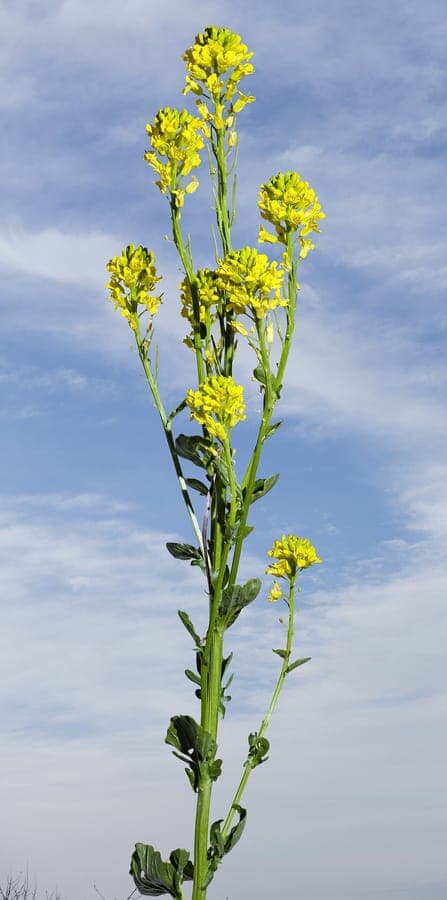
Didier Descouens / CC BY-SA 4.0, via Wikimedia Commons
Winter-cress: complete guide
Barbarea vulgaris
Want to see Winter-cress: complete guide in your garden?
1 minute, no credit card
Overview
Winter-cress, or Barbarea vulgaris, is a resilient biennial or short-lived perennial in the Brassicaceae family. Often spotted along roadsides or in damp field margins, it's more than just a roadside weed - it's a valuable garden plant for those who appreciate edible greens and biodiversity. While it self-seeds readily and can spread, its peppery leaves and early blooms make it a standout in permaculture designs or informal borders.
On gardenworld.app, you can design a planting scheme that integrates Winter-cress into edible hedgerows or pollinator zones, making sure it doesn't dominate more delicate species. The platform also helps track its growth cycle so you know exactly when to harvest or deadhead.
Appearance & bloom cycle
In its first year, Winter-cress forms a tight basal rosette of dark green, deeply lobed leaves with a coarse texture and a spicy, watercress-like flavour. These leaves stay green through winter, making them one of the earliest edible greens in March and April. In the second year, flowering stems shoot up to 60–90 cm tall, topped with dense clusters of bright yellow flowers from April to June.
The flowers are a vital nectar source for early bees, hoverflies, and the rare orange-tip butterfly. After blooming, the plant develops long, flat seed pods that rattle in the wind, dispersing seeds over several metres. Left unchecked, it can become weedy - so monitor its spread if you're gardening in a formal layout.
Ideal location
Winter-cress thrives in full sun to light shade (light level 8/10). It performs best in open, unshaded spots - think vegetable beds, wildflower borders, or along fence lines. It tolerates partial shade but stretches and blooms less. It grows well in USDA zones 5–9, meaning it's hardy across most of the UK, US, and central Europe.
Avoid deeply shaded or constantly waterlogged areas. A sunny patch with morning dew but good afternoon airflow is ideal.
Soil requirements
It prefers neutral to slightly alkaline soils with a pH of 7.0–7.5. Rich, moist loam or clay-loam is perfect, but it adapts to sandy soils if amended with compost. Avoid acidic or nutrient-poor substrates. A spring or autumn top-dressing of well-rotted compost boosts leaf production and root resilience.
Use gardenworld.app to run a soil analysis and get custom recommendations for improving texture and pH - especially helpful if you're converting lawn into a productive border.
Free design
Want to see Winter-cress: complete guide in your garden? Make a free design now.
Watering
Keep the soil consistently moist during active growth, especially in the first year. In dry springs or summers, water weekly at the base to prevent stress. Mature plants tolerate short dry spells but produce tougher, more bitter leaves. Never let the soil dry out completely during flowering.
Avoid overhead watering to reduce the risk of fungal diseases like downy mildew. Mulching with compost in spring helps retain moisture but avoid thick mulch in autumn, which can encourage rot.
Pruning
Not essential, but pruning helps control spread and encourages fresh growth. Cut flowering stems after bloom if you don't want self-seeding. Trim back the basal rosette in early spring to stimulate tender new leaves for harvest.
Use clean, sharp secateurs and remove any damaged or diseased foliage during routine checks. Don't cut into the crown - this can kill the plant.
Maintenance calendar
- January: Check rosettes; remove damaged leaves.
- February: Plant out young plants after frost risk.
- March: Begin harvesting young leaves; watch for aphids.
- April: Flowers appear; monitor for pollinators.
- May: Peak bloom; deadhead if preventing spread.
- June: Seeds ripen; decide on collection or dispersal.
- July: Remove spent stems.
- August: Minimal care; watch for reseeding.
- September: Add compost around base.
- October: Check for new rosettes.
- November: Leave seeds for birds; avoid pruning.
- December: Light cleanup; protect from compacted snow.
Winter hardiness
Winter-cress is fully hardy in USDA zones 5–9. The basal rosette survives temperatures down to -15°C and often stays green all winter. In milder areas, you can harvest leaves even in December. No winter protection needed, though a light mulch in wet soils can prevent crown rot.
Companion plants
Pair Winter-cress with early bloomers like forget-me-nots, garlic mustard, or sweet rocket. In the veg patch, it grows well alongside kale, chard, and spring onions. Its flowers attract beneficial insects, so planting it near tomatoes or strawberries can improve pollination.
Avoid dense shade-providers like hostas or ferns, which suppress its growth.
Closing
Winter-cress is a low-effort, high-reward plant. It gives you edible greens when little else is available, supports early pollinators, and adds structure to the garden. Start with a few plants and observe how they behave in your soil and climate. You'll find them easy to grow - and hard to eliminate once established.
Buy seeds or young plants from local garden centres or online suppliers like those found at OBI, Hornbach, or standard garden centres. With gardenworld.app, you can map its lifecycle, set harvest reminders, and plan companion planting - making it easier than ever to work with nature, not against it.
Want to see Winter-cress: complete guide in your garden? Make a free design now.
Upload a photo, pick a style, and get a photorealistic design with plant list in under a minute.
No credit card required


Similar plants
Brassica cretica: complete guide
Brassica cretica
Brassica cretica, the Cretan cabbage, grows wild on Aegean cliffs. Discover how to grow this drought-tolerant, yellow-flowered Mediterranean perennial.
Corsican cabbage: complete guide
Brassica insularis
Corsican cabbage is a rare Mediterranean rock cabbage with white flowers and blue-green leaves. Location, soil and winter protection.
Prostrate cabbage: complete guide
Brassica procumbens
Prostrate cabbage is a creeping North African cliff plant with yellow flowers. Discover location, soil type and winter protection.