
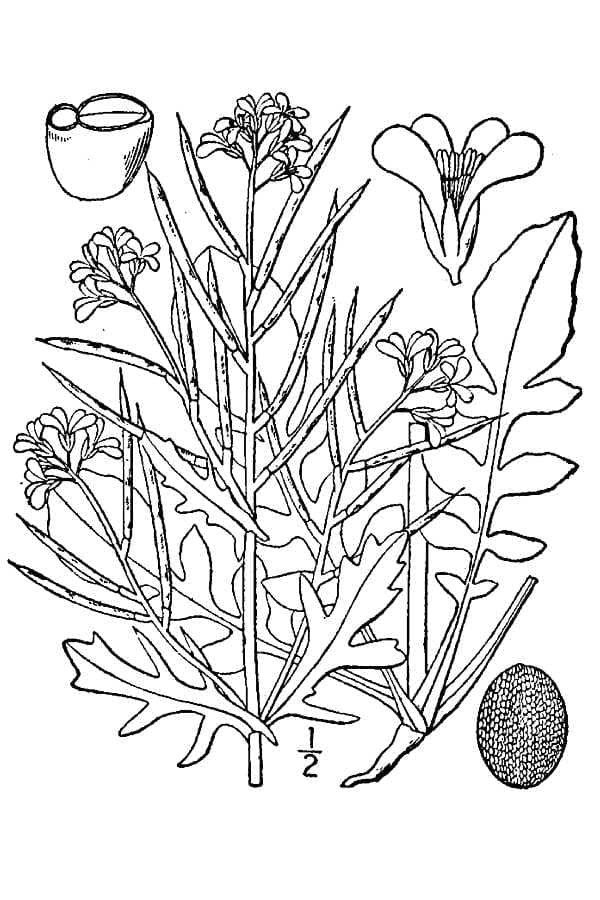
Britton, N.L., and A. Brown. / Public domain, via Wikimedia Commons
American cress: complete guide
Barbarea verna
Want to see American cress: complete guide in your garden?
1 minute, no credit card
Overview
American cress, or Barbarea verna, is a resilient herbaceous plant that punches above its weight in the early garden. Native to southern Europe and the Azores, it's perfectly adapted to temperate climates and thrives in USDA zones 6–9. In the UK and northern Europe, it starts pushing through in February, making it one of the first edible greens available before most crops even germinate.
Unlike many brassicas, which are annuals, American cress can behave as a biennial or short-lived perennial, especially in milder climates. It forms a low rosette of glossy, deeply lobed leaves in its first season, then bolts in spring with flowering stalks reaching 30–50 cm. It's part of the Brassicaceae family, so it shares a peppery kick with garden cress and watercress-but with a more rounded, slightly bitter complexity.
If you're planning a productive early-season garden, American cress is a no-brainer. On gardenworld.app, you can design a layout that maximizes light and spacing for early edibles like this, ensuring you harvest fresh greens when little else is available.
Appearance & bloom cycle
The plant grows in a basal rosette with dark green, fleshy leaves that are deeply divided-almost fern-like. As temperatures rise in late winter, it sends up sturdy, branching flower stalks topped with clusters of small, bright yellow flowers. These bloom from March to May, depending on local frost patterns.
The flowers are a magnet for early pollinators like hoverflies and solitary bees, adding ecological value to its culinary use. After flowering, long seed pods form, drying and splitting to scatter seeds. If you want it to self-seed, leave a few stalks uncut. For continuous leaf harvest, pinch off flower buds as they appear.
Ideal location
American cress thrives in light to partial shade, scoring an 8 on the light scale-meaning it wants bright, indirect light but not harsh afternoon sun. Full sun can dry out the soil too quickly, especially in spring, leading to tough, bitter leaves. A spot under a deciduous shrub, along a north-facing wall, or at the edge of a woodland garden works perfectly.
It's ideal for cottage gardens, kitchen borders, or under fruit trees where it can act as a living mulch. Use gardenworld.app to visualize how American cress fits into your existing garden plan, especially when layering plants for seasonal interest.
Free design
Want to see American cress: complete guide in your garden? Make a free design now.
Soil requirements
This plant loves moist, humus-rich soil with a pH between 5.5 and 6.5. Avoid heavy clay unless amended with compost or leaf mold to improve drainage. Sandy soils should be enriched with organic matter to retain moisture.
Before planting, work in well-rotted compost or manure. A top dressing of mulch-straw or shredded leaves-helps maintain soil moisture and suppress weeds. Avoid lime-heavy soils, as American cress prefers slightly acidic conditions.
Watering
Consistent moisture is key. Letting the soil dry out stresses the plant and triggers early bolting. Water deeply once or twice a week during dry spells, preferably in the morning. Drip irrigation or soaker hoses work well to keep foliage dry and reduce fungal risk.
Rainwater is ideal, as cress dislikes high calcium levels. If using tap water, let it sit overnight to dissipate chlorine.
Pruning
Harvest outer leaves regularly to encourage bushy growth. Cut no more than one-third of the foliage at a time. Once flower stalks appear, snip them off if you want to prolong leaf production. If you're saving seed, allow a few plants to flower and set seed-just be aware it may spread readily in favorable conditions.
Maintenance calendar
- Jan: Check for overwintering rosettes; clear debris.
- Feb: Begin light feeding with compost tea.
- Mar: Start harvesting young leaves; monitor for pests.
- Apr: Peak harvest; keep well-watered.
- May: Remove spent flowers or allow seeding.
- Jun–Aug: Dormant; no care needed unless reseeding.
- Sep: Sow new seeds or divide clumps.
- Oct: Apply light mulch for root protection.
- Nov: Watch for slugs in wet conditions.
- Dec: Protect with fleece in harsh winters.
Winter hardiness
American cress is hardy to USDA zone 6. In colder zones, it may die back but often regrows from rootstock. In milder areas, it stays green all winter. A light mulch of straw or leaves helps insulate roots during freezing temps.
Companion plants
Pair with early leeks, garlic, or kale. It grows well beneath fruit trees or alongside chives and parsley. Avoid planting near beans or peas, which compete for moisture. Mint and lemon balm can work if spaced apart to prevent overcompetition.
Closing
American cress is a quiet achiever in the early garden-edible, hardy, and beneficial to pollinators. With minimal care, it delivers fresh, peppery greens when your garden is otherwise dormant. Start with seeds or small plants from garden centres like those at OBI or Hornbach, and watch how it fills the early gap. Once you've grown it, you'll wonder how you managed without it.
Want to see American cress: complete guide in your garden? Make a free design now.
Upload a photo, pick a style, and get a photorealistic design with plant list in under a minute.
No credit card required


Similar plants
Brassica cretica: complete guide
Brassica cretica
Brassica cretica, the Cretan cabbage, grows wild on Aegean cliffs. Discover how to grow this drought-tolerant, yellow-flowered Mediterranean perennial.
Corsican cabbage: complete guide
Brassica insularis
Corsican cabbage is a rare Mediterranean rock cabbage with white flowers and blue-green leaves. Location, soil and winter protection.
Prostrate cabbage: complete guide
Brassica procumbens
Prostrate cabbage is a creeping North African cliff plant with yellow flowers. Discover location, soil type and winter protection.