
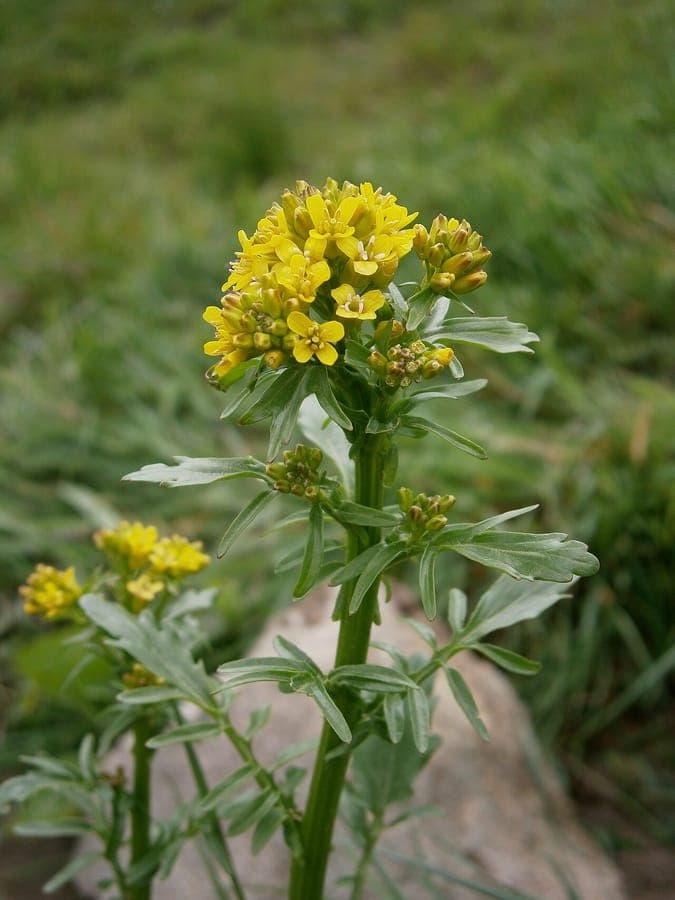
Meneerke bloem / CC BY-SA 3.0, via Wikimedia Commons
Intermediate wintercress: complete guide
Barbarea intermedia
Want to see Intermediate wintercress: complete guide in your garden?
1 minute, no credit card
Overview
Intermediate wintercress, or Barbarea intermedia, is a quiet achiever in the world of garden plants. It's not the kind of plant you'll see splashed across garden centre displays, but for gardeners who appreciate subtle beauty and low-maintenance greenery, it's a gem. Belonging to the Brassicaceae family, it's related to mustards and cresses, but with a more refined, wildflower-like presence. It's native to a wide range of regions - from the Alps to the East Himalaya - which hints at its adaptability. In home gardens, it works well as part of a naturalistic planting scheme. On gardenworld.app you can design a border that highlights its understated charm, pairing it with complementary textures and bloom times.
This plant is typically biennial or short-lived perennial, forming a basal rosette in its first year and flowering in the second. After setting seed, it often dies back, but thanks to reliable self-seeding, it tends to persist in the right conditions. It's not aggressive, just persistent - a quality many seasoned gardeners appreciate.
Appearance & bloom cycle
Intermediate wintercress grows 30–60 cm tall, with upright stems that branch lightly in the upper half. From April to June, it produces clusters of small, bright yellow flowers. Each flower has four petals arranged in a cross shape - a hallmark of the cabbage family. The blooms are small, about 8–10 mm across, but they appear in such numbers that the plant gains a luminous quality in dappled light.
The leaves are dark green, glossy, and pinnately lobed. The lower leaves are deeply divided, resembling those of wild mustard, while the upper stem leaves are smaller and clasping. When crushed, they emit a slightly bitter, peppery scent - a clue to its edibility, though it's not widely cultivated as a food crop. The overall effect is neat but natural, making it ideal for cottage gardens or woodland edges.
Ideal location
Give this plant a spot with a light rating of 8 out of 10 - that means full sun to partial shade. It thrives in areas with morning sun and afternoon shade, especially in warmer climates. In cooler zones like the UK or northern Europe, it can handle full sun as long as the soil stays reliably moist.
Avoid hot, dry south-facing banks unless you're prepared to irrigate regularly. It performs best along hedgerows, in herbaceous borders, or at the edge of a shaded path. If you're mapping your garden's microclimates, gardenworld.app offers tools to identify these transition zones so you can place Intermediate wintercress exactly where it will flourish.
Soil requirements
This plant prefers a neutral to slightly alkaline soil, with a pH between 7.0 and 7.5. It does poorly in acidic conditions, so avoid pine needle mulch or ericaceous compost. A loamy or sandy loam soil works best, provided it retains moisture without becoming waterlogged.
If your soil is heavy clay, amend it with grit and well-rotted compost to improve drainage. Don't over-fertilize - like many wild relatives of garden vegetables, it thrives in modest fertility. Excess nitrogen leads to lush, weak growth and fewer flowers.
Free design
Want to see Intermediate wintercress: complete guide in your garden? Make a free design now.
Watering
Keep the soil consistently moist during the first growing season. Once established, Intermediate wintercress can tolerate short dry spells, but prolonged drought will cause it to bolt prematurely or reduce flowering. Water deeply once a week during dry springs, especially if you're growing it in a border with competing roots.
Avoid overhead watering if possible, as wet foliage can encourage fungal diseases like downy mildew. A drip irrigation system or watering at soil level works best. Rainwater is ideal, as the plant can be sensitive to high levels of chlorine or fluoride in tap water.
Pruning
Pruning isn't strictly necessary, but you can deadhead spent flowers if you want to limit self-seeding. Otherwise, let the seed pods develop - they add visual interest and provide food for small birds. Cut back the flowering stems in late summer after seeds have dispersed, unless you want more plants next year.
The basal rosette can remain through winter in milder areas (USDA zones 7–9). In colder zones, it may die back but often returns from rootstock. No special winter protection is needed.
Maintenance calendar
- Jan: Check for overwintering rosettes
- Feb: Monitor for early growth
- Mar: Remove any winter debris
- Apr: Active growth begins; ensure soil moisture
- May: Peak bloom; watch for slugs
- Jun: Flowering ends; seed pods form
- Jul: Cut back stems if not self-seeding
- Aug: Dormant period; reduce watering
- Sep: Watch for seedlings
- Oct: Leave seed heads for wildlife
- Nov: No action needed
- Dec: Plant in dormancy
Winter hardiness
Intermediate wintercress is hardy in USDA zones 7 to 9. It can survive winter temperatures down to -15°C when protected by snow or mulch. In colder zones, it may behave as a true biennial, regrowing from seed each year. The plant tolerates frost well, but waterlogged soil in winter can cause root rot, so ensure good drainage.
Companion plants
Pair it with plants that enjoy similar conditions: Campanula latifolia, Alchemilla mollis, or Digitalis purpurea. It also works well with grasses like Deschampsia cespitosa or shade-tolerant ferns. Avoid pairing it with highly invasive species like mint or ground elder.
For edible gardens, keep it away from cultivated mustards to prevent cross-pollination. Instead, grow it near herbs like chives or thyme, which won't compete aggressively.
Closing
Intermediate wintercress won't win any beauty contests, but it earns its place through reliability and ecological value. It's a pollinator-friendly plant that asks for little and gives back season after season. You can find it at independent garden centres or order seeds online. With thoughtful placement - perhaps guided by a planting plan from gardenworld.app - it becomes a quiet backbone in a well-balanced garden.
Want to see Intermediate wintercress: complete guide in your garden? Make a free design now.
Upload a photo, pick a style, and get a photorealistic design with plant list in under a minute.
No credit card required


Similar plants
Brassica cretica: complete guide
Brassica cretica
Brassica cretica, the Cretan cabbage, grows wild on Aegean cliffs. Discover how to grow this drought-tolerant, yellow-flowered Mediterranean perennial.
Corsican cabbage: complete guide
Brassica insularis
Corsican cabbage is a rare Mediterranean rock cabbage with white flowers and blue-green leaves. Location, soil and winter protection.
Prostrate cabbage: complete guide
Brassica procumbens
Prostrate cabbage is a creeping North African cliff plant with yellow flowers. Discover location, soil type and winter protection.