
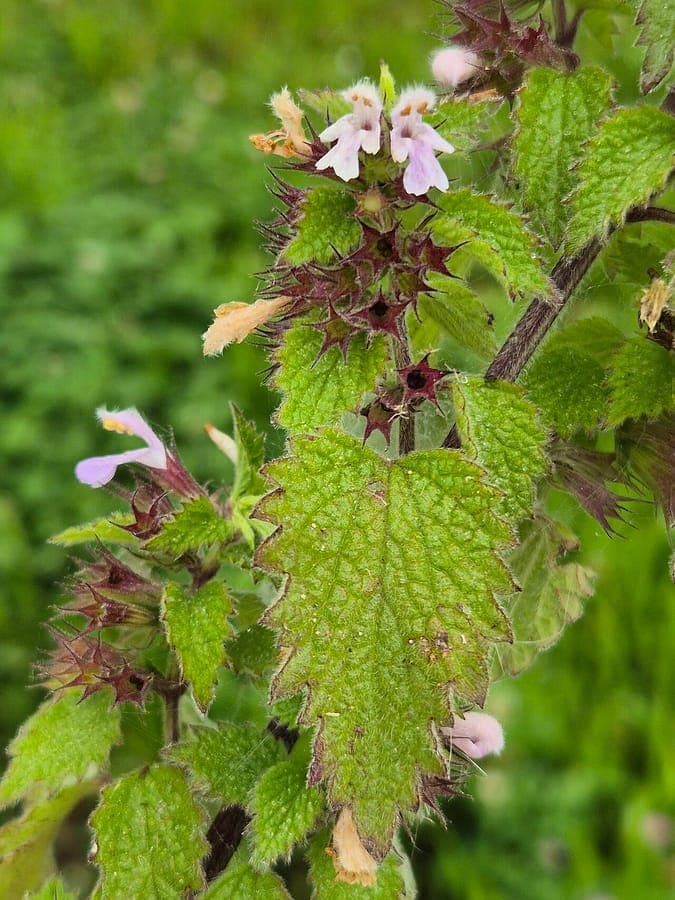
Stefan.lefnaer / CC BY-SA 4.0, via Wikimedia Commons
Black horehound: complete guide
Ballota nigra
Want to see Black horehound: complete guide in your garden?
1 minute, no credit card
Overview
Black horehound (Ballota nigra) is a rugged, herbaceous perennial that thrives in tough garden spots where other plants struggle. Part of the Lamiaceae family, it's native to southern and eastern Europe but adapts well to UK and northern European climates, surviving reliably in USDA zones 5 to 9. Typically growing 50–80 cm tall, it forms upright, branched clumps with a bushy habit that adds structure to borders and wildflower patches.
Not the flashiest plant in the border, but don't underestimate its value. Black horehound tolerates poor soil, drought, and neglect - making it ideal for beginner gardeners or low-input landscapes. On gardenworld.app, you can design a drought-resistant border that highlights tough performers like Ballota nigra, blending ecology with long-term beauty.
Appearance & bloom cycle
This plant comes alive from May through September, peaking in midsummer. Its whorled clusters of purple, tubular flowers appear in dense rings around the upper stems, typical of the mint family. The blooms are small but numerous, forming a soft haze of colour that attracts bees, bumblebees, and late-season butterflies.
The leaves are opposite, heart-shaped at the base, and covered in fine hairs that give them a grey-green, slightly felted texture. When crushed, they release a strong, musky scent - some describe it as musty or camphorous, which explains the 'stinking' part of its common name. Despite the aroma, it's not invasive or aggressive, just distinctive.
Ideal location
Black horehound loves full sun to light shade, scoring a 7 on the light scale. That means at least 5–6 hours of direct sunlight daily. In full sun, the plant stays compact and flowers abundantly. In heavy shade, it stretches, becomes leggy, and may flop over.
It performs best at the back or middle of a sunny border, along dry walls, or tucked into gravel gardens. Avoid wet, shady corners. If you're unsure about sun exposure in your garden, gardenworld.app offers sun-mapping tools to help you place Ballota nigra exactly where it will thrive.
Soil requirements
This plant isn't fussy about soil richness but needs excellent drainage. It prefers neutral to slightly alkaline conditions, with a pH between 7.0 and 7.5. Sandy or loamy soils work well; heavy clay needs amending with grit or horticultural sand to prevent waterlogging.
Black horehound often grows wild on disturbed ground - roadsides, rubble, old walls - so it's perfectly happy in low-fertility soils. No need for compost or fertiliser. Overfeeding leads to floppy growth and fewer flowers.
Free design
Want to see Black horehound: complete guide in your garden? Make a free design now.
Watering
Once established, Black horehound is highly drought-tolerant. Water young plants weekly during their first spring and early summer to help roots settle. After that, rely on rainfall unless you face extended dry spells.
During hot, dry summers, give a deep soak every 10–14 days. Avoid frequent shallow watering - it encourages weak root development. Always let the soil dry out between waterings to prevent root rot.
Pruning
Minimal pruning is needed. After flowering (late August to early September), cut back the top third of the stems to keep the plant tidy and possibly encourage a second, lighter flush of blooms.
In late winter or early spring, trim old stems to 10 cm above ground level. This makes space for fresh growth and keeps the plant looking neat. Leaving some stems over winter provides shelter for beneficial insects - a small act that supports garden biodiversity.
Maintenance calendar
- January: No action needed. Leave old growth for overwintering bugs.
- February: Lightly tidy up if weather is dry.
- March: Cut back last year's stems; apply a thin mulch if desired.
- April: Check for new shoots. Water only if soil is dry.
- May: Plant new specimens or divide clumps. Bloom starts.
- June - August: Peak flowering. No feeding required.
- September: Optional trim to encourage late blooms.
- October: Collect seeds or let them self-sow.
- November - December: Prepare for winter. Keep or cut stems.
Winter hardiness
Ballota nigra is fully hardy in USDA zones 5–9. In the UK (zone 8), it survives winter with no protection. The top growth dies back, but the roots remain alive. In colder zones (5–6), a light mulch of straw or leaf litter can help, though it's rarely necessary.
Avoid covering the crown too thickly - moisture retention can cause rot. This plant thrives on neglect, so minimal winter care is best.
Companion plants
Pair Black horehound with other sun-loving, drought-tolerant perennials. Good matches include lavender (Lavandula spp.), sedums (Sedum spectabile), yarrow (Achillea spp.), and catmint (Nepeta x faassenii). It also blends well with ornamental grasses or in a Mediterranean-style gravel garden.
Avoid moisture-hungry plants like hostas or ferns. Stick to companions with similar cultural needs - low water, full sun, sharp drainage.
Closing
Black horehound won't win a beauty contest, but it's a resilient, ecologically valuable plant that asks for little and gives back steadily. It's perfect for tough spots, low-maintenance schemes, or wildlife-friendly gardens.
You can find Ballota nigra at UK garden centres or online nurseries. When buying, confirm the botanical name - it's often confused with other mints or dead-nettles. With the right spot and a little guidance from gardenworld.app, this understated perennial will return faithfully year after year.
Want to see Black horehound: complete guide in your garden? Make a free design now.
Upload a photo, pick a style, and get a photorealistic design with plant list in under a minute.
No credit card required


Similar plants
Apple mint (Mentha x villosa): complete guide
Mentha x villosa
Meet apple mint (Mentha x villosa): a fruity-scented kitchen herb with woolly leaves, perfect for tea and mojitos.
Salvia peyronii: complete guide
Salvia peyronii
Discover Salvia peyronii, a rare Lebanese mountain sage. Growing tips, hardiness, and companion planting for a Mediterranean gravel garden.
Bigleaf mint (Mentha x rotundifolia): complete guide
Mentha x rotundifolia
Discover bigleaf mint: cultivation, care tips, and garden uses. Learn how to grow this aromatic herb with soft, hairy leaves.