
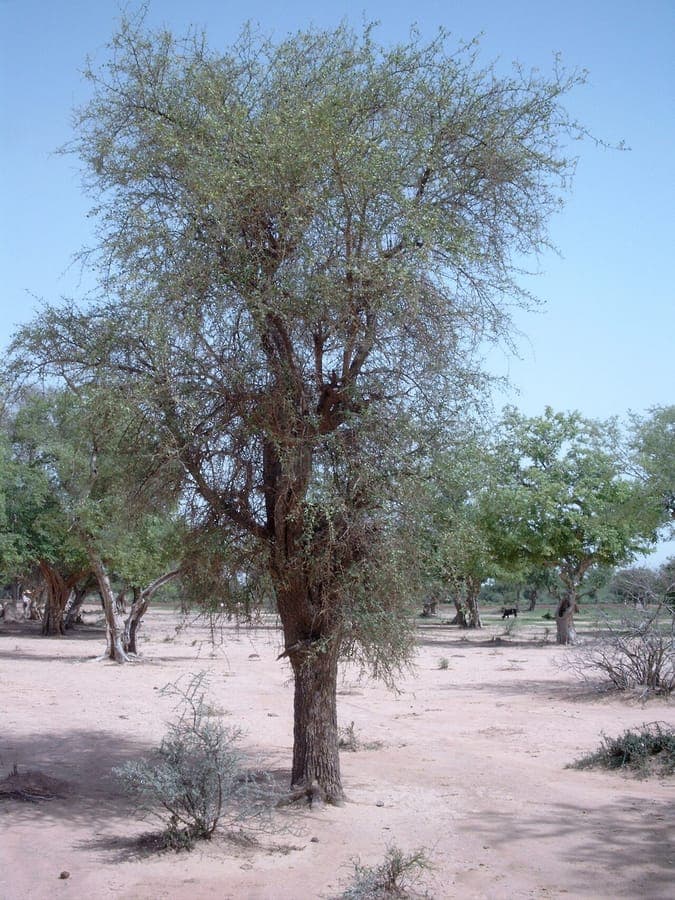
Marco Schmidt / CC BY-SA 2.5, via Wikimedia Commons
Desert Date: Complete Guide
Balanites aegyptiaca
Want to see Desert Date: Complete Guide in your garden?
1 minute, no credit card
Overview
Balanites aegyptiaca, commonly known as the desert date or heglig, is a remarkable shrub or small tree native to arid regions of Africa and the Arabian Peninsula. This plant is legendary among gardeners for its extraordinary drought tolerance and ability to thrive in some of the most unforgiving environments imaginable. For gardeners in dry climates or seeking a unique, conversation-starting specimen, this is a compelling choice.
Appearance and Bloom
The desert date grows as a shrub to small tree, reaching two to four meters in height, though taller specimens occur under exceptional conditions. The trunk develops dark, fissured bark that becomes characterfully gnarled with age. Leaves are small, biternately compound, creating a light, feathery appearance despite the arid environment. During spring (April-May in warm climates), small, yellow, fragrant flowers appear in dense clusters. These highly aromatic blooms attract pollinators from considerable distances. Following successful pollination, brown, tubercled fruits develop; these contain edible kernels historically prized as food sources.
Ideal Location
This plant thrives only in extreme sun exposure. Full sun, eight to ten hours daily, is non-negotiable. Exposure to wind is tolerated and even beneficial. Plant against a south-facing wall or in completely open positions. This specimen literally bathes in solar radiation - more sun invariably results in superior performance.
Soil
Poor, well-draining, sandy or gravelly soil is essential. Balanites aegyptiaca grows in its native habitat on nutrient-poor soils. Avoid rich, heavily amended substrates. Plant in a mixture of lean garden soil amended with at least fifty percent sand or gravel. The plant actually thrives on poor soil - this is a feature, not a limitation.
Free design
Want to see Desert Date: Complete Guide in your garden? Make a free design now.
Watering
Once established and properly rooted, extreme caution regarding water is essential. This plant desires minimal moisture during its growing period and virtually none during dormancy. Water only during exceptional drought conditions. Ensure water never pools around roots or collects in depressions near the base.
Pruning
Pruning is virtually unnecessary. The plant naturally develops an attractive, spreading form. Remove only dead material; allow the specimen to determine its own silhouette.
Maintenance Calendar
Spring (March-May): Plant awakens from dormancy. Water only if drought is severe. Summer (June-August): No watering required except in extreme conditions. Cease all feeding. Autumn (September-October): Plant enters rest; no intervention needed. Winter (November-February): Complete dormancy. No water, no fertilizer whatsoever.
Winter Hardiness
Balanites aegyptiaca is completely frost-tender and dies back at temperatures below zero Celsius. In the Netherlands, outdoor survival is possible only in very favorable south-facing exposures in southern provinces and only with extensive winter protection. In colder regions, grow the specimen in containers and move indoors before winter.
Companion Planting
This plant serves dramatically as a specimen on a broad terrace or courtyard. Combine it with other xerophytic plants such as agave, echeveria, sedum, and cacti. For a desert-garden effect, group these plants in well-draining, elevated beds. The specimen is also spectacular in large, unglazed terra-cotta pots positioned prominently.
Closing Remarks
The desert date appeals to courageous gardeners willing to reimagine conventional horticultural wisdom. It demands minimal care while offering maximum character and conversation value. Source specimens from specialist nurseries. Gardenworld.app assists in designing extreme, arid gardens where Balanites aegyptiaca can flourish magnificently.
Want to see Desert Date: Complete Guide in your garden? Make a free design now.
Upload a photo, pick a style, and get a photorealistic design with plant list in under a minute.
No credit card required


Similar plants
Guaiacum officinale: complete guide for holy wood
Guaiacum officinale
Discover Guaiacum officinale, the rare holy wood with unique medicinal heritage. Learn cultivation tips, historical significance, and botanical characteristics of this precious tropical tree.
Guaiacum sanctum: complete guide
Guaiacum sanctum
Discover how to successfully grow Lignum vitae with this comprehensive guide. From basic care to maintenance planning - all you need for this unique tree.
Zygophyllum fabago: complete guide
Zygophyllum fabago L.
Discover the Syrian bean-caper, a unique xeric plant with delicate white flowers. Learn cultivation, care, and garden design strategies for this drought-loving specimen.