
Len Worthington / CC BY-SA 2.0, via Wikimedia Commons
Pacific azolla: complete guide
Azolla filiculoides
Want to see Pacific azolla: complete guide in your garden?
1 minute, no credit card
Overview
Azolla filiculoides, commonly known as Pacific azolla, is a petite floating fern that packs a punch in garden ponds across temperate climates. Native to regions stretching from Alaska to Argentina, this aquatic herb has adapted well to outdoor ponds in the UK and North America. It's a forb that grows on the water's surface, forming a lush carpet that suppresses algae, shades fish, and adds a dynamic colour shift throughout the seasons.
Pacific azolla multiplies rapidly under ideal conditions, doubling its biomass in just a few days. This makes it incredibly effective at nutrient uptake but also means it requires consistent management. Left unchecked, it can completely cover a pond within weeks, limiting light penetration and oxygen exchange. That said, with regular pruning, it's a low-maintenance ally in creating a balanced pond ecosystem.
On gardenworld.app you can design a pond layout that integrates Pacific azolla with deeper-rooted aquatics like water lilies, ensuring both aesthetics and ecological function.
Appearance & bloom cycle
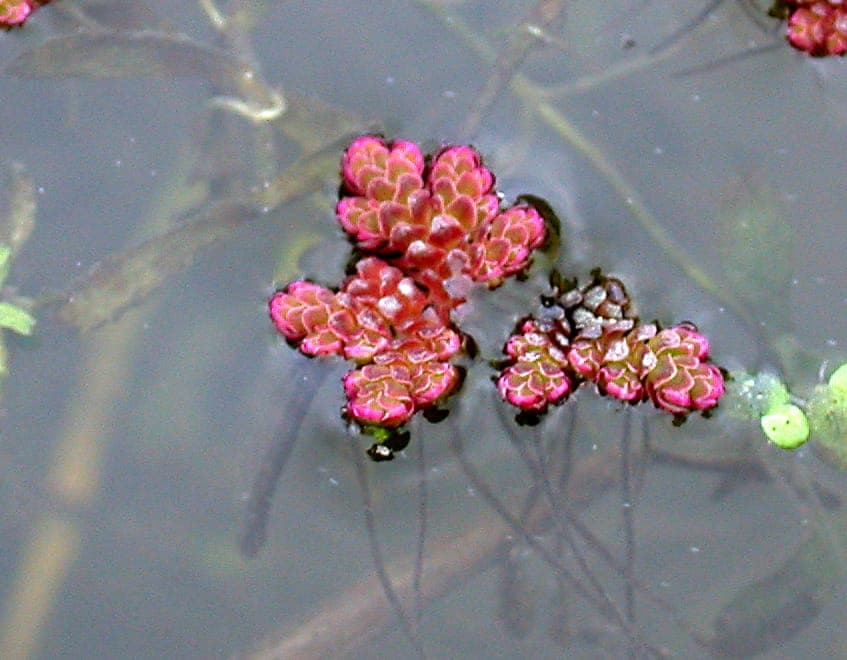
Each individual Pacific azolla plant measures just 1–2 cm, but collectively they form dense, moss-like mats. The fronds are tiny, overlapping, and arranged in two rows, giving them a feathered appearance. In spring and early summer, the foliage is bright green. As temperatures rise and sunlight intensifies from June through September, the fronds develop stunning coppery-red hues – especially in full sun.
True blooms are rare and inconspicuous. What's marketed as flowering is actually the development of sporocarps – reproductive structures tucked between leaf pairs. These aren't showy, so the visual appeal lies entirely in the plant's colour transformation and texture. Peak vibrancy occurs in July and August when water temperatures are consistently above 20°C.
Ideal location
Pacific azolla thrives in still or slow-moving water with at least 8 hours of direct sunlight daily (light level 8/10). It performs best in shallow to mid-depth ponds, no deeper than 60 cm, where the floating mats aren't submerged. Avoid shaded areas under trees or pergolas, as low light leads to weak, pale growth and increased susceptibility to rot.
Position it away from strong water currents or fountains, which can break up the mat. If you're using it in a container water garden, a half-barrel or wide basin works well. Pair it with marginal plants like dwarf rushes or water mint to create layered interest.
Soil requirements
As a free-floating plant, Pacific azolla doesn't root in soil. It absorbs nutrients directly through its fronds from the surrounding water. However, water chemistry matters. Aim for a neutral to slightly alkaline pH between 7.0 and 7.5. Acidic water below pH 6.5 slows growth, while pH above 8.0 may cause nutrient lockout.
Avoid adding fertilisers to the water – this fuels algal competition. If your azolla isn't thriving, test for excessive phosphate or nitrate levels, which often stem from fish waste or decaying plant matter.
Free design
Want to see Pacific azolla: complete guide in your garden? Make a free design now.
Watering
Since the plant lives entirely in water, manual watering isn't needed. However, evaporation in summer can lower water levels quickly, exposing parts of the mat and causing them to dry out. Top up weekly with dechlorinated tap water or stored rainwater. Never use freshly chlorinated water, as it can kill sensitive aquatic life.
During heatwaves, consider adding floating shade covers or moving the pond to partial afternoon shade to prevent overheating, which can trigger die-off.
Pruning
Regular pruning is non-negotiable. Remove about 30% of the mat weekly during peak season to prevent overcrowding. Use a fine mesh net to skim excess growth. The removed biomass can be composted or dried for use as a nitrogen-rich mulch.
Never dump azolla in natural waterways. It's listed as an invasive species in several countries, including parts of Europe and New Zealand. Releasing it into lakes or rivers can disrupt native ecosystems.
Maintenance calendar
- Jan: Check for decayed matter; remove if accessible
- Feb: Dormant phase; minimal intervention
- Mar: Begin clearing winter debris; monitor light levels
- Apr: Watch for first growth; maintain stable water level
- May: Start weekly thinning; control early expansion
- Jun: Rapid growth phase; prune 30% weekly; ensure full sun
- Jul: Peak colour and spread; monitor daily in heat
- Aug: Continue pruning; prevent total surface coverage
- Sep: Slow down pruning; leave some mats for overwintering
- Oct: Harvest excess; prepare pond for dormancy
- Nov: Allow natural die-back; leave remnants in pond
- Dec: Minimal care; check for ice formation
Winter hardiness
Pacific azolla is winter-hardy in USDA zones 7b to 9. In milder regions, it survives under ice or as submerged fragments in pond sediment. In colder zones (6 and below), the plant typically dies back but may reseed if conditions allow. To ensure survival, overwinter a small portion indoors in a bucket of pond water at room temperature.
In areas with harsh winters, treat it as an annual and reintroduce new plants each spring from garden centres.
Companion plants
Pacific azolla pairs well with water lilies, pickerelweed, and dwarf umbrella palm. These plants occupy different niches – deep-rooted, marginal, or submerged – reducing competition. Avoid pairing with aggressive floaters like water hyacinth, which can dominate the surface.
Include oxygenators like hornwort or anacharis to maintain water clarity and balance nutrient loads.
You can visualise ideal plant combinations on gardenworld.app, where pond designs featuring Pacific azolla are customisable for size, light, and hardiness zone.
Closing
Pacific azolla is a dynamic, functional addition to any water garden. It's not just a pretty face – it actively improves water quality, shades pond inhabitants, and cycles nutrients efficiently. With consistent pruning and proper placement, it remains a manageable, rewarding plant. Start small, monitor growth closely, and enjoy the seasonal colour shifts that turn your pond into a living canvas.
Want to see Pacific azolla: complete guide in your garden? Make a free design now.
Upload a photo, pick a style, and get a photorealistic design with plant list in under a minute.
No credit card required


Similar plants
African Payal: complete guide
Salvinia auriculata
Salvinia auriculata, the African Payal or Eared Watermoss, is a floating aquatic fern with distinctive butterfly-like leaves. Fast-growing and excellent for aquariums and ponds, it naturally filters water and provides shelter for aquatic life.
Mosquito fern: complete guide
Azolla caroliniana
Mosquito fern (Azolla caroliniana) is a popular floating aquatic plant. Learn how to grow this fascinating water fern in your pond and aquarium gardens.
Floating Watermoss: complete guide
Salvinia natans
Grow floating Salvinia natans. Fast-growing, drifting, perfect for water gardens.