
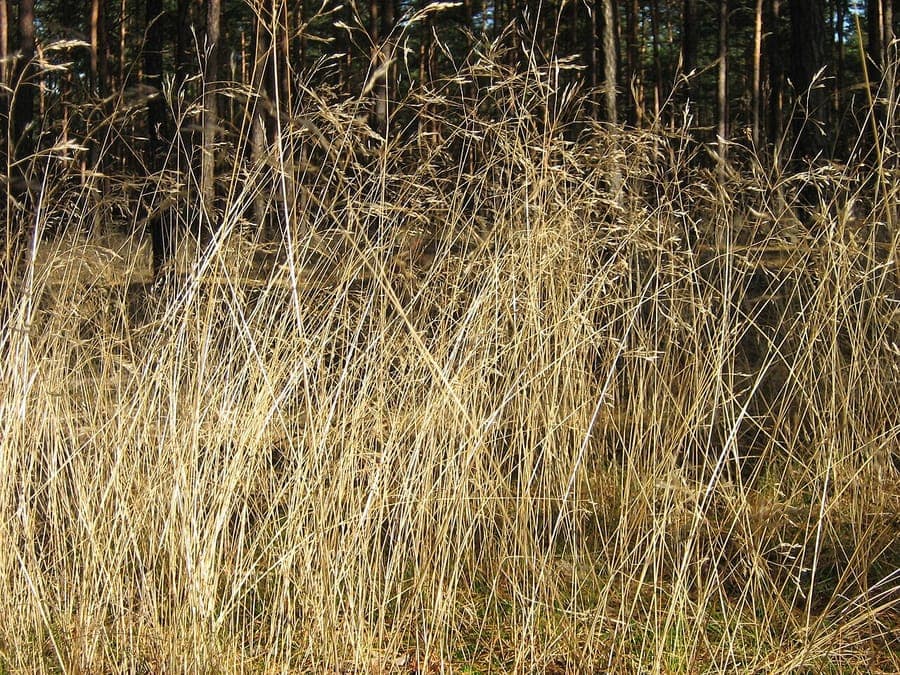
Botaurus / Public domain, via Wikimedia Commons
Wavy hairgrass: complete guide
Avenella flexuosa
Want to see Wavy hairgrass: complete guide in your garden?
1 minute, no credit card
Overview
Wavy hairgrass, or Avenella flexuosa, is a graceful, fine-textured grass that brings movement and softness to gardens with its arching stems and airy flower heads. Native across much of Europe and parts of North America, this cool-season grass thrives in woodland edges, open forests, and moist slopes. It's perfect for gardeners looking to create a natural, low-maintenance planting scheme without sacrificing visual interest.
This grass isn't flashy, but it delivers consistent elegance from late spring through winter. Its subtle beauty works especially well in naturalistic designs, and it's a great choice for areas where other perennials might struggle. On gardenworld.app, you can design a planting layout that integrates Avenella flexuosa into shaded corners or wildflower meadows for year-round structure.
Appearance & bloom cycle
Wavy hairgrass grows 40–80 cm tall with a spread of 30–50 cm. The narrow, glossy green leaves are about 2–4 mm wide and can reach 25–30 cm in length. From May through August, delicate flowering stems rise above the foliage, carrying loose, nodding panicles that start pale and mature to silvery-white with subtle purple tints.
The flowers catch the light beautifully, especially in morning and evening sun, giving the planting a shimmering effect. Even after blooming, the dried stems persist through winter, adding fine texture and movement to the dormant garden. This long seasonal interest makes it a valuable addition to any border.
Ideal location
Choose a spot with partial to full shade-this grass dislikes hot, direct afternoon sun, especially on dry soils. It thrives under open canopies of deciduous trees like beech or birch, where dappled light filters through. Avoid south-facing, exposed areas unless the soil stays consistently moist.
Plant in groups of 5–7 per square metre to create a cohesive, natural-looking ground cover. It works well in woodland gardens, shaded borders, or under shrubs. For optimal placement, use gardenworld.app to map out spacing and light conditions so the grass integrates seamlessly into your existing design.
Soil requirements
Wavy hairgrass prefers humus-rich, well-drained loam or clay-loam with a pH between 4.8 and 6.8. It tolerates short periods of damp soil but won't survive in waterlogged or compacted ground. The soil should retain moisture without becoming soggy.
In sandy soils, amend with compost or leaf mould to improve water retention and fertility. Avoid highly alkaline or calcareous soils-this grass prefers slightly acidic conditions and may yellow or weaken in chalky soils.
Free design
Want to see Wavy hairgrass: complete guide in your garden? Make a free design now.
Watering
During the first growing season, water weekly during dry spells to help roots establish. After that, it's largely drought-tolerant in cooler climates but benefits from occasional watering in extended dry periods. Check the top few centimetres of soil-if it's dry, it's time to water. Use rainwater when possible, as tap water with high lime content can stress the plant over time.
Pruning
Minimal pruning is needed. In late winter or early spring (February to March), cut back the old foliage to about 10 cm above ground level before new growth emerges. This keeps the clump tidy and promotes fresh, healthy shoots. Use sharp shears for a clean cut and remove dead material to reduce disease risk.
Maintenance calendar
- Jan: inspect for winter damage
- Feb: cut back old growth
- Mar: clear debris; prepare soil
- Apr: monitor new shoots; add compost if needed
- May: flowering begins; ensure soil moisture
- Jun-Aug: peak bloom; minimal care required
- Sep: leave standing; seeds support wildlife
- Oct: check for pests or disease
- Nov: allow stems to remain for winter effect
- Dec: enjoy structural presence in the garden
Winter hardiness
Wavy hairgrass is hardy in USDA zones 4–8. In zone 7 (typical of much of the UK and northern US), it remains semi-evergreen, with foliage turning straw-brown in severe cold. No winter protection is needed-the plant self-insulates with its own dead material. Leaving it uncut until spring also provides winter habitat for insects.
Companion plants
Pair with shade-loving perennials like Athyrium ferns, Hosta, Geranium phaeum, or Anemone nemorosa. It also works beautifully with early spring bulbs such as Chionodoxa or Scilla. Avoid aggressive spreaders like mint or goldenrod that could overwhelm its delicate form. For texture contrast, plant alongside Carex species or Hakonechloa macra.
You can find Avenella flexuosa at garden centres across the UK and US, especially in spring. Look for healthy, firm clumps with vibrant green leaves. Avoid any with brown, crispy foliage or signs of root rot.
Closing
Wavy hairgrass is a quiet achiever in the garden-unobtrusive yet essential for texture, movement, and year-round interest. It's perfect for shaded areas where you want a soft, natural look without constant upkeep. With the right conditions, it forms a neat, self-sustaining ground cover that supports local wildlife and blends effortlessly with woodland planting. For design ideas and visual planning, visit gardenworld.app to see how this grass can elevate your garden's aesthetic with minimal effort.
Want to see Wavy hairgrass: complete guide in your garden? Make a free design now.
Upload a photo, pick a style, and get a photorealistic design with plant list in under a minute.
No credit card required


Similar plants
Sporobolus pungens: complete guide
Sporobolus pungens
Sporobolus pungens is a stoloniferous Mediterranean coastal grass with outstanding salt and drought tolerance, perfect for seaside and dry gardens.
Mediterranean aegilops: complete guide
Aegilops biuncialis
Everything about Aegilops biuncialis, a Mediterranean annual grass with ornamental spikes and outstanding drought tolerance for dry gardens.
Silver bluestem: complete guide
Bothriochloa saccharoides
Full guide to Bothriochloa saccharoides (silver bluestem): site, soil, watering, winter hardiness, pruning, and garden companions.