
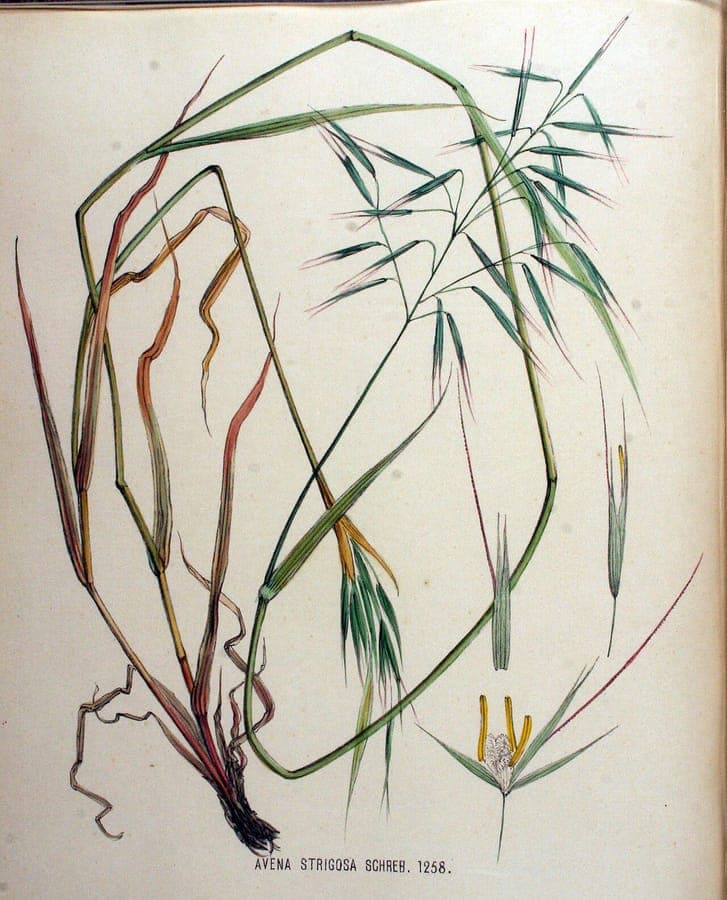
Jan Kops / Public domain, via Wikimedia Commons
Lopsided oat: complete guide
Avena strigosa
Want to see Lopsided oat: complete guide in your garden?
1 minute, no credit card
Overview
Avena strigosa, commonly known as lopsided oat, is a wiry annual grass native to southwestern Europe-particularly Spain, Portugal, and Corsica. It's not a staple in most UK or North American gardens, but it should be. This unassuming grass thrives in poor, dry soils where other plants struggle. Reaching 60–90 cm in height, it brings movement and texture to borders with its drooping, one-sided seed heads. It's perfect for naturalistic planting schemes, gravel gardens, or as part of a wildflower mix. If you're into low-input gardening, lopsided oat is a reliable performer that asks for almost nothing and gives back visual interest from early summer to autumn.
Appearance & bloom cycle
Lopsided oat has slender, upright stems with narrow green leaves that stay upright until maturity. From June to August, the plant produces distinctive, nodding seed heads that lean distinctly to one side-hence the name. The awns are long, bristly, and covered in fine hairs, giving the inflorescence a rough, rustic look. As seeds ripen, the whole plant turns golden brown, providing autumn colour and structure. It typically flowers 10–12 weeks after sowing, depending on soil warmth and sunlight. Once seeds are mature, they may self-sow if left undisturbed, making it a good choice for informal gardens.
Ideal location
Full sun is non-negotiable. This grass needs at least 6–8 hours of direct sunlight daily. It performs best in open, airy spots with little competition. Avoid shady or damp corners. It's ideal for south-facing borders, dry slopes, or gravel gardens. Lopsided oat works well in cottage-style plantings or naturalistic drifts. Combine it with other drought-tolerant annuals like Californian poppies or cosmos. On gardenworld.app, you can design a planting scheme that balances texture and height, ensuring lopsided oat doesn't get lost in the mix.
Soil requirements
Lopsided oat prefers light, well-drained soils-sandy or gravelly types are ideal. It doesn't need rich compost or added nutrients; in fact, overly fertile soil can lead to floppy growth. A pH range of 5.5 to 7.5 is fine. Avoid heavy clay or waterlogged areas, as these promote root rot, especially in wet autumns. If your soil is compact, consider a shallow till or add grit to improve drainage. This grass is perfect for urban gardens with poor subsoil or rooftop planters with free-draining mixes.
Free design
Want to see Lopsided oat: complete guide in your garden? Make a free design now.
Watering
Once established, lopsided oat needs no supplemental watering. During germination and the first few weeks, keep the soil lightly moist to help seedlings establish. After that, it's entirely drought-tolerant. In prolonged dry spells, it may slow growth but rarely dies. Avoid overhead watering once plants are mature-this can encourage fungal issues. Rainwater is best if irrigation is needed. This plant is a smart pick for water-wise gardens, especially in USDA zones 7–10.
Pruning
No pruning needed. As an annual, it completes its lifecycle in one season. You can leave dead stems standing into autumn to provide structure and food for finches and other small birds. Cut back in late autumn or early winter, once seeds are dispersed. If you want to limit self-seeding, remove seed heads before they shatter. On gardenworld.app, use the seasonal planner to track when to clear old growth and prep for new sowings.
Maintenance calendar
- January: No action
- February: Start seeds indoors if desired
- March: Sow indoors or in a greenhouse
- April: Direct sow outdoors after last frost (typically late April in mild zones)
- May: Thin seedlings; remove weeds
- June: Flowers appear; monitor for aphids or mildew
- July: Peak bloom; support if needed in windy spots
- August: Seeds ripen; reduce watering
- September: Allow some seed drop for self-sowing
- October: Cut back dead foliage
- November: Lightly cultivate soil or apply mulch
- December: No action
Winter hardiness
Not winter-hardy-Avena strigosa is a true annual. It dies after setting seed. Self-sown seedlings may appear in spring, especially in mild winters, but they're vulnerable to late frosts. No overwintering care required. In colder zones (below USDA 7), treat as a full annual with fresh sowing each year.
Companion plants
Pair lopsided oat with Echinacea, Rudbeckia, Verbena bonariensis, or Salvia. It blends well with airy perennials that don't overcrowd it. Avoid aggressive spreaders like mint or bamboo. Low-growers like sedum or thyme make good front-border partners. It also works in cut-flower gardens-its seed heads dry beautifully. Look for seed mixes at garden centres like those from Thompson & Morgan or Sarah Raven, often including Avena strigosa in wildflower blends.
Closing
Lopsided oat is a hidden gem for gardeners who value resilience and simplicity. It's not flashy, but it brings rhythm, movement, and seasonal change to the garden with minimal effort. Whether used in a meadow mix or a modern gravel bed, it adapts effortlessly. Its ability to thrive on neglect makes it perfect for beginners or busy gardeners. Try it in drifts for maximum effect, and use gardenworld.app to visualise how it flows with your existing plants across the seasons.
Want to see Lopsided oat: complete guide in your garden? Make a free design now.
Upload a photo, pick a style, and get a photorealistic design with plant list in under a minute.
No credit card required


Similar plants
Sporobolus pungens: complete guide
Sporobolus pungens
Sporobolus pungens is a stoloniferous Mediterranean coastal grass with outstanding salt and drought tolerance, perfect for seaside and dry gardens.
Mediterranean aegilops: complete guide
Aegilops biuncialis
Everything about Aegilops biuncialis, a Mediterranean annual grass with ornamental spikes and outstanding drought tolerance for dry gardens.
Silver bluestem: complete guide
Bothriochloa saccharoides
Full guide to Bothriochloa saccharoides (silver bluestem): site, soil, watering, winter hardiness, pruning, and garden companions.