
Alvesgaspar / CC BY-SA 3.0, via Wikimedia Commons
Spring wild oat: complete guide
Avena fatua
Want to see Spring wild oat: complete guide in your garden?
1 minute, no credit card
Overview
Spring wild oat, or Avena fatua, is an annual grass in the Poaceae family native to parts of Europe, Asia, and North Africa. While often seen as a weed in agricultural fields, it has real potential in ornamental gardens. With its fine-textured foliage and graceful seed heads, it adds movement and soft structure to garden beds. On gardenworld.app, you can design a garden layout that highlights the airy charm of Spring wild oat, especially in naturalistic or low-maintenance settings.
This grass grows quickly, reaching 60 to 120 cm in height, with a clumping, upright growth habit. It thrives in poor soils and full sun, making it ideal for gravel gardens, dry borders, or as a temporary filler in summer schemes. Though not a showy flowering plant, its visual appeal lies in the way it sways in the breeze, creating rhythm in the garden. Because it self-seeds easily, it can come back year after year if conditions allow.
Appearance & bloom cycle
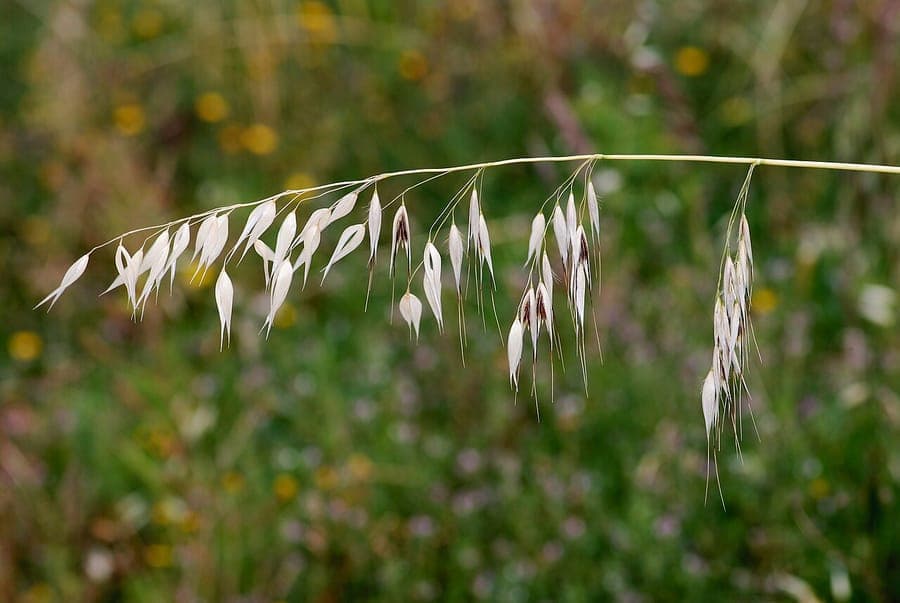
Spring wild oat has slender, light green leaves about 20–40 cm long and less than 0.5 cm wide. The foliage has a slightly rough texture and a silvery sheen when young. From June to August, it produces open panicles - loose, drooping seed heads up to 25 cm long. These start greenish and mature to golden-brown, catching the light beautifully in late summer. The bloom cycle is short and occurs just once per plant, as it's an annual.
Once mature, the seeds disperse easily by wind or animal contact. In gardens, this means it can pop up in unexpected places the following year. While this can be a benefit for naturalizing, it also means you should monitor its spread if you don't want it everywhere. The seeds are mildly toxic to horses if consumed in large quantities, so avoid planting near paddocks.
Ideal location
Spring wild oat needs a light level of 8 out of 10 - full sun is best. It performs well in open, sunny spots with at least 6–8 hours of direct sunlight daily. It's perfect for south-facing borders, gravel gardens, or pathways where soil is thin and dry. Avoid shady areas or spots under dense tree canopies, as it won't thrive there.
Because it grows fast and can self-seed aggressively, don't plant it directly among slow-growing perennials. Use it instead in annual beds or as a seasonal accent. On gardenworld.app, you can simulate sun exposure in your garden to find the perfect spot for this sun-loving grass.
Free design
Want to see Spring wild oat: complete guide in your garden? Make a free design now.
Soil requirements
It prefers a pH between 7.5 and 8.0 - slightly alkaline to neutral. It's not fussy about fertility and actually does better in poor, well-drained soils. Rich, heavily amended beds can cause floppy growth. Sandy or loamy soils work best; avoid heavy clay unless improved with grit.
Good drainage is essential. While drought-tolerant once established, it won't survive in waterlogged soil. If your garden has compacted ground, loosen it lightly before sowing.
Watering
Once germinated, Spring wild oat needs little to no supplemental watering. During dry spells in May and June, light watering can help seedlings establish, but after that, it's self-sufficient. Overwatering increases the risk of fungal diseases and weak stems.
Pruning
No pruning required. As an annual, it dies back naturally after seeding. You can cut or pull the dead stems in late autumn if you want a tidier look, or leave them through winter for texture and bird forage.
Maintenance calendar
- March–April: Sow seeds directly outdoors after frost risk passes.
- May: Germination and early growth. Water lightly during dry periods.
- June–August: Flowering and seed development. No feeding needed.
- September–October: Plants die back. Collect seeds or leave for natural reseeding.
- November–February: Dormant period. No action required.
Winter hardiness
Spring wild oat is not winter-hardy as a mature plant. It's an annual, so it completes its life cycle in one season. However, it can self-seed and return the next year in USDA zones 6–9, especially in milder climates. Young seedlings may survive light frosts if established early.
Companion plants
Pair Spring wild oat with other drought-tolerant species like Echinacea, Salvia, or ornamental grasses such as Pennisetum. It works well as a middle layer in sunny borders, adding height and motion. Avoid pairing with aggressive groundcovers or fast-spreading perennials that may smother young seedlings.
Closing
Spring wild oat is a humble grass with hidden ornamental value. It asks for little and gives back with texture, movement, and seasonal interest. While not sold as a standard bedding plant, you can find seeds online or at independent garden centres. In the UK and US, check local suppliers or specialty seed vendors. Mainstream garden centres may not carry it, but stores like OBI or Jardiland sometimes stock wildflower mixes that include it. And remember: on gardenworld.app, you can create a seasonal planting plan that tracks self-sowing annuals like Spring wild oat, helping you manage their lifecycle without constant guesswork.
Want to see Spring wild oat: complete guide in your garden? Make a free design now.
Upload a photo, pick a style, and get a photorealistic design with plant list in under a minute.
No credit card required


Similar plants
Sporobolus pungens: complete guide
Sporobolus pungens
Sporobolus pungens is a stoloniferous Mediterranean coastal grass with outstanding salt and drought tolerance, perfect for seaside and dry gardens.
Mediterranean aegilops: complete guide
Aegilops biuncialis
Everything about Aegilops biuncialis, a Mediterranean annual grass with ornamental spikes and outstanding drought tolerance for dry gardens.
Silver bluestem: complete guide
Bothriochloa saccharoides
Full guide to Bothriochloa saccharoides (silver bluestem): site, soil, watering, winter hardiness, pruning, and garden companions.