
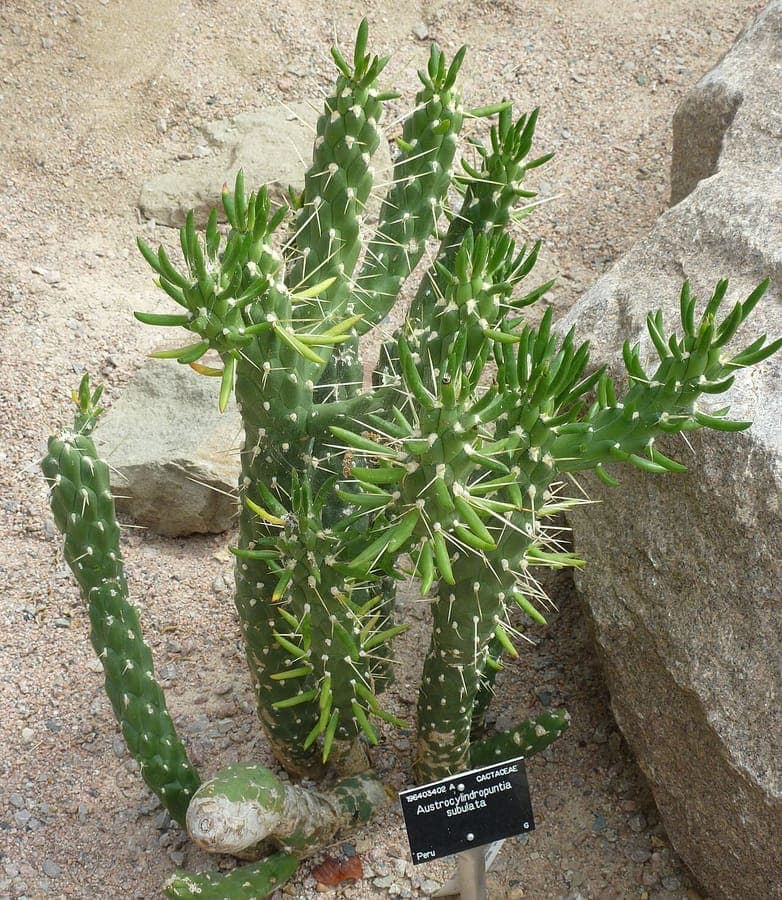
Magnus Manske / CC BY-SA 2.5, via Wikimedia Commons
Austrocylindropuntia subulata: complete guide
Austrocylindropuntia subulata
Want to see Austrocylindropuntia subulata: complete guide in your garden?
1 minute, no credit card
Overview
Austrocylindropuntia subulata, commonly called the long-spine cactus or Eve's needle cactus, is a striking vertical cactus native to the mountainous regions of Colombia, Peru, and Bolivia. This species is celebrated among succulent enthusiasts for its dramatic upright growth habit and impressive long, needle-like spines that create a sculptural effect. The plant belongs to the Cactaceae family and makes an excellent statement piece for collectors.
This cactus can thrive both indoors in containers and outdoors in well-drained gardens in appropriate climates. Growth is slow and steady, with segments extending upward to form elegant stems that persist for many years.
Appearance and bloom
Austrocylindropuntia subulata features distinctive cylindrical segments that grow vertically upward, creating a unique architectural form. The thick, fleshy segments are dark green to bluish-green and covered with areoles from which long, golden-brown spines emerge. Some varieties display delicate silky sheaths on the spines.
Flowers: The plant produces small yellow flowers that appear in spring and summer. Multiple flowers often bloom simultaneously along different portions of the plant. Following pollination, red-purple berries develop and eventually fade to yellow.
Size: Adult specimens typically reach 1.5 to 3 meters in height, though indoor plants grow much more slowly and rarely achieve such dimensions.
Ideal location
Light is critical for healthy growth and proper spine development. Position your plant in the brightest location available:
- South-facing window: Ideal for 6-8 hours of direct sun daily
- Outdoors: Full sun with afternoon shade protection in extremely hot climates
- Minimum: At least 4 hours of direct sunlight, or very bright indirect light
Frost sensitivity: While somewhat cold-tolerant compared to tropical cacti, this species struggles with temperatures below -2 degrees Celsius. In cold regions, provide winter protection or move plants indoors.
Soil
Success depends on exceptional drainage. Standard potting soil retains too much moisture and promotes root rot. Use commercial cactus mix or create your own:
- Base: 60% coarse sand or pumice
- Amendment: 30% potting soil or coconut coir
- Drainage: 10% perlite
- Add broken terracotta pieces for enhanced drainage
Ensure pots have multiple drainage holes. Terracotta containers are superior to plastic because they allow moisture evaporation. Never use regular garden soil.
Free design
Want to see Austrocylindropuntia subulata: complete guide in your garden? Make a free design now.
Watering
This is where most growers struggle. Austrocylindropuntia subulata stores water in its tissues and succumbs far more readily to overwatering than underwatering:
Growing season (spring through fall):
- Water only when soil is dry 3-4 cm deep
- Approximately every 2-3 weeks depending on temperature and humidity
- Water thoroughly until it drains from holes
- Ensure no water pools on the soil surface
Dormant season (winter):
- Water very sparingly, perhaps just once monthly
- Use distilled or rainwater to prevent mineral buildup
- Keep the plant slightly moist but never wet
Pruning
Pruning is rarely necessary but can be useful:
- Remove damaged or diseased segments at the junction point using a sterile knife
- Plants can be shaped, but growth is slow so major pruning yields minimal visible results
- Allow cut surfaces to dry for several days
- Dust cuts with sulfur-based fungicide to prevent infection
- Expect slow recovery
Maintenance calendar
March: Begin increasing water gradually as temperatures warm. Inspect for pests. Reduce feeding from previous season.
April-May: Increase water as growth resumes. Feed monthly with diluted cactus fertilizer. Observe flowering.
June-August: Peak growing season. Water regularly as soil dries. Ensure abundant sunlight. Plant may produce multiple flower flushes.
September-October: Gradually reduce watering frequency as fall approaches. Discontinue feeding after September.
November-February: Minimal water. Keep in cool location (ideally 10-15 degrees Celsius) for dormancy. No feeding during winter.
Winter hardiness
This species demonstrates moderate cold tolerance compared to tropical cacti:
- USDA hardiness zones: 9b-11 (minimum winter temperatures -4 to -1 degrees Celsius)
- Best cultivated indoors in average climates
- Winter protection: In zones 9-10, cover with frost cloth or move indoors when temperatures approach freezing
- Cannot tolerate frost or snow
Companion plants
Pair Austrocylindropuntia subulata with other succulents sharing similar cultural requirements:
- Other Opuntia species and cacti (Echinocereus, Agave species)
- Echeveria and Crassula
- Senecio species (String of Pearls)
- Aloe vera and Haworthia
Avoid combining in the same container with moisture-loving species.
Final thoughts
Austrocylindropuntia subulata appeals to serious cactus collectors and those seeking dramatic living sculpture. With proper drainage, abundant light, and restrained watering, this species provides years of steady growth and architectural interest. Whether you're in Europe or North America, successful cultivation requires attention to its specific needs. Source healthy specimens from reputable growers and enjoy the rewarding process of nurturing this South American treasure into a focal point for any indoor or outdoor space.
Want to see Austrocylindropuntia subulata: complete guide in your garden? Make a free design now.
Upload a photo, pick a style, and get a photorealistic design with plant list in under a minute.
No credit card required


Similar plants
Plains prickly pear: complete guide
Opuntia polyacantha
All about plains prickly pear cactus: hardiness, soil, placement and care. One of the most cold-tolerant cacti for temperate gardens.
Saguaro: complete guide
Carnegiea gigantea
Everything about growing saguaro cactus: container care, watering, overwintering, and companion plants for this iconic desert giant.
Cylindropuntia imbricata: complete guide
Cylindropuntia imbricata
The Tree Cholla offers distinctive segmented stems and vibrant red flowers. A unique ornamental succulent perfect for sunny, dry gardens and large containers.