
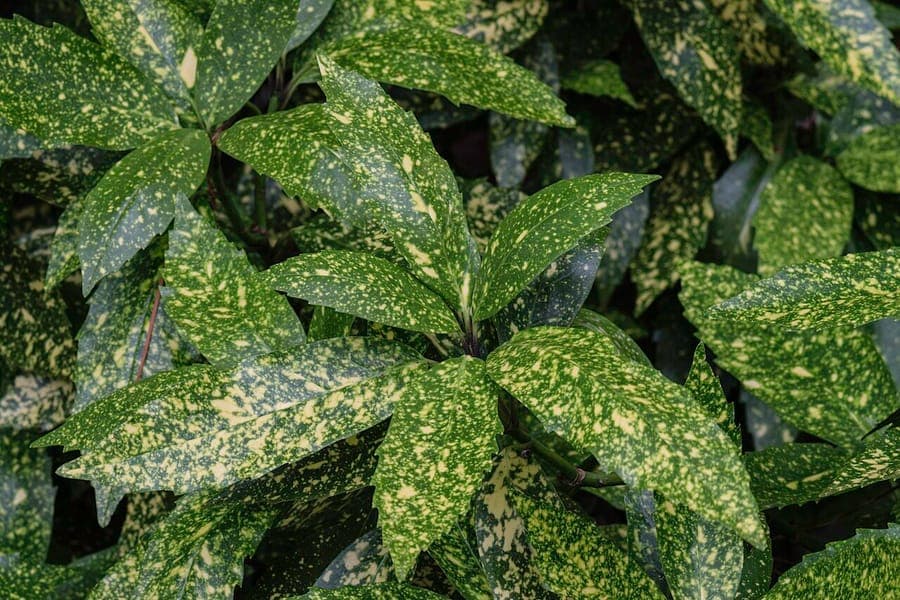
PumpkinSky / CC BY-SA 4.0, via Wikimedia Commons
Spotted-laurel: complete guide
Aucuba japonica
Want to see Spotted-laurel: complete guide in your garden?
1 minute, no credit card
Overview
Aucuba japonica, commonly known as spotted-laurel, is a tough evergreen shrub that thrives where many other plants struggle. Native to Japan, Korea, and parts of China and Taiwan, it's been a garden staple in temperate regions for over a century. Reaching 5–10 ft (1.5–3 m) in height and 5–6 ft (1.5–2 m) in spread, it's perfect for structure, hedges, or as a solitary specimen in difficult spots.
This shrub grows slowly, so you won't be constantly pruning it, but it rewards patience with year-round presence. It's particularly valuable in urban gardens due to its tolerance for pollution, dry soil, and root competition from trees. On gardenworld.app, you can design a planting scheme that integrates Aucuba with other shade-loving species, ensuring balanced spacing and visual harmony.
Appearance & bloom cycle
The most striking feature of Aucuba japonica is its glossy, leathery leaves. They're 4–8 in (10–20 cm) long, arranged oppositely on the stems, and deep green with random yellow or white speckles - especially in the popular 'Variegata' cultivar. These variegated leaves brighten up dark corners and provide winter interest.
Flowering occurs in April and May. The flowers are small, purplish-brown, and inconspicuous, but they serve an important purpose. Aucuba is dioecious, meaning male and female flowers grow on separate plants. For berries to form, you need both. Female plants, when pollinated by a nearby male, produce clusters of bright red berries from autumn through winter. These berries can persist into early spring and are a food source for birds.
When buying, check whether the plant is female and whether a male pollinator is nearby. Many garden centres sell female plants grown near males, ensuring fruit set. If you're planting in isolation, consider adding a male like 'Gold Dust' or 'Seiboldii'.
Ideal location
Spotted-laurel excels in shade. It handles full shade, partial shade, and even dappled sunlight under trees. It's ideal for north-facing walls, under large trees, or in narrow side yards with little direct light.
Avoid hot, south-facing exposures - especially in regions with intense summer sun. In such spots, leaves can scorch and turn brown at the edges. A location with morning sun and afternoon shade is optimal. Urban gardeners love it for its resilience to polluted air and compacted soil.
Use gardenworld.app to assess light patterns in your garden. The app helps you map shaded zones and suggests where to place Aucuba for maximum impact without overexposure.
Soil requirements
Aucuba isn't fussy about soil pH and grows well in acidic to slightly alkaline conditions (pH 5.5–7.5). The key is good drainage. It hates waterlogged roots, which can lead to root rot.
It prefers moist, humus-rich soil but adapts to sandy or clay soils if amended with compost. In heavy clay, plant on a slight mound or mix in organic matter to improve aeration. Once established, it tolerates dry spells better than most evergreens.
Free design
Want to see Spotted-laurel: complete guide in your garden? Make a free design now.
Watering
Young plants need consistent watering during the first two growing seasons. Provide deep watering once a week during dry periods, especially in summer. After establishment, Aucuba is fairly drought-tolerant.
In prolonged droughts (like July and August in the UK), water every 10–14 days. Use rainwater when possible - tap water high in lime can cause chlorosis, where leaves turn yellow between veins. Mulching with leaf mould or compost helps retain moisture and protects roots.
Pruning
Pruning isn't usually necessary, but you can shape Aucuba in late spring or early summer (May–June). Avoid pruning in autumn, as new growth may not harden before winter and could be damaged by frost.
It responds well to hard pruning - even into old wood - so you can rejuvenate overgrown specimens. Use sharp, clean secateurs and cut just above a leaf node. For hedges, trim lightly to maintain shape.
Maintenance calendar
- Jan: Check for frost damage; remove broken branches
- Feb: No action needed
- Mar: Prepare soil for new plantings
- Apr: Monitor for aphids; flowering begins
- May: Light pruning if desired; water young plants
- Jun: Watch for dry spells; inspect for pests
- Jul: Water deeply during drought
- Aug: Check for scale insects or mildew
- Sep: No major care
- Oct: Berries appear; leaves may turn bronze in cold
- Nov: Leave fallen leaves as natural mulch
- Dec: Protect young plants with fleece in harsh winters
Winter hardiness
Aucuba japonica is hardy in USDA zones 7–9 (-12°C to -1°C). In colder areas, it may suffer leaf burn or defoliation during severe cold snaps, especially in exposed sites.
Young plants are more vulnerable - mulch around the base and consider wrapping with horticultural fleece in zone 7. Mature plants usually recover even after significant damage. In windy locations, plant near a wall or fence for shelter.
Companion plants
Pair Aucuba with other shade-tolerant plants like Helleborus, Bergenia, Lamium, ferns (e.g., Dryopteris), or taller evergreens like Mahonia. It also works well beneath deciduous trees where it fills the understory.
Try combining it with red-twigged dogwood (Cornus alba) for winter colour contrast, or with ivy for layered ground cover. On gardenworld.app, you can simulate these combinations and preview how they'll look across seasons.
Closing
Spotted-laurel is a dependable, low-maintenance shrub that brings life to shady, challenging areas. Its glossy foliage, winter berries, and resilience make it a smart choice for city gardens, woodland edges, or foundation planting.
Buy from reputable garden centres - look for healthy, well-branched plants. Cultivars like 'Variegata', 'Crotonifolia', and 'Mr. Goldstrike' offer different variegation patterns. And remember: no male, no berries. Plan accordingly, and your Aucuba will thrive for decades.
Want to see Spotted-laurel: complete guide in your garden? Make a free design now.
Upload a photo, pick a style, and get a photorealistic design with plant list in under a minute.
No credit card required


Similar plants
Acer pycnanthum: complete guide
Acer pycnanthum
Acer pycnanthum, the Japanese swamp maple, is a fast-growing tree with early red flowers and brilliant autumn color, ideal for damp garden settings.
Freeman maple: complete guide
Acer × freemanii
Everything about the Freeman maple (Acer x freemanii): a fast-growing shade tree with spectacular autumn colour for large gardens.
Silver vine: complete guide
Actinidia polygama
Discover silver vine (Actinidia polygama): a hardy climbing plant with silvery foliage, loved by gardeners and cats alike.