
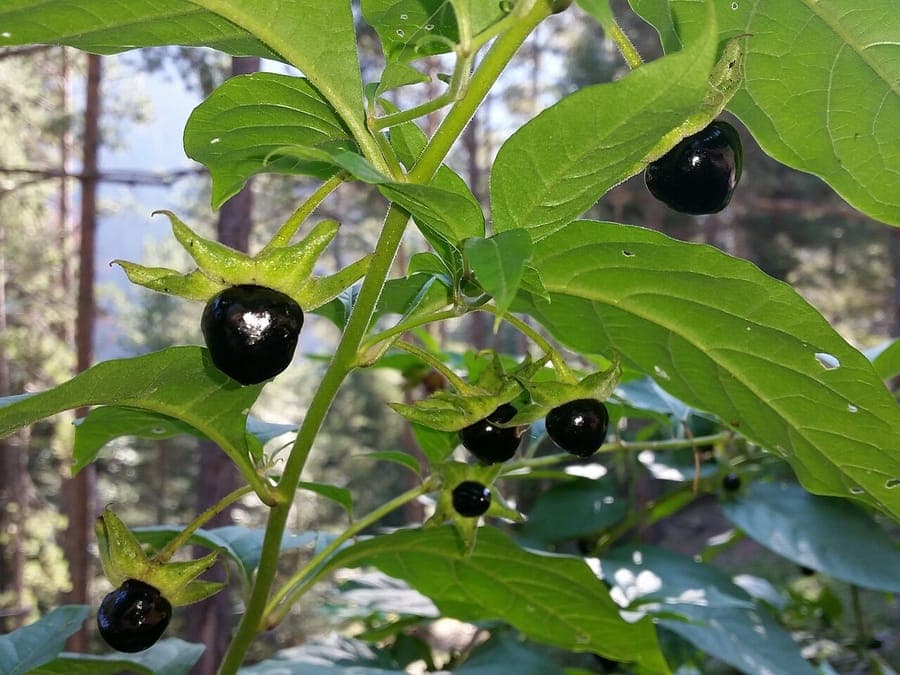
Joan Simon from Barcelona, España / CC BY-SA 2.0, via Wikimedia Commons
Belladonna: complete guide
Atropa bella-donna
Want to see Belladonna: complete guide in your garden?
1 minute, no credit card
Overview
Belladonna, scientifically Atropa bella-donna, is a fascinating and notorious plant from the nightshade family (Solanaceae). Native to Western and Central Europe, the Mediterranean region through to Northern Iran, this plant carries a long and dark history in medicine and witchcraft.
THIS IS AN EXTREMELY TOXIC PLANT. All parts are poisonous, and even skin contact can cause problems. This guide is only for experienced gardeners who fully understand how dangerous this plant is and can ensure safe handling and storage. If you have children or pets who eat everything, DO NOT PLANT.
Appearance and bloom
Belladonna is a robust plant reaching 60-150 cm tall. The stems are thick and dark, the leaves large (up to 20 cm), oval and serrated at the edges. The foliage is dark green with a soft velvety texture.
Flowers appear May through September, violet-purple sometimes with greenish undertones. They grow solitary in leaf axils, roughly 2-3 cm long. The flowers are tubular with five lobes. Later, dark or deep purple berries form (roughly 1-1.5 cm across), which are extremely toxic.
Ideal location
Belladonna prefers partial shade to full sun, though it performs better with some protection from afternoon sun in hot climates. It tolerates strong wind well. Plant in a safe, enclosed location away from pathways and where children cannot access.
It is essential this plant is grown in a secure environment, ideally in a fenced garden or better still, in large pots in a controlled space.
Soil
Belladonna grows in virtually any soil type but thrives best in well-draining soil with pH 6.5-8.0. The plant tolerates poor soil but grows more vigorously in nutrient-rich conditions. If you grow it in containers (recommended), use good-draining potting compost mixed with some garden soil.
Free design
Want to see Belladonna: complete guide in your garden? Make a free design now.
Watering
Once established, Belladonna tolerates dry periods. Water regularly during the growing season (April-October) so the soil feels moist but not waterlogged. In dry periods, extra water may be needed.
In winter, rainfall usually reduces water needs significantly. Let the soil dry out between waterings during dormancy. For container plants, check water regularly as pots dry faster.
Pruning
Pruning is not needed for health, but you can cut back excessive growth to maintain shape. Dead foliage must be removed. Always wear GLOVES when handling this plant.
At season's end, you can cut the plant back to roughly 30 cm tall. All pruning waste must be disposed of carefully and never placed in compost heaps.
Maintenance calendar
March: Check for winter damage, light balanced feed. April-May: Growth begins, regular watering. June-September: Flowering and fruiting, keep well-nourished. October-February: Growth slows, minimal water, no feeding.
Winter hardiness
Belladonna is reasonably hardy in USDA zones 5-9 (minimum -25 to -5 degrees Celsius). In very cold zones (4 and colder), the plant may die. In warm zones (9-10), it can grow year-round.
In borders, mulch the plant in winter with 10-15 cm for extra protection. In containers, move pots indoors in winter in colder areas.
Companion plants
Belladonna is a solitary plant. Do not plant nearby other plants to avoid damage and accidents. If absolutely necessary, choose other robust, non-edible species that cannot easily be confused, such as large ferns or non-edible Solanum species.
Avoid all combinations with vegetables, berry bushes or children's gardens.
Closing
Belladonna is a fascinating plant with a dark history, but NOT suitable for average gardeners, especially not for homes with children or pets. If you wish to grow this plant, all safety measures are essential: wear gloves, keep laundry completely separate, and dispose of toxic parts carefully.
If you have this plant in your garden, clearly inform visitors of the danger. Highly recommended is to grow this plant in controlled pots in a secure space, not in open ground. For safer but equally interesting toxic alternatives, visit gardenworld.app.
Want to see Belladonna: complete guide in your garden? Make a free design now.
Upload a photo, pick a style, and get a photorealistic design with plant list in under a minute.
No credit card required


Similar plants
Solanum dolichosepalum: complete guide
Solanum dolichosepalum
Discover Solanum dolichosepalum, an Andean nightshade with striking long sepals. Growing tips, hardiness, and companion planting for your patio.
Solanum ripense: complete guide
Solanum ripense
Discover Solanum ripense, a moisture-loving Andean nightshade for pond edges and conservatories. Growing tips, hardiness, and companions.
Solanum tomentosum: complete guide
Solanum tomentosum
Discover Solanum tomentosum, a thorny South African nightshade with felted leaves. Growing tips, hardiness, and companion planting ideas.