
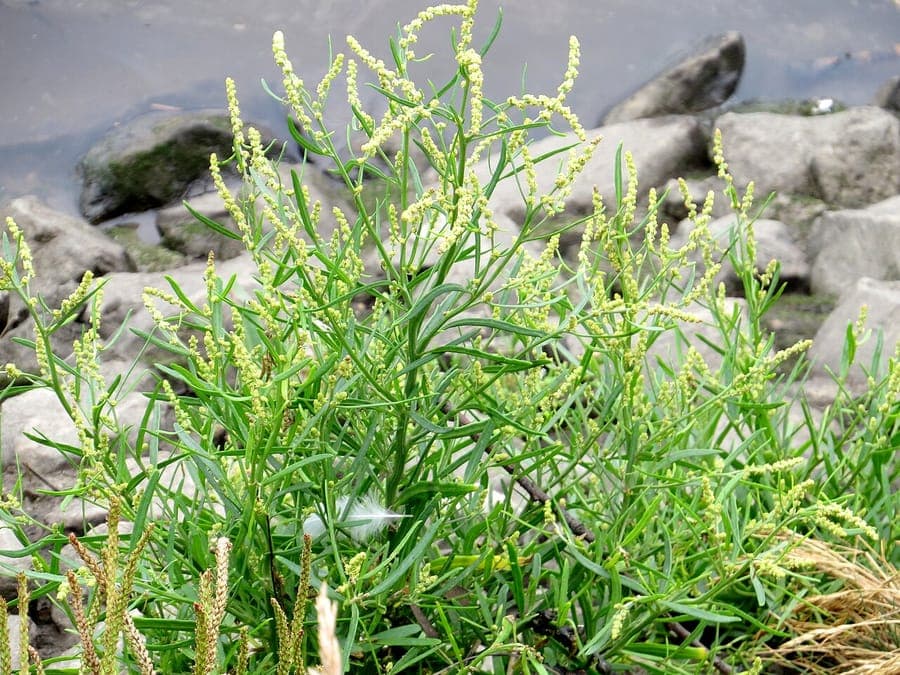
MPF / CC BY-SA 4.0, via Wikimedia Commons
Narrow-leaf atriplex: complete guide
Atriplex littoralis
Want to see Narrow-leaf atriplex: complete guide in your garden?
1 minute, no credit card
Overview
Atriplex littoralis, commonly known as narrow-leaf atriplex, is a rugged, salt-tolerant plant that thrives in coastal conditions and poor, sandy soils. Native to regions across Northern and Central Europe, including Denmark, the Baltic States, and parts of Russia, this annual or short-lived perennial is often found growing wild on dunes, shingle banks, and roadside verges where salt is used in winter. While not a traditional garden favourite, it's gaining attention among gardeners seeking resilient, low-input plants for tough sites.
Narrow-leaf atriplex brings texture and subtle colour with its silvery-grey foliage and upright growth habit. It's not flashy, but it adds structure and year-round interest, especially in coastal, gravel, or xeriscaped gardens. If you're planning a seaside plot or a drought-prone border, this plant deserves a spot. On gardenworld.app, you can design a layout that integrates narrow-leaf atriplex with other salt- and drought-tolerant species for a cohesive, natural look.
Appearance & bloom cycle
This plant typically reaches 40 to 80 cm in height with a spread of 30 to 50 cm. Stems are erect, branching, and covered in narrow, lance-shaped leaves 3–6 cm long. The foliage is a soft silvery-grey, often with a mealy coating that reduces water loss and protects against intense sunlight. As the plant matures, lower leaves may drop, leaving a more open, architectural form.
From July to September, narrow-leaf atriplex produces small, green, wind-pollinated flowers in dense spikes at the tips of stems. The blooms are inconspicuous but add texture and movement. After flowering, tiny seed-bearing fruits persist into autumn, providing visual interest long after the bloom season ends. The plant often self-seeds lightly, coming back in similar spots the following year.
Ideal location
Full sun is essential - aim for 9 to 10 hours daily. This plant needs maximum light to maintain compact growth and vibrant leaf colour. Place it in open, exposed areas such as coastal gardens, dry riverbeds, or gravel beds. Its salt tolerance makes it perfect for seaside properties or urban gardens where de-icing salt runs off pavement.
It also works well in modern, low-water landscapes. Consider using it in raised beds with good drainage or as part of a structural planting scheme. For inspiration on how to place narrow-leaf atriplex in your garden, check gardenworld.app, where you can explore realistic designs tailored to your space and soil type.
Free design
Want to see Narrow-leaf atriplex: complete guide in your garden? Make a free design now.
Soil requirements
Narrow-leaf atriplex prefers light, sandy, well-drained soils with a pH between 7.0 and 7.5. It tolerates alkaline and saline conditions exceptionally well. Avoid heavy clay or water-retentive soils - these lead to root rot. If your garden has dense soil, amend it with coarse sand or gravel to improve drainage.
Interestingly, this plant performs better in poor soils. Rich, fertile ground encourages leggy growth and weak stems. It's ideal for rehabilitating degraded or compacted sites where few other plants survive.
Watering
Once established, narrow-leaf atriplex is highly drought-tolerant. Water only during prolonged dry spells in the first few weeks after planting. Provide about 1 litre per plant once a week for the first month, then rely on rainfall. Overwatering is a common mistake and can cause fungal issues or collapse.
Pruning
No regular pruning is required. You can tidy up dead stems in late autumn or early spring if desired, but leaving them through winter adds texture and shelter for overwintering insects. As a self-seeding annual or biennial, it often reappears without intervention.
Maintenance calendar
- Jan: Dormant; no action needed
- Feb: Remove old plant debris if necessary
- Mar: Prepare seedbeds or start seeds indoors
- Apr: Sow seeds directly after frost risk passes
- May: Monitor young plants; water only if extremely dry
- Jun: Rapid growth phase; ensure good airflow
- Jul: Flowers begin; no extra care needed
- Aug: Peak bloom; watch for overcrowding
- Sep: Seeds mature; allow some to drop for next season
- Oct: Collect seeds or let them self-sow
- Nov: Cut back or remove dead foliage
- Dec: Dormant; prepare soil for spring
Winter hardiness
Hardy in USDA zones 6 to 9. In zone 8, common across the UK and coastal areas, it often behaves as a biennial or self-seeding annual. No winter protection is needed. The plant may die back but frequently returns from seed.
Companion plants
Pair narrow-leaf atriplex with other tough, sun-loving plants such as Eryngium giganteum (Miss Willmott's ghost), Artemisia 'Powis Castle', Carex testacea, or Festuca glauca. These create a harmonious, textural planting with silvery and blue tones. Avoid moisture-loving species like astilbe or ligularia.
Closing
Narrow-leaf atriplex is not a showstopper, but it's a workhorse for difficult conditions. It handles salt, drought, and poor soil with ease, making it a smart choice for low-maintenance or coastal gardens. You can find Atriplex littoralis at garden centres across the UK, especially those specialising in native or coastal plants. For design ideas and planting combinations, visit gardenworld.app, where you can visualise how this plant fits into your garden's ecosystem.
Want to see Narrow-leaf atriplex: complete guide in your garden? Make a free design now.
Upload a photo, pick a style, and get a photorealistic design with plant list in under a minute.
No credit card required


Similar plants
Bassia laniflora (woolly summer-cypress): complete guide
Bassia laniflora
Full guide to Bassia laniflora: origin, appearance, ideal location, soil, watering and care for this drought-tolerant annual.
Suaeda spicata: complete guide
Suaeda spicata
Everything about Suaeda spicata (spiked seablite): a rare salt-tolerant coastal succulent from the western Mediterranean and Macaronesia.
California amaranth: complete guide
Amaranthus californicus
Full guide to California amaranth (Amaranthus californicus): growing tips, ideal location, soil needs, watering, and garden design ideas.