
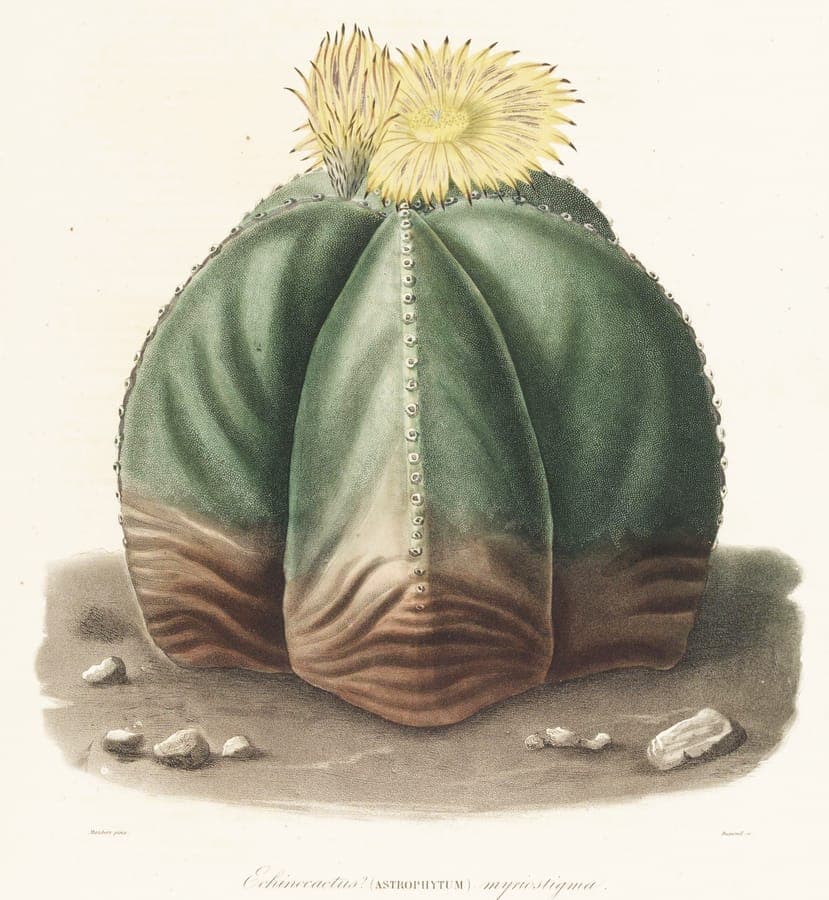
Lemaire, Charles Antoine / Public domain, via Wikimedia Commons
Bishop's-cap: complete guide
Astrophytum myriostigma
Want to see Bishop's-cap: complete guide in your garden?
1 minute, no credit card
The Bishop's-cap, scientifically known as Astrophytum myriostigma, is a fascinating cactus originating from northeastern Mexico. This unique plant is especially valued for its geometrically perfect form and beautiful yellow flowers. The Mexican name "mitra" refers to its shape resembling a bishop's ceremonial hat.
Overview The Bishop's-cap belongs to the Cactaceae family and is a very slow-growing, small to medium-sized cactus. This makes it ideal for container cultivation in home gardens, on balconies, and in greenhouses. The plant requires minimal care and is extremely drought-tolerant, making it perfect for dry gardens and xeriscape design.
Appearance and Bloom The Bishop's-cap's characteristic form is its most striking feature: a compact, cube-like body with five sharp, clearly visible ribs. The plant is covered with numerous tiny, white or yellowish spots ("myriostigma" literally means "many stigmata"), creating beautiful texture. Flowers are golden-yellow, bright, and approximately 3-5 cm in diameter. These typically appear in spring and early summer. After flowering, greenish seed pods form.
Ideal Location The Bishop's-cap is a cactus requiring full sun. Plant it in a location receiving at least six to eight hours of direct sunlight daily. This can be indoors on a sunny window, or outdoors in full sun. Indoors, a south or west-facing window is ideal. Ensure good ventilation: cacti appreciate air movement. Protect from frost; this species cannot tolerate temperatures below 5 degrees Celsius.
Soil The Bishop's-cap requires very well-draining cactus potting mix or a blend of regular potting soil with at least 50% amendments such as sand, perlite, or pumice. This ensures water drains quickly and no waterlogging occurs. A pH between 6.5 and 7.5 is acceptable. Use a pot with good drainage holes at the bottom.
Watering This is where most cactus care fails: overwatering. The Bishop's-cap tolerates extended dry periods. Water only when potting soil feels completely dry, typically once every two weeks during growth and bloom time (spring/summer). In fall and winter, water very little; once monthly is usually sufficient. Winter with minimal water encourages better blooming next season.
Pruning Pruning is generally unnecessary. This cactus grows slowly and maintains a compact form. Only dying or damaged parts can be carefully removed. Use sterile tools to prevent infection.
Maintenance Calendar March-April: Begin regular watering as days warm. Move to more sunlight. May-July: Water regularly; monitor for blooms. Feeding can be done monthly. August-September: Gradually reduce water. October-November: Further reduce water; stop feeding. December-February: Minimal care; very little water; cool ambient temperature.
Winter Hardiness The Bishop's-cap is not frost-hardy and can suffer serious damage from freezing. In climates with cold winters, keep indoors in a cool, dry room (ideally 10-15 degrees Celsius). This also promotes flowering.
Companion Plants In succulent gardens, the Bishop's-cap combines beautifully with other slow-growing cacti and succulents. Good companions are Echeveria, Sempervivum, Aloe, and other Astrophytum varieties. Ensure all plant companions have similar water and drainage requirements.
Closing Thoughts The Bishop's-cap is an ideal choice for beginners in cactus care and for those who appreciate minimalist gardens. With its geometrically perfect form, yellow flowers, and minimal care requirements, it provides pleasure for years. Available from specialized succulent retailers and nurseries.
GardenWorld helps you design your garden. Visit gardenworld.app to transform your front yard into a dream garden!
Want to see Bishop's-cap: complete guide in your garden? Make a free design now.
Upload a photo, pick a style, and get a photorealistic design with plant list in under a minute.
No credit card required


Similar plants
Plains prickly pear: complete guide
Opuntia polyacantha
All about plains prickly pear cactus: hardiness, soil, placement and care. One of the most cold-tolerant cacti for temperate gardens.
Saguaro: complete guide
Carnegiea gigantea
Everything about growing saguaro cactus: container care, watering, overwintering, and companion plants for this iconic desert giant.
Cylindropuntia imbricata: complete guide
Cylindropuntia imbricata
The Tree Cholla offers distinctive segmented stems and vibrant red flowers. A unique ornamental succulent perfect for sunny, dry gardens and large containers.