
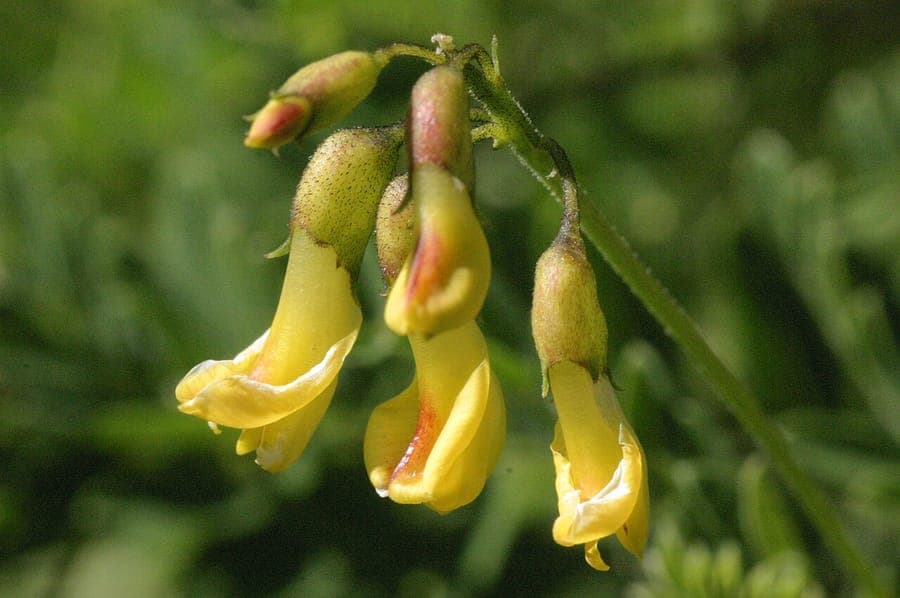
HermannSchachner / CC0, via Wikimedia Commons
Mountain lentil: complete guide
Astragalus penduliflorus
Want to see Mountain lentil: complete guide in your garden?
1 minute, no credit card
Overview
Mountain lentil (Astragalus penduliflorus) is a low-growing, creeping perennial native to the rocky slopes of the Alps, Carpathians, and other mountain regions across central and southern Europe. Belonging to the Fabaceae family, it thrives in well-drained, alkaline soils and full sun. With a height of just 15–20 cm and a spread of 30–40 cm, it's ideal for rock gardens, crevices in stone walls, or as a ground cover in dry, sunny beds. Its graceful, hanging flowers and tidy growth habit make it a favorite among alpine gardeners.
This plant is not commonly found in mainstream UK or North American garden centres, but interest is growing due to its resilience and unique bloom structure. Once established, it requires minimal care and adds year-round texture. On gardenworld.app, you can design a planting scheme that highlights Mountain lentil's strengths, including spacing, sunlight mapping, and companion plant suggestions.
Appearance & bloom cycle
Mountain lentil features fine, silvery-green, pinnate leaves that form a dense mat close to the ground. The foliage remains evergreen in milder climates (USDA zones 6–8), providing visual interest even in winter. From late May to early July, arching stems produce 2–3 cm long, pendulous flowers in soft purple-white or pale pink. The blooms hang just beneath the leaf canopy, creating a delicate, nodding effect-hence the botanical name penduliflorus.
After flowering, small, inflated seed pods develop. These papery pods persist into autumn, adding structural interest and aiding in natural reseeding. While the bloom time is relatively short, the plant's foliage and form maintain elegance throughout the year.
Ideal location
Mountain lentil performs best in full sun (7 out of 10 on the light scale) but tolerates light shade. In cooler climates like the UK or northern Europe, a south- or southwest-facing slope ensures maximum sun exposure. It's perfect for alpine gardens, gravel beds, or between stepping stones where drainage is excellent.
Avoid low-lying, damp areas. This plant despises wet feet and will rot in poorly drained soil, especially during winter. If planting in containers, ensure pots have generous drainage holes and are elevated off the ground. On gardenworld.app, you can analyze your garden's microclimate to find the ideal spot for Mountain lentil, factoring in sun angles and wind exposure.
Soil requirements
This species prefers neutral to slightly alkaline soils with a pH between 7.0 and 7.5. It thrives in gritty, rocky substrates that mimic its natural alpine habitat. Heavy clay or water-retentive soils must be avoided. Amend the soil with horticultural grit, perlite, or crushed limestone to improve drainage. A 30% mix of inorganic material helps prevent compaction.
Mountain lentil does not require rich soil. In fact, overly fertile conditions promote excessive leaf growth at the expense of flowering. Do not add compost or high-nitrogen fertilizers. A light top dressing of gravel mulch is sufficient to suppress weeds and reflect sunlight onto the foliage.
Free design
Want to see Mountain lentil: complete guide in your garden? Make a free design now.
Watering
Once established, Mountain lentil is highly drought-tolerant. During the first growing season, water weekly during dry spells to help roots establish. After that, natural rainfall is usually sufficient. In prolonged droughts (over two weeks without rain), provide a deep soak once every 10–14 days.
Always water at soil level to avoid wetting the foliage, which can encourage fungal diseases. Use rainwater when possible, as tap water with high lime content may affect soil pH over time.
Pruning
Pruning is rarely needed. In early spring (March–April), remove any dead or damaged stems with clean, sharp scissors. Cut just above a leaf node to encourage bushy growth. Avoid cutting into old wood, as this species does not regenerate well from bare stems.
Seed pods can be left intact through winter for visual interest and to support overwintering insects. Remove them in early spring if they become unsightly.
Maintenance calendar
- January–February: Check for frost damage; protect young plants with gravel mulch.
- March–April: Remove dead material; lightly loosen topsoil.
- May–July: Peak bloom period; avoid pruning.
- August–September: Monitor for aphids; do not fertilize.
- October–December: Allow plant to go dormant; ensure excellent drainage to prevent winter rot.
Winter hardiness
Mountain lentil is hardy in USDA zones 5–8 (-20°C to -10°C). In colder regions, a light mulch of gravel or pine needles helps protect the crown from freeze-thaw cycles. However, avoid organic mulches that retain moisture, as they increase the risk of root rot.
In containers, move pots to a cold frame or sheltered area during winter, or wrap them with hessian for insulation.
Where to buy
In the UK and US, Mountain lentil is available through specialist alpine nurseries and online retailers. Some garden centres may carry it, but availability is limited. Check with local independent nurseries or browse online platforms. On gardenworld.app, you can find nearby suppliers and compare stock levels across regions.
Companion plants
Pair Mountain lentil with other drought-tolerant, low-growing perennials such as Thymus polytrichus, Aubrieta deltoidea, or Sedum spurium. Small ornamental grasses like Helictotrichon sempervirens add contrast in texture. Avoid vigorous spreaders like mint or goldenrod, which can overwhelm this delicate species.
Closing
Mountain lentil is not a flashy plant, but it brings quiet charm and resilience to rock gardens and dry landscapes. With its nodding flowers, tidy habit, and minimal needs, it's a smart choice for sustainable, low-input gardening. By pairing it with the right companions and siting it in well-drained, sunny spots, you create a long-lasting, ecologically sound planting. Remember, on gardenworld.app you can simulate how this plant fits into your garden over time, including growth spread and seasonal changes.
Want to see Mountain lentil: complete guide in your garden? Make a free design now.
Upload a photo, pick a style, and get a photorealistic design with plant list in under a minute.
No credit card required


Similar plants
Tall Silky Lupine: complete guide
Lupinus elatus
Tall silky lupine is a fast-growing Californian perennial with silvery foliage and blue-purple flower spikes, ideal for a prairie-style garden.
Garfield Lupine: complete guide
Lupinus garfieldensis
The Garfield lupine is a rare, fast-growing American perennial for alkaline, dry grassland gardens, with striking blue flower spikes.
Lupinus elegans: complete guide
Lupinus elegans
Lupinus elegans, the elegant lupine, is a spectacular blooming plant from Mexico with blue flower spikes. Care, cultivation and garden use.