
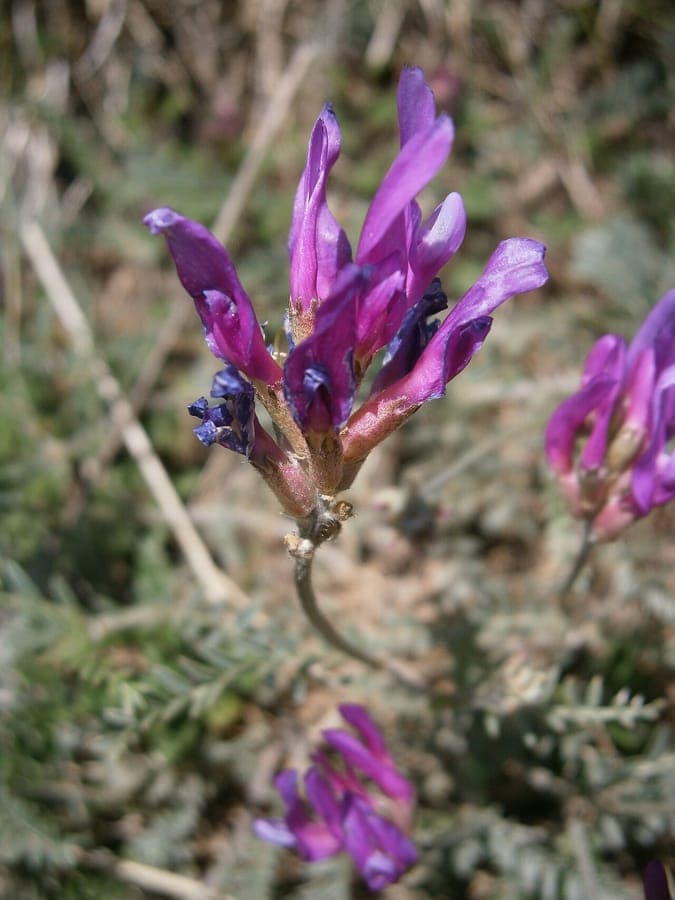
Meneerke bloem / CC BY-SA 4.0, via Wikimedia Commons
Astragalus hypoglottis: complete guide
Astragalus hypoglottis
Want to see Astragalus hypoglottis: complete guide in your garden?
1 minute, no credit card
Overview
Purple milk-vetch (Astragalus hypoglottis) is a remarkable legume native to southwestern Europe, from Spain through the Balkans. This alpine and subalpine plant thrives on rocky slopes and calcareous ground in mountain regions. Prized for its stunning purple flowers, this plant also fixes atmospheric nitrogen, enriching the soil around it.
It remains underappreciated in many gardens, yet offers exceptional value for Mediterranean and alpine landscapes. Its low growth habit and extended bloom period make it a standout performer.
Appearance and bloom
Purple milk-vetch forms compact, stiff plants reaching 20-30 cm in height. Its pinnate foliage is gray-green, creating beautiful contrast with the flowers. From June through August, dense clusters of small purple flowers appear on short stems.
The blooms are modest in size but numerous, attracting butterflies, bees, and other pollinators. After flowering, small pods develop and persist on the plant for months, providing additional ornamental interest and natural seed dispersal.
Ideal location
This plant demands full sun. Aim for 6-8 hours of direct sunlight daily. Choose raised positions or steep slopes where water drains quickly. The purple milk-vetch dislikes wet feet and thrives in gritty, sandy, or rocky sites.
Plant it where winter moisture won't pool-rock gardens, alpine troughs, and steep borders are ideal. Avoid flat areas prone to waterlogging.
Soil requirements
Purple milk-vetch flourishes on poor, well-drained soils. It disdains fertility. Sand, gravel, and rocks are perfect growing media. If using potting soil, blend 70% grit or sand with 30% standard potting mix.
The plant tolerates strongly acidic to highly alkaline soils. Its nitrogen-fixing capacity even allows it to colonize derelict mining sites and contaminated ground.
Free design
Want to see Astragalus hypoglottis: complete guide in your garden? Make a free design now.
Watering
Once established, purple milk-vetch is remarkably drought-tolerant. Water regularly during the first year and a half to establish roots. Afterward, water only during droughts exceeding two weeks.
In containers, water sparingly. Never allow the plant to sit in standing water. Winter watering is unnecessary in temperate climates.
Pruning
Minimal pruning is needed. Allow the plant to assume its natural form. Post-bloom, remove yellowed foliage. In winter, most leaves may drop-this is normal. Simply remove dead stems in spring before new growth emerges.
Maintenance calendar
Spring brings cautious emergence. Water gently as roots activate. Summer showcases purple blooms with minimal intervention required. Autumn and winter see minimal growth. Reduce watering accordingly.
Winter hardiness
Purple milk-vetch is fully hardy to -20°C (-4°F), making it suitable for northern Europe. However, it despises wet winter conditions. Ensure excellent drainage and protection from waterlogging.
In regions with wet winters, grow it on a raised stone bed or in alpine troughs with grit-based compost.
Companion plants
Purple milk-vetch pairs beautifully with other alpine and Mediterranean species: lavender, santolina, and artemisia. Sedums and saxifrages complement it structurally. Together, they evoke alpine mountain ecosystems.
Incorporate alpine grasses for texture and wildlife value.
Final thoughts
Purple milk-vetch rewards gardeners who value minimal maintenance with maximum ecological benefit. Its violet blooms, nitrogen-fixing properties, and drought tolerance make it ideal for Mediterranean, alpine, and scree gardens. Established plants provide years of pleasure with negligible care. Find seeds through specialty seed suppliers and online retailers.
Elevate your garden's resilience and beauty with this remarkable European alpine!
Want to see Astragalus hypoglottis: complete guide in your garden? Make a free design now.
Upload a photo, pick a style, and get a photorealistic design with plant list in under a minute.
No credit card required


Similar plants
Tall Silky Lupine: complete guide
Lupinus elatus
Tall silky lupine is a fast-growing Californian perennial with silvery foliage and blue-purple flower spikes, ideal for a prairie-style garden.
Garfield Lupine: complete guide
Lupinus garfieldensis
The Garfield lupine is a rare, fast-growing American perennial for alkaline, dry grassland gardens, with striking blue flower spikes.
Lupinus elegans: complete guide
Lupinus elegans
Lupinus elegans, the elegant lupine, is a spectacular blooming plant from Mexico with blue flower spikes. Care, cultivation and garden use.