
Hectonichus / CC BY-SA 3.0, via Wikimedia Commons
European michaelmas daisy: complete guide
Aster amellus
Want to see European michaelmas daisy: complete guide in your garden?
1 minute, no credit card
Overview
Aster amellus, commonly known as the European michaelmas daisy, is a tough and reliable perennial that brings vibrant colour to gardens when many other plants are winding down. Native to central and southern Europe - including Austria, France, the Balkans, and parts of eastern Europe - this aster thrives in temperate climates and adapts well to UK and North American gardens in USDA zones 4–8. Unlike many asters that bloom late in September, A. amellus starts flowering in mid-August, giving you a longer display of rich purples and blues just when you need it most.
Gardeners love it for its upright habit, clean foliage, and resilience. It's not prone to powdery mildew like some fall asters, making it a low-fuss choice for cottage gardens, borders, and gravel beds. On gardenworld.app, users often pair it with grasses and late-blooming salvias for dynamic late-season interest.
Appearance & bloom cycle
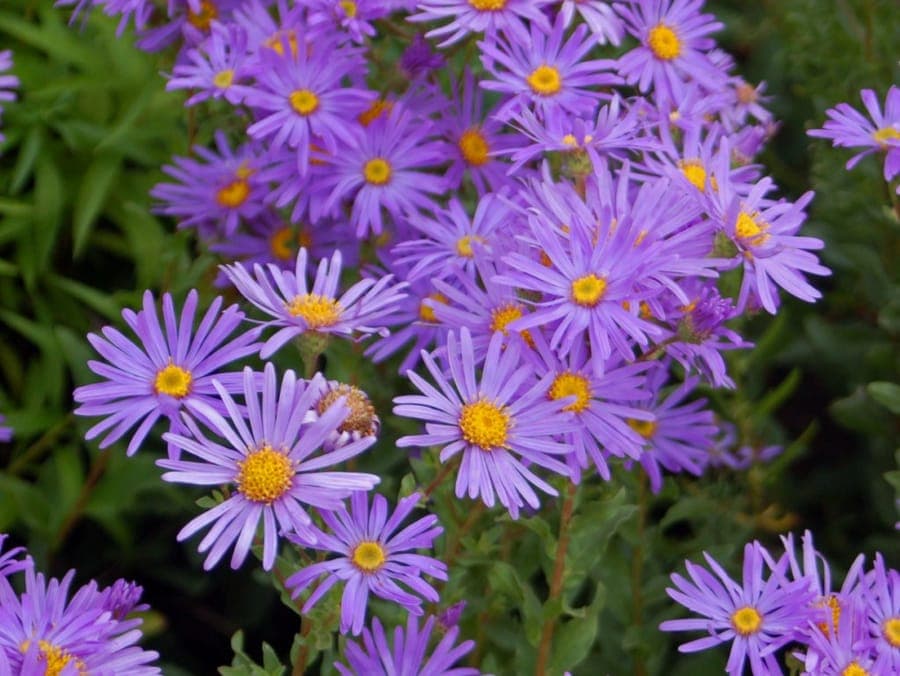
Aster amellus grows 40–60 cm tall with a spread of about 40 cm. The stems are sturdy, slightly hairy, and carry narrow, lance-shaped leaves 3–6 cm long. These leaves stay healthy and dark green all summer, rarely troubled by pests or disease. In mid-August, daisy-like flowers appear - 4–5 cm across, with ray florets in deep lavender to violet and a bright yellow centre that matures to reddish-purple.
Flowering continues from August through October, depending on climate. Deadheading encourages more blooms and can extend the season by up to three weeks. The plant has an upright, bushy form, and when pinched in early summer, it becomes even denser and more floriferous.
Ideal location
Plant in full sun to light shade. At least 6 hours of direct sunlight daily ensures strong stems and abundant flowers. In hot southern regions, afternoon shade helps prevent stress. Avoid deep shade - plants will stretch, flop, and produce fewer blooms.
This aster performs well in exposed sites and tolerates coastal conditions. On gardenworld.app, you can visualise how to position European michaelmas daisy in your border for maximum impact, especially when combining it with contrasting textures and bloom times.
Soil requirements
It prefers well-drained, neutral to slightly alkaline soils (pH 6.5–7.5). While adaptable, it does poorly in waterlogged or highly acidic conditions. Heavy clay soils are acceptable if amended with grit or compost to improve drainage. Sandy soils work well too, as long as some organic matter is added to retain moisture.
Avoid rich, overly fertile soils - too much nitrogen leads to leggy growth and fewer flowers. No supplemental feeding is needed. In containers, use a standard potting mix with extra perlite or sand for drainage.
Free design
Want to see European michaelmas daisy: complete guide in your garden? Make a free design now.
Watering
Water regularly during the first month after planting. Once established, it's fairly drought-tolerant. During dry spells, give a deep soak every 10–14 days. Water at the base to keep foliage dry and reduce disease risk. Mulching with gravel or shredded bark helps retain moisture and suppress weeds.
Rainwater is preferable - tap water with high lime content can affect sensitive plants over time. Avoid overhead watering, especially in the evening.
Pruning
This aster needs minimal pruning. In early spring (February–March), cut back last year's stems to 5 cm above ground level. This encourages fresh, compact growth.
For bushier plants with more flowers, pinch back the tips by one-third in early June. This delays flowering slightly but results in stronger stems and a longer bloom period. Do not pinch after early July, or you risk losing flowers for the season.
Maintenance calendar
- Jan: Check for crown damage. No action needed.
- Feb: Cut back old stems.
- Mar: Finish pruning. Apply a thin layer of compost.
- Apr: New growth emerges. Keep weeds down.
- May: Pinch back tips for bushier growth (before June).
- Jun: Monitor for aphids. No further pinching.
- Jul: Watch for drought stress. Water if needed.
- Aug: First blooms appear. Begin deadheading.
- Sep: Peak flowering. Deadhead weekly.
- Oct: Bloom tapers off. Leave seed heads for birds.
- Nov: Cut back or leave standing for winter structure.
- Dec: Dormant period. Protect young plants with mulch in harsh winters.
Winter hardiness
Fully hardy in USDA zones 4–8. Dies back in winter but returns reliably each spring. In milder areas, foliage may persist. The dried stems provide shelter for beneficial insects and seeds for birds. In wet winters, root rot can occur - ensure good drainage. Avoid heavy organic mulches in damp gardens; use gravel instead.
Companion plants
Pair with late-blooming perennials like Sedum 'Herbstfreude', Salvia nemorosa 'Caradonna', or Echinacea purpurea. The purple tones complement each other, and all attract pollinators. Grasses such as Deschampsia cespitosa or Panicum virgatum add movement and contrast.
Avoid overly aggressive spreaders like mint or bishop's weed - they'll overwhelm this modest aster. Good for planting in front of shrubs or along path edges where its long bloom season can be appreciated.
Closing
The European michaelmas daisy is a must-have for any garden that values late-season colour and low maintenance. It's tough, bee-friendly, and easy to grow - a true workhorse for autumn gardens. You'll find it at most garden centres under its botanical name or as 'summer aster'. Look for named cultivars like 'Veilchenkönigin' or 'Septemberglory' for improved performance.
Whether you're designing a new border or refreshing an old one, gardenworld.app offers layout tools and plant pairing suggestions that make the most of Aster amellus. It's a quiet star that shines when the rest of the garden begins to fade.
Want to see European michaelmas daisy: complete guide in your garden? Make a free design now.
Upload a photo, pick a style, and get a photorealistic design with plant list in under a minute.
No credit card required


Similar plants
Calendula stellata: complete guide
Calendula stellata
Complete guide to Calendula stellata, the star-flowered marigold from Sicily: location, soil, watering and companion planting tips.
Korean chrysanthemum: complete guide
Chrysanthemum x rubellum
Chrysanthemum x rubellum is a hardy autumn perennial with single pink to copper flowers from August to November. Care and combinations.
Helianthus divaricatus: complete guide
Helianthus divaricatus
Helianthus divaricatus is a North American woodland sunflower with yellow summer blooms, ideal for naturalistic borders and shady edges.