
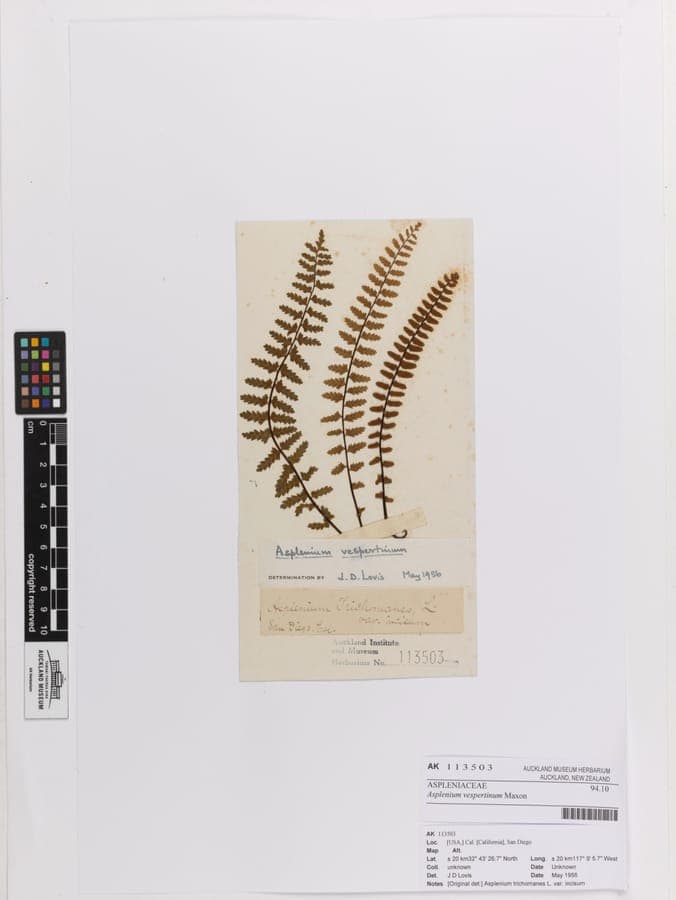
John Lovis / CC BY 4.0, via Wikimedia Commons
Western spleenwort: complete guide
Asplenium vespertinum
Want to see Western spleenwort: complete guide in your garden?
1 minute, no credit card
Overview
The Western spleenwort (Asplenium vespertinum) is an elegant fern native to the southwestern United States, particularly California and northwestern Mexico. This delicate member of the fern family is prized for its fine, graceful fronds and its ability to thrive in warm, dry environments where many other ferns struggle. The plant grows slowly but steadily under the right conditions, transforming any bright corner into a lush green accent.
Gardeners seeking unusual, hard-to-find varieties will appreciate this fern as both a challenge and a rewarding addition to their collection. Its diminutive stature and refined foliage make it a perfect choice for shelves, windowsills, or small plant stands.
Appearance and Growth
The Western spleenwort is a small fern, typically reaching 30 to 50 cm in height and width. Its leaves are finely dissected, featuring small, irregularly arranged leaflets that create an airy, feathery texture. The fronds are deep green and feel delicate to the touch.
Under the right lighting, the leaflets may show a subtle sheen that enhances their visual appeal. As a true fern, it produces no visible flowers or seeds but reproduces via microscopic spores held on the undersides of fronds - a fascinating botanical feature.
Ideal Location
This fern thrives in bright, indirect light. The ideal spot combines shade with some dappled sunlight, such as a north or northeast-facing windowsill. Avoid harsh afternoon sun, which can scorch the delicate fronds. A partially shaded patio or terrarium works well during growing seasons.
Indoors, place it near a bright window but away from direct rays. The plant tolerates lower light but grows more slowly in very dim corners. Consistent temperatures and moderate humidity are essential for optimal growth.
Soil Composition
The Western spleenwort prefers loose, humus-rich soil that drains well. A mix of peat moss, fine bark, and perlite ensures water moves through without waterlogging - critical since root rot is more dangerous to ferns than drought. Add extra humus through quality compost or coconut coir. The pH should be neutral to slightly acidic, around 6.5 to 7.0.
Choose pots with adequate drainage holes and use a fern-specific potting mix if available. The soil should remain consistently moist but never soggy.
Free design
Want to see Western spleenwort: complete guide in your garden? Make a free design now.
Watering
Water regularly to keep soil consistently moist but not waterlogged. Check the top centimeter of soil weekly - if it feels dry, water gently until moisture drains from the bottom. During active growth in spring and summer, the plant needs more frequent watering.
In winter, reduce watering as growth slows. Never allow water to pool in the pot; excellent drainage is non-negotiable. Consider using filtered or distilled water, as some ferns are sensitive to chlorine and minerals in tap water.
Pruning and Maintenance
The Western spleenwort requires minimal pruning. Simply remove yellowing or damaged fronds to maintain plant health and appearance. Use clean scissors to prevent disease transmission. Old fronds can be gently removed at the base to make room for new growth.
Avoid excessive handling or moving the plant, as ferns can be stress-sensitive. Keep humidity moderate to high - consider misting fronds during dry spells or placing the pot on a pebble tray with water beneath.
Maintenance Calendar
- Spring (April-May): Begin regular watering; feed lightly every 2-3 weeks
- Summer (June-August): Keep soil consistently moist; provide afternoon shade
- Fall (September-October): Gradually reduce watering as growth slows
- Winter (November-March): Water minimally; fertilize sparingly or not at all
Winter Hardiness
This fern is not frost-hardy in temperate climates like the Netherlands or northern Europe. Always keep it indoors where temperatures never drop below 10 degrees Celsius. The ideal winter temperature range is 15-18 degrees Celsius. Protect it from drafts and cold windows.
Be mindful that heated indoor air can dry out quickly in winter - maintain humidity by misting occasionally or grouping plants together to share moisture.
Companion Plants
The Western spleenwort pairs beautifully with other shade-loving ferns and plants:
- Shield ferns (Dryopteris)
- Bird's nest fern (Asplenium nidus)
- Platycerium bifurcatum
- English ivy (Hedera helix)
- Cast iron plant (Aspidistra elatior)
These combinations create a lush, tropical feel and share similar care requirements.
Closing
The Western spleenwort is a stunning addition for plant lovers seeking something distinctive. With proper conditions - bright indirect light, consistent moisture without waterlogging, and warm, protected indoor placement - this elegant fern will reward you for years.
Explore our full fern collection at gardenworld.app, where you'll find expert guidance for expanding your plant collection. For more plant advice and garden inspiration, visit gardenworld.app today.
Want to see Western spleenwort: complete guide in your garden? Make a free design now.
Upload a photo, pick a style, and get a photorealistic design with plant list in under a minute.
No credit card required


Similar plants
Mountain spleenwort: complete guide
Asplenium montanum
Everything about mountain spleenwort fern: cultivation, care, growing conditions and proper maintenance for your garden
Asplenium cirrhatum: complete guide
Asplenium cirrhatum
Discover the chestnut scale spleenwort, a tropical fern full of elegance. Learn how to care for this exotic plant at home.
Asplenium feei: complete guide
Asplenium feei
Asplenium feei, or Fee's spleenwort, is a delicate tropical fern with fine-textured fronds. Discover how to cultivate this elegant houseplant in humid environments.