
Michael Becker / CC BY-SA 3.0, via Wikimedia Commons
Forked spleenwort: complete guide
Asplenium septentrionale
Want to see Forked spleenwort: complete guide in your garden?
1 minute, no credit card
Overview
Forked spleenwort (Asplenium septentrionale) is a resilient little fern that thrives in rocky, well-drained spots where most plants give up. Native to alpine cliffs and rocky outcrops from the Baltics to Afghanistan, it's a quiet performer in the garden – not flashy, but dependable. In the UK and North America, it's becoming a go-to for rock gardens, stone walls, and shaded crevices. If you're planning a low-maintenance, naturalistic design, this fern deserves a spot.
It's non-flowering, like all ferns, and instead reproduces via spores. But its structure is what sets it apart – narrow, leathery fronds with forked tips growing from dark, wiry stalks. On gardenworld.app you can design a planting scheme that highlights its texture alongside other shade-loving perennials.
Appearance & bloom cycle
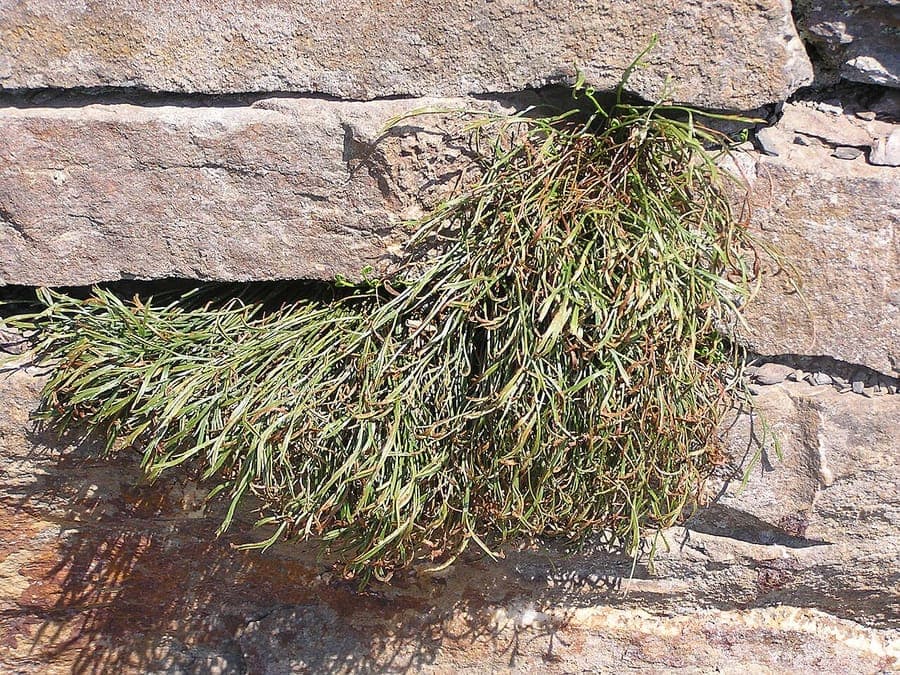
Don't expect flowers – this is a fern, after all. What you do get is year-round greenery. The fronds are slender, 5–15 cm long, a glossy medium green, and often split at the tip, giving them a delicate, almost feathery look. The stipe (stem) is dark brown to nearly black, tough and wiry, anchoring the plant firmly in tight spaces.
Mature plants develop small clusters of spores along the undersides of the frond margins, appearing as neat rows of dark brown lines from July to September. These are not harmful – just nature doing its thing. The plant grows slowly, forming tight clumps over time, expanding via creeping rhizomes just beneath the surface.
Ideal location
This fern loves cool, sheltered spots. Partial to full shade is best – avoid hot afternoon sun, which can scorch the fronds. It's perfect for crevices in stone walls, gaps between paving stones, or tucked into the base of conifers with open canopies.
It also works well in troughs or alpine beds. If you're building a vertical garden or rock feature, check gardenworld.app for layout ideas that incorporate forked spleenwort with mosses and sedums.
Soil requirements
The key is drainage. This fern hates wet feet. Use a gritty mix – think 50% loam, 30% horticultural sand, 20% small gravel or perlite. It tolerates a range of pH but prefers neutral to slightly alkaline (6.5–7.8), especially if grown on limestone rock.
Avoid peat-heavy or water-retentive soils. It's adapted to lean conditions, so no need for compost or manure. A little leaf mould is fine, but keep it light. Over-rich soil leads to weak growth and rot.
Free design
Want to see Forked spleenwort: complete guide in your garden? Make a free design now.
Watering
Water sparingly. Once established, it's drought-tolerant for short periods. During dry spells in summer, give a light soak at the base – never overhead, as wet foliage encourages fungal issues. Let the soil dry between waterings.
In containers, water when the top 2–3 cm feel dry. Use rainwater if possible; tap water with high lime content can leave white deposits on leaves and stunt growth over time.
Pruning
Pruning isn't needed. Remove only dead or damaged fronds in early spring (March–April) to make way for new growth. Use clean, sharp scissors to avoid spreading disease. No feeding required – this fern thrives on neglect.
Maintenance calendar
- Jan: Check for frost damage
- Feb: Inspect for new rhizome activity
- Mar: Clear dead fronds
- Apr: Monitor moisture, water lightly if dry
- May: Shield from intense sun if needed
- Jun: Observe spore development
- Jul: Water sparingly during dry weeks
- Aug: Watch for leaf browning in heat
- Sep: Let spores mature, no pruning
- Oct: Reduce watering
- Nov: Leave old fronds for winter insulation
- Dec: Minimal care, ensure drainage
Winter hardiness
Forked spleenwort is hardy in USDA zones 5–8 (-23°C to -12°C). It handles winter well in most temperate gardens. The evergreen fronds may bronze slightly in cold snaps but usually recover in spring.
Avoid cutting back in autumn – the old fronds protect new buds. In exposed sites, a light mulch of gravel or pine needles helps, but full coverings can trap moisture and cause rot. No winter protection needed in sheltered urban gardens.
Companion plants
Pair with plants that share its taste for sharp drainage and shade:
- Sedum acre (goldmoss stonecrop)
- Saxifraga spp. (rockfoil)
- Polystichum setiferum (soft shield fern)
- Heuchera spp. (coral bells)
- Tiarella cordifolia (foamflower)
These combinations add texture and seasonal interest. The contrast between the forked spleenwort's narrow fronds and broader-leaved companions works beautifully in shaded rock gardens.
Closing
Forked spleenwort is a quiet hero in the shade garden. It asks for little, returns much. With its evergreen presence and architectural form, it fills gaps where other plants fail. It's not sold everywhere, but keep an eye out at garden centres, especially those specialising in ferns or alpine plants. You might also find it at larger independents or online nurseries.
Once planted in the right spot, it's likely to stay for years. Combine it with other crevice dwellers, and let nature take its course. For layout inspiration, head to gardenworld.app and explore fern-friendly designs that make the most of its understated charm.
Want to see Forked spleenwort: complete guide in your garden? Make a free design now.
Upload a photo, pick a style, and get a photorealistic design with plant list in under a minute.
No credit card required


Similar plants
Mountain spleenwort: complete guide
Asplenium montanum
Everything about mountain spleenwort fern: cultivation, care, growing conditions and proper maintenance for your garden
Western spleenwort: complete guide
Asplenium vespertinum
The Western spleenwort (Asplenium vespertinum) is a delicate fern from California with fine, feathery fronds. Learn about care, location, and overwintering in this comprehensive guide.
Asplenium cirrhatum: complete guide
Asplenium cirrhatum
Discover the chestnut scale spleenwort, a tropical fern full of elegance. Learn how to care for this exotic plant at home.