
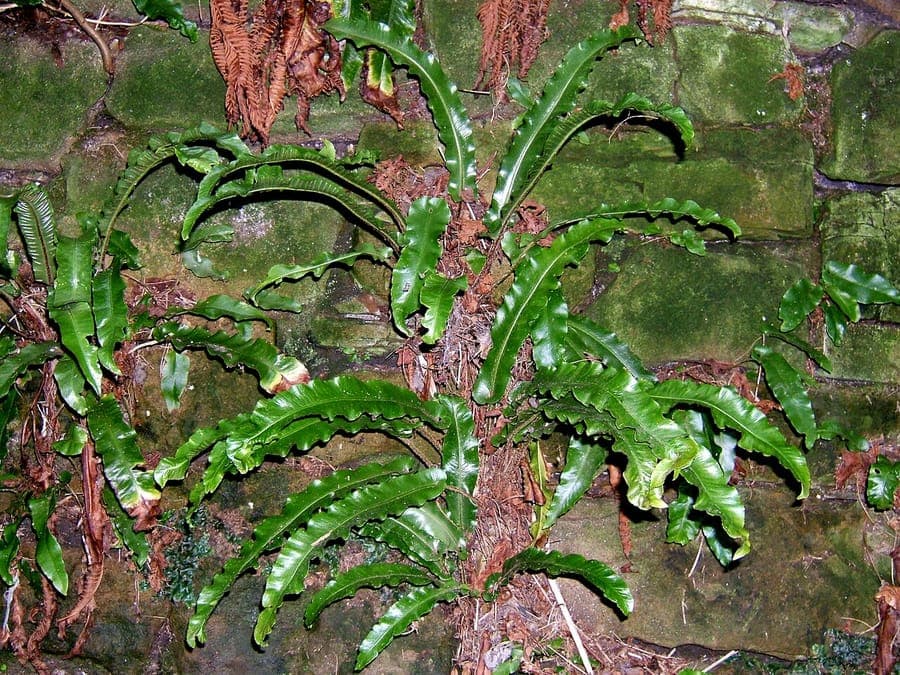
No machine-readable author provided. MPF assumed (based on copyright claims). / CC BY 2.5, via Wikimedia Commons
Hart's-tongue fern: complete guide
Asplenium scolopendrium
Want to see Hart's-tongue fern: complete guide in your garden?
1 minute, no credit card
Overview
The hart's-tongue fern (Asplenium scolopendrium) brings quiet elegance to any garden. Native to damp woodlands, limestone cliffs, and old stone walls across southern Europe, North Africa, and parts of the USA including Alabama, this evergreen fern thrives in cool, sheltered spots. While rare in the wild in some areas, it adapts well to cultivated gardens when given the right conditions. It's a herbaceous perennial with a clump-forming habit, slowly spreading by rhizomes over time. As a member of the Aspleniaceae family, it doesn't flower, but its foliage provides year-round interest.
This fern stands out for its simplicity - long, undivided fronds that grow upright in a tidy rosette. It's perfect for modern shade gardens, cottage borders, or tucked into rock crevices. On gardenworld.app, you can design a planting scheme that highlights the clean lines of Asplenium scolopendrium alongside complementary textures.
Appearance & bloom cycle
The fronds of the hart's-tongue fern are glossy, dark green, and strap-shaped, typically reaching 30–50 cm in length, sometimes up to 70 cm in ideal conditions. They grow in a neat basal rosette, emerging from a central crown. Though it doesn't produce flowers, from May to October, fertile fronds develop sori - rows of spore cases - on the underside, arranged in a distinctive herringbone pattern. These dark, linear markings give the fronds a printed look and add subtle visual interest.
New fronds unfurl in spring, pushing through older ones. The plant is evergreen in mild climates (USDA zones 7–9), but fronds may brown in harsh winters. Old fronds can be left in place over winter to protect the crown, then tidied in early spring.
Ideal location
This fern prefers partial to full shade. North- or east-facing spots, under deciduous trees, or along shaded walls are ideal. Avoid hot afternoon sun, which scorches the fronds. A spot beneath a hawthorn, hornbeam, or under the dappled shade of a mature beech works well. It also thrives in sheltered woodland gardens, rock gardens with moisture-retentive pockets, or in containers on a shady patio. On gardenworld.app, use the shade mapper tool to pinpoint the best locations for ferns in your garden layout.
It dislikes drying winds and dry air, so avoid exposed sites. Planting near a fence, rock formation, or shrub border helps create a humid microclimate.
Soil requirements
Soil should be moist, well-drained, and rich in organic matter. A slightly alkaline to neutral pH (6.5–7.5) is preferred, as the plant often grows on limestone in the wild. Amend planting holes with leaf mould, composted bark, or well-rotted leaf compost. Avoid acidic peat-heavy soils unless amended with garden lime. Heavy clay soils should be loosened with grit and organic matter to prevent waterlogging.
Free design
Want to see Hart's-tongue fern: complete guide in your garden? Make a free design now.
Watering
Keep soil consistently moist, especially during dry spells in summer. Water at the base in the morning or evening to reduce evaporation. Use rainwater when possible, as tap water with high lime or chlorine content can harm sensitive fronds. Never let the plant dry out completely - drought stress causes frond dieback and weak growth.
Pruning
Minimal pruning is needed. Remove only dead, damaged, or unsightly fronds in early spring before new growth emerges. Cut close to the base with clean, sharp shears. Avoid cutting healthy fronds, as they photosynthesize and support the plant's energy reserves.
Maintenance calendar
- Jan: Check for frost damage; protect crowns if extreme cold is forecast.
- Feb: Monitor soil moisture during thaw periods.
- Mar: Clear old fronds; inspect for new fiddleheads.
- Apr: Apply a thin layer of compost as a top-dress.
- May: Spore development begins; maintain moisture.
- Jun: Watch for sun scorch; ensure shade coverage.
- Jul: Water regularly in dry weather.
- Aug: Look out for slugs, which may nibble young fronds.
- Sep: Reduce watering as temperatures drop.
- Oct: Leave dead fronds for winter insulation.
- Nov: No feeding; mulch lightly with leaf litter in colder zones.
- Dec: Minimal care; check for fungal issues in wet weather.
Winter hardiness
Hardy in USDA zones 7–9, the hart's-tongue fern tolerates temperatures down to -15°C. In zone 6, it can survive with winter protection - a light mulch of leaf mould or bracken helps insulate the crown. Avoid plastic covers, which trap moisture and promote rot. In exposed gardens, consider planting in a sheltered microclimate or using a cold frame.
Companion plants
Pair with other shade-loving perennials like Hosta, Heuchera, Epimedium, or Polystichum ferns. The smooth, linear fronds contrast beautifully with ruffled hostas or the fine texture of Athyrium. For a woodland feel, plant with Cyclamen hederifolium, Geranium phaeum, or Tellima. Garden centres often stock these in shaded plant sections - look for seasonal bundles that include ferns and groundcovers.
Closing
The hart's-tongue fern isn't flashy, but its quiet presence adds structure and year-round greenery. It asks little in return - just shade, moisture, and a little patience. Once established, it's a reliable, low-maintenance plant that improves with age. For gardeners seeking understated beauty, Asplenium scolopendrium is a timeless choice.
Want to see Hart's-tongue fern: complete guide in your garden? Make a free design now.
Upload a photo, pick a style, and get a photorealistic design with plant list in under a minute.
No credit card required


Similar plants
Mountain spleenwort: complete guide
Asplenium montanum
Everything about mountain spleenwort fern: cultivation, care, growing conditions and proper maintenance for your garden
Western spleenwort: complete guide
Asplenium vespertinum
The Western spleenwort (Asplenium vespertinum) is a delicate fern from California with fine, feathery fronds. Learn about care, location, and overwintering in this comprehensive guide.
Asplenium cirrhatum: complete guide
Asplenium cirrhatum
Discover the chestnut scale spleenwort, a tropical fern full of elegance. Learn how to care for this exotic plant at home.