
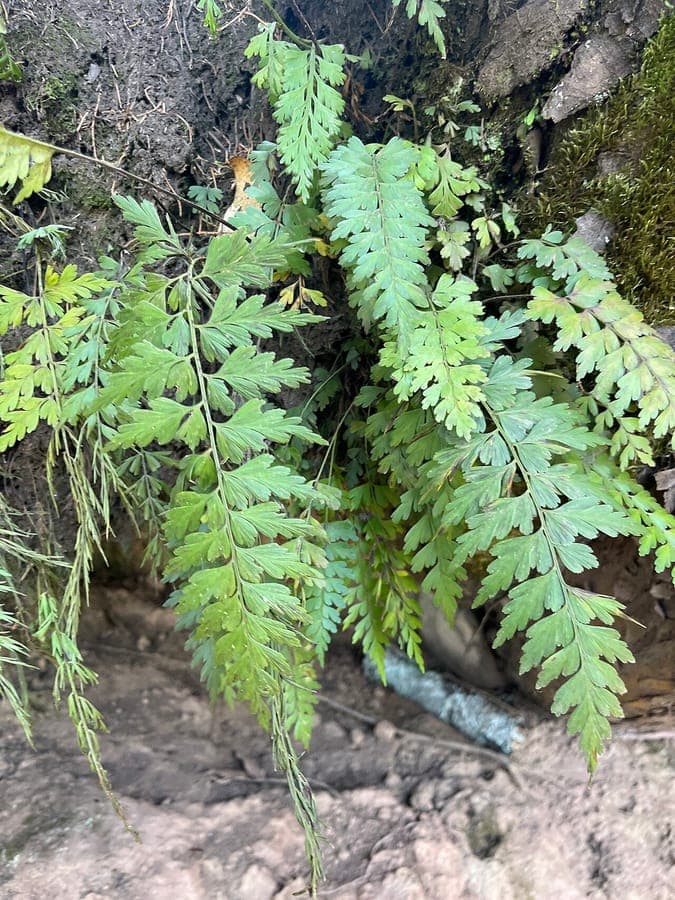
Elliot Greiner / CC BY 4.0, via Wikimedia Commons
Egyptian Spleenwort: Complete Guide
Asplenium aethiopicum
Want to see Egyptian Spleenwort: Complete Guide in your garden?
1 minute, no credit card
Overview
Asplenium aethiopicum, commonly known as Egyptian Spleenwort or Egyptian Fern, is a delicate, elegant fern found extensively in tropical and subtropical regions. This fern belongs to the Aspleniaceae family and grows from Africa to the Pacific Ocean. Asplenium aethiopicum is bird-friendly and offers an airy, fine texture perfect for shady indoor spaces or protected outdoor locations.
This fern is known for its fine, divided fronds and compact growth. It grows as a small to medium fern perfectly suited for pots, hanging baskets, or as a supporting plant in indoor gardens. With correct humidity levels and shade, this fern will thrive and offer years of elegant foliage.
Appearance and Bloom
Asplenium aethiopicum is a fern without flowers or seeds in the classical sense. Instead, it reproduces via spores that grow under the fronds. The fronds are finely divided, light green, and approximately 20-40 centimeters long. They grow in rosettes from crowns, creating an attractive, bushy habit.
The fronds are silky-soft with fine veins. This species grows slowly to moderately fast, depending on growing conditions. If you look at the underside of the fronds, you'll see small, rectangular brown structures which are sporangia - the reproductive organs of ferns.
Ideal Location
Asplenium aethiopicum is shade-loving and grows best in indirectly lit spaces. Indoors, a location away from direct sunlight works well - for example, near a window but not in direct sun. This fern can also grow in deeper shade, though growth will be slower.
If you want to grow this fern outdoors, choose a spot under trees or under structures providing filtered or indirect light. Direct sunlight will cause leaf scorch and shriveling.
Soil
Asplenium aethiopicum grows best in light, nutrient-rich, well-draining potting mix. A mixture of peat, perlite, and bark works well. Ferns prefer slightly acidic pH (pH 5.5-7.0). In pot culture, good drainage is essential to protect roots from disease.
The soil should stay moist but not waterlogged. Add organic matter when potting to increase moisture retention. A top layer of mulch can help retain moisture and keep roots cool.
Free design
Want to see Egyptian Spleenwort: Complete Guide in your garden? Make a free design now.
Watering
Asplenium aethiopicum prefers consistently moist soil and high ambient humidity. Keep soil evenly moist but not waterlogged. During the growing period (spring and summer) water regularly - if the top centimeter of soil feels dry, it's time to water.
In winter reduce watering slightly, though the plant still needs some moisture. Use soft water (rainwater is ideal) as hard water can damage fronds. Also mist regularly to maintain high humidity levels.
Pruning
Pruning is minimal for Asplenium aethiopicum. Remove only old, yellowed, or damaged fronds. Trim these carefully near the base. This helps the plant focus on growing healthy new fronds.
Avoid removing too much foliage at once. If the plant becomes overcrowded, you can carefully separate old plant sections when repotting, which stimulates growth.
Maintenance Calendar
Spring: Begin regular feeding once every two weeks. Increase watering as needed. Check for pests.
Summer: Regular watering. Continue feeding every two weeks. Mist regularly to keep humidity high.
Fall: Lower feeding to monthly. Gradually reduce watering.
Winter: Minimal feeding. Limited water. Avoid cold drafts.
Winter Hardiness
Asplenium aethiopicum is not winter-hardy outdoors in temperate climates. The plant grows only in warm conditions and dies if it gets cold (below 10 degrees Celsius). This is strictly a houseplant in temperate climates. In tropical or subtropical regions it can grow outdoors in protected, shady locations.
Ensure the plant is never exposed to frost and keep it away from cold drafts near windows in winter.
Companion Plants
Asplenium aethiopicum works well with other shade-loving, moisture-loving plants:
- Adiantum: Other ferns for extra texture.
- Platycerium: Staghorn ferns add drama.
- Calathea: These foliage plants share the same humidity requirements.
- Pilea: Aluminum plants are other moisture-loving foliage plants.
- Begonias: Shade-loving varieties work well together.
Conclusion
Asplenium aethiopicum is a charming addition to any indoor collection, especially for those with shaded spaces. With its fine, elegant fronds and low-maintenance nature (provided humidity levels are correct), this fern offers years of delicate beauty. By providing regular watering, high humidity, and indirect light, your Asplenium aethiopicum will do what ferns do best - transform your interior into a lush, green oasis.
For more information about houseplants and tropical species, visit gardenworld.app. Local retailers often have this fern available in various sizes.
Want to see Egyptian Spleenwort: Complete Guide in your garden? Make a free design now.
Upload a photo, pick a style, and get a photorealistic design with plant list in under a minute.
No credit card required


Similar plants
Mountain spleenwort: complete guide
Asplenium montanum
Everything about mountain spleenwort fern: cultivation, care, growing conditions and proper maintenance for your garden
Western spleenwort: complete guide
Asplenium vespertinum
The Western spleenwort (Asplenium vespertinum) is a delicate fern from California with fine, feathery fronds. Learn about care, location, and overwintering in this comprehensive guide.
Asplenium cirrhatum: complete guide
Asplenium cirrhatum
Discover the chestnut scale spleenwort, a tropical fern full of elegance. Learn how to care for this exotic plant at home.