
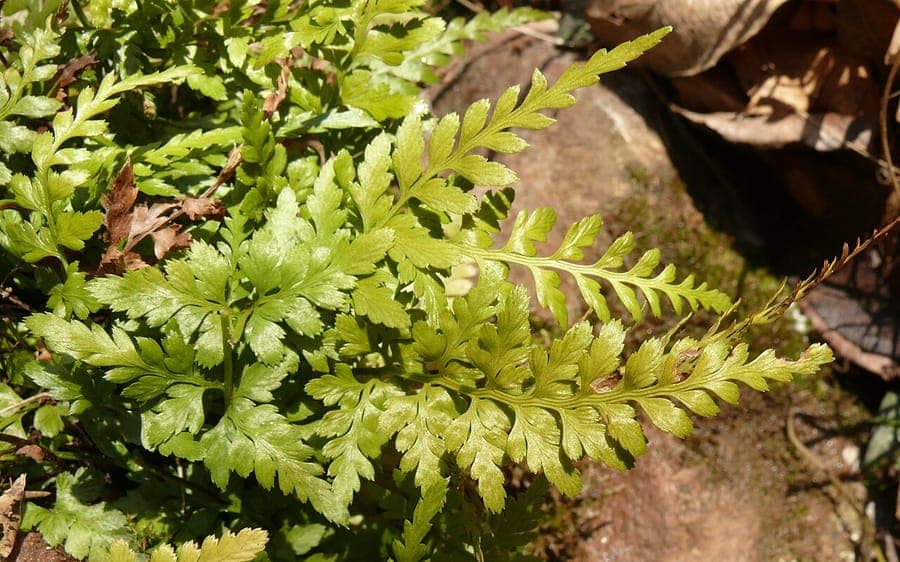
Bernd Haynold / CC BY-SA 3.0, via Wikimedia Commons
Black spleenwort: complete guide
Asplenium adiantum-nigrum
Want to see Black spleenwort: complete guide in your garden?
1 minute, no credit card
Overview
Black spleenwort, or Asplenium adiantum-nigrum, is a hardy, evergreen fern that brings quiet elegance to shaded corners of the garden. Native to rocky slopes, cliff faces, and old walls across Europe, North Africa, and parts of Asia, it's a plant that thrives where soil is thin and conditions are moist but well-drained. In the UK and Ireland, it's not uncommon to find it growing wild in stone walls or between boulders in woodland settings. It's a slow grower, forming neat clumps up to 30–40 cm across, but once settled, it can persist for years with minimal care.
Unlike flowering plants, black spleenwort reproduces via spores found in neat lines along the undersides of its fronds. There's no bloom, but the structure and texture of the foliage more than make up for it. The dark, almost black stipes (stems) contrast beautifully with the bright green, finely divided leaflets. If you're designing a shaded rock garden or reviving an old stone wall, this fern deserves a spot. On gardenworld.app, you can create a custom planting plan that integrates black spleenwort with other shade-tolerant species for a cohesive look.
Appearance & bloom cycle
The fronds of Asplenium adiantum-nigrum are lance-shaped, 20–40 cm long, and composed of numerous small, oblong segments arranged neatly along a central rachis. The most striking feature is the jet-black stipe, which gives the plant its name-'nigrum' meaning black. The leaflets are leathery, dark green, and slightly glossy, staying evergreen through winter in milder climates.
Spore production occurs between June and August. You'll notice dark, linear sori (spore clusters) along the veins on the underside of mature fronds. These don't open like flowers but split open when dry, releasing spores into the air. In practice, most gardeners propagate this fern by dividing established clumps in early spring rather than sowing spores, which can take months to germinate.
Ideal location
This fern prefers partial to full shade. A north-facing wall, the base of a hedge, or a spot beneath deciduous trees works best. Avoid hot, south-facing exposures-direct midday sun will scorch the fronds and dry out the roots too quickly. It thrives in cool, humid microclimates, such as crevices in stone walls or between boulders where moisture lingers.
If you're using it in a container, place it in a sheltered spot away from drying winds. Urban gardeners often use it to soften the look of brick or concrete walls. On gardenworld.app, you can visualise how this fern fits into your space, especially in vertical garden designs or shaded courtyard layouts.
Soil requirements
Black spleenwort isn't fussy about soil richness but needs excellent drainage with consistent moisture. A mix of loam, leaf mould, and sharp sand or perlite works well. The ideal pH ranges from slightly acidic to neutral (6.0–7.0). It can tolerate chalky soils, making it suitable for gardens with limestone features.
Avoid heavy clay that stays waterlogged. If planting in a wall, tuck small plants into gaps with a handful of compost-rich soil. In pots, use a free-draining compost and add grit to prevent compaction.
Free design
Want to see Black spleenwort: complete guide in your garden? Make a free design now.
Watering
Keep the soil lightly moist during the growing season (April to September). Water at the base to avoid wetting the fronds too much, which can encourage fungal issues. In dry spells, mist the foliage in the morning to boost humidity. Potted specimens need more frequent watering-check every 2–3 days in summer.
In winter, reduce watering but don't let the rootball dry out completely. Evergreen fronds still transpire, so some moisture is essential.
Pruning
No pruning is required beyond removing old, damaged, or brown fronds. Do this in early spring (March–April) using clean secateurs. Cut back to the base to encourage fresh growth. Wear gloves if handling spore-bearing fronds, as the dust can irritate sensitive skin.
Never cut into the crown-this can kill the plant. Focus only on the outer, older fronds.
Maintenance calendar
- January: Check potted plants for dryness. Minimal water.
- February: Inspect for early growth. Remove any winter-damaged fronds.
- March: Clear dead foliage. Light top-dress with compost if needed.
- April: Growth resumes. Water regularly. Watch for slug damage.
- May: Maintain moisture. No feeding required.
- June: Spores begin to ripen. Avoid overhead watering.
- July: Peak summer-mist in heatwaves. Keep soil cool with mulch.
- August: Continue monitoring moisture. No pruning.
- September: Reduce watering gradually.
- October: Leave old fronds for winter insulation.
- November: Protect pots from hard frost.
- December: Dormant period. Water sparingly.
Winter hardiness
Hardy in USDA zones 7–9 (-15°C to -7°C). It survives most UK and Pacific Northwest winters outdoors. In colder zones, protect potted plants by moving them to a sheltered spot or wrapping the container. Mulching the base with dry leaves helps in exposed locations.
Companion plants
Pair black spleenwort with other shade-loving ferns like Polystichum acrostichoides or Dryopteris filix-mas. It also complements woodland perennials such as Epimedium, Brunnera, or native wood anemones. For texture contrast, plant near Hosta, Heuchera, or Lamium.
Its dark stems stand out against pale stone or gravel paths, making it a smart choice for rock gardens or wall plantings.
Closing
Black spleenwort isn't flashy, but it's a reliable, elegant fern that adds depth and year-round interest to shaded areas. It asks for little-just shade, moisture, and good drainage. You can find it at garden centres like those stocking native ferns, or order from specialist nurseries. When planning your shade garden, use gardenworld.app to test placements and companion combinations before you plant a single frond.
Want to see Black spleenwort: complete guide in your garden? Make a free design now.
Upload a photo, pick a style, and get a photorealistic design with plant list in under a minute.
No credit card required


Similar plants
Mountain spleenwort: complete guide
Asplenium montanum
Everything about mountain spleenwort fern: cultivation, care, growing conditions and proper maintenance for your garden
Western spleenwort: complete guide
Asplenium vespertinum
The Western spleenwort (Asplenium vespertinum) is a delicate fern from California with fine, feathery fronds. Learn about care, location, and overwintering in this comprehensive guide.
Asplenium cirrhatum: complete guide
Asplenium cirrhatum
Discover the chestnut scale spleenwort, a tropical fern full of elegance. Learn how to care for this exotic plant at home.