
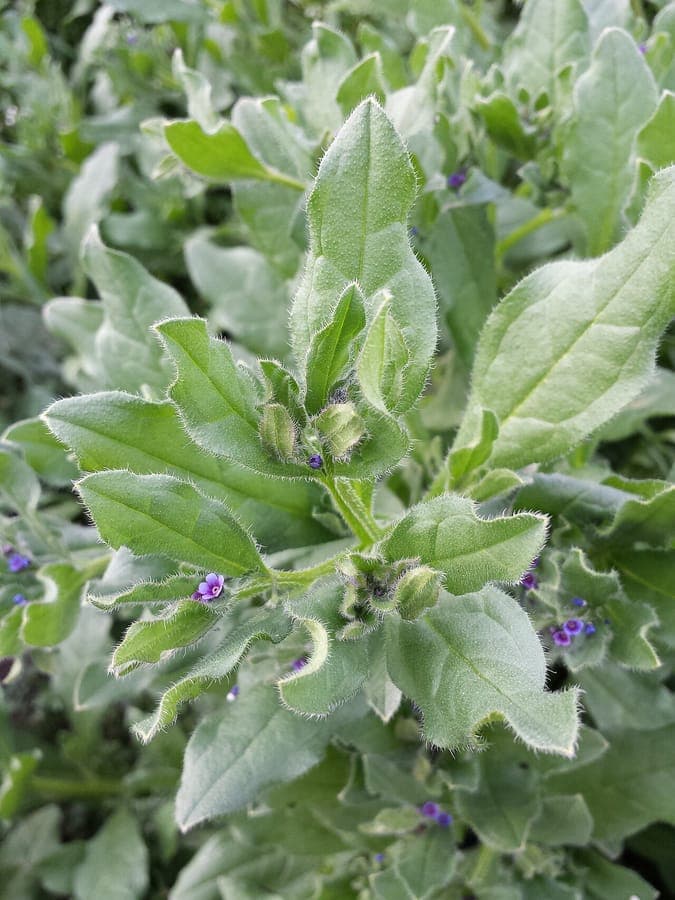
Stefan.lefnaer / CC BY-SA 4.0, via Wikimedia Commons
Madwort: complete guide
Asperugo procumbens
Want to see Madwort: complete guide in your garden?
1 minute, no credit card
Overview
Madwort, or Asperugo procumbens, is a low-profile annual herb from the Boraginaceae family that often flies under the radar. While sometimes mistaken for a weed, it's a resilient little plant with ecological value and quiet charm. Native to parts of Europe and Asia, it naturally occurs on dry, sandy soils along roadsides, field margins, and disturbed ground. In garden settings, it fits beautifully in wildflower meadows, rock gardens, or as a casual ground cover in overlooked corners.
On gardenworld.app, you can design a garden layout that embraces Madwort's natural spreading habit, giving it space to self-seed and weave through other drought-tolerant species.
Appearance & bloom cycle
This herb has a creeping growth habit, with stems reaching up to 30 cm long that trail along the ground. The leaves are lance-shaped, slightly toothed, and covered in fine, bristly hairs-typical of the borage family. When brushed, they release a faint, earthy scent.
From April through August, Madwort produces tiny, vivid blue flowers, about 5 mm in diameter, with five distinct petals. The blooms appear in the leaf axils and stay close to the stems. The flowering period is impressively long, especially in sunny spots. These small flowers attract early-season pollinators like hoverflies and small bees, contributing to garden biodiversity.
After blooming, the plant forms hard, prickly nutlets that easily cling to clothing and animal fur-nature's effective dispersal method. This self-seeding ability makes Madwort ideal for naturalistic gardens where plants are allowed to move and establish freely.
Ideal location
Madwort thrives in full sun to light shade, scoring a 7/10 on the light scale. Aim for at least 5 hours of direct sunlight daily. It does well at the edges of lawns, between paving stones, or along gravel paths where the soil is open and undisturbed.
South- or southeast-facing areas are best, particularly in dry garden styles. Avoid dense shade under large shrubs or trees, as the plant will become leggy and produce fewer flowers.
Soil requirements
Well-drained soil is essential-sandy or light loamy types work best. Madwort prefers a slightly alkaline to alkaline pH between 7.5 and 8.0. It's a natural fit for calcareous soils or gardens with limestone features, walls, or paths.
Don't enrich the soil with compost or manure. This plant actually performs better in poor, low-nutrient conditions. Fertile soil leads to floppy growth and reduced flowering.
Free design
Want to see Madwort: complete guide in your garden? Make a free design now.
Watering
Madwort is highly drought-tolerant. Once established, it rarely needs supplemental watering. During germination and the first few weeks after sowing or transplanting, keep the soil lightly moist-about 2–3 weeks. After that, rely on rainfall.
Only water during prolonged dry spells lasting over three weeks. Use collected rainwater if possible, and water early in the morning or late in the evening to minimize evaporation. Overhead watering in heavy soils can encourage root rot.
Pruning
No pruning is required. As an annual, Madwort completes its lifecycle in one season. You can tidy up by removing dead stems in early spring before new seedlings emerge. Wear gloves-the plant's texture can be rough.
If you want to control spread, cut back flowering stems before seeds mature, or collect seed heads. Otherwise, let it reseed naturally for next year's display.
Maintenance calendar
- January: No action needed.
- February: Prepare seed trays if starting indoors.
- March: Clear debris from potential germination zones.
- April: Germination begins; watch for seedlings in sunny patches.
- May: Peak bloom starts; check for visiting pollinators.
- June: Full flowering; ideal for garden photos.
- July: Continue flowering; monitor for self-seeding.
- August: Seed development underway; plan for collection.
- September: Scatter collected seed or allow natural dispersal.
- October: Thin out overcrowded areas if desired.
- November: No maintenance.
- December: Dormant; plan next season.
Use the seasonal planner on gardenworld.app to stay on track with sowing and care tasks.
Winter hardiness
Madwort is an annual, so the plant dies back in autumn. However, the seeds are winter-hardy down to -15°C (USDA zone 7b). In colder regions (zone 6 and below), collect and store seeds indoors for spring sowing.
A light mulch of straw or leaf litter can help protect overwintering seeds in marginal zones.
Companion plants
Pair Madwort with other drought-tolerant species like Anchusa capensis, Leucanthemum vulgare, or Teucrium chamaedrys. It blends well with low thymes, sedums, or in gravel gardens with Bellis perennis.
Avoid heavy feeders or vigorous perennials that compete for space and nutrients. Madwort shines in relaxed, low-maintenance plantings where spontaneity is welcomed.
Closing
Madwort isn't flashy, but it brings subtle beauty and resilience to the garden. Its long bloom time, pollinator appeal, and minimal needs make it a smart choice for sustainable gardening. Embrace its wild side and let it find its own place in your outdoor space.
Find seeds at garden centres like B&Q, Wyevale, or online botanical suppliers.
Want to see Madwort: complete guide in your garden? Make a free design now.
Upload a photo, pick a style, and get a photorealistic design with plant list in under a minute.
No credit card required


Similar plants
Western waterleaf: complete guide
Hydrophyllum occidentale
Full growing guide for western waterleaf (Hydrophyllum occidentale): shade tolerance, soil needs, watering, winter hardiness and naturalistic garden use.
Limestone phacelia (Phacelia affinis): complete guide
Phacelia affinis
Full guide to Phacelia affinis, the limestone phacelia: sowing tips, purple-blue bee flowers, drought tolerance and uses in dry or wildlife gardens.
Pyrenean viper's bugloss: complete guide
Echium asperrimum
Echium asperrimum is a striking biennial from the western Mediterranean with rough bristly stems and vivid blue flowers. A magnet for bees and a bold border plant.