
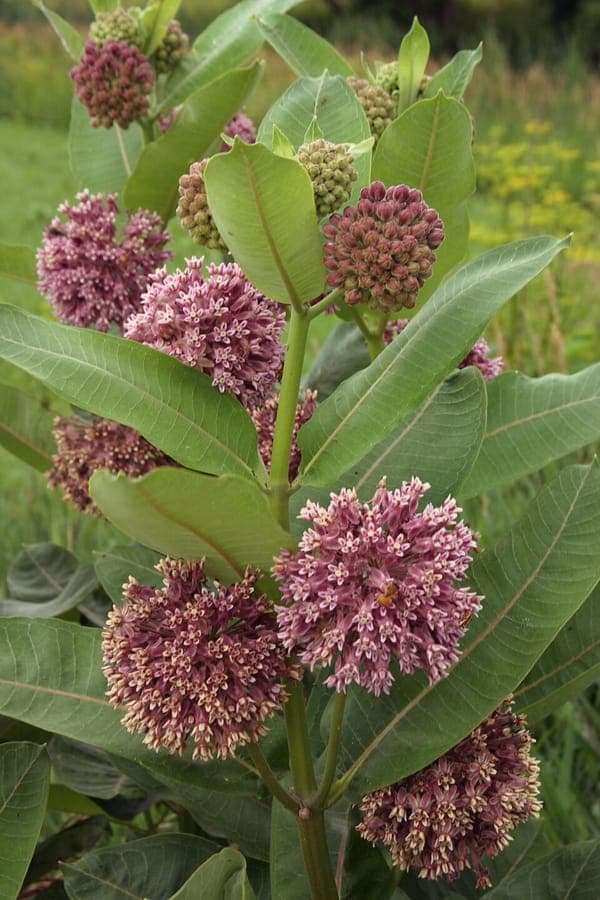
Amos Oliver Doyle / CC BY-SA 4.0, via Wikimedia Commons
Common milkweed: complete guide
Asclepias syriaca
Want to see Common milkweed: complete guide in your garden?
1 minute, no credit card
Overview
Asclepias syriaca, commonly known as common milkweed, is a hardy perennial forb native to eastern North America, including states like Illinois, Indiana, and Iowa. It's a vital plant for monarch butterfly conservation, serving as the sole food source for monarch caterpillars. Belonging to the Apocynaceae family, this herbaceous plant thrives in open fields and along roadsides in the wild but adapts beautifully to cultivated gardens. Standing 3 to 5 feet tall and spreading up to 2 feet wide, it's a bold presence in any border.
Growing common milkweed isn't just about aesthetics-it's about supporting biodiversity. Once established, it's low-maintenance and drought-tolerant, making it a smart choice for eco-conscious gardeners. It's winter hardy in USDA zones 3 through 9, meaning it handles freezing winters with ease. If you're planning a butterfly garden, consider using gardenworld.app to map out spacing, sunlight needs, and companion species for a balanced design.
Appearance & bloom cycle
Common milkweed features large, oval leaves with a soft, silvery underside. The plant produces dense, spherical clusters of fragrant flowers, typically 3 to 4 inches across, in shades of pinkish-purple. Blooming occurs from June through August, peaking in July. The flowers emit a sweet, almost spicy scent that attracts bees, hummingbirds, and, of course, monarch butterflies.
After blooming, seed pods form and split open in late fall, releasing seeds attached to silky white floss-nature's parachute system. This floss was historically used for insulation and life jackets, and today it's a favorite for natural floral arrangements.
Ideal location
This plant thrives in full sun. Aim for a light exposure rating of 8 or higher on a 1–10 scale. It needs at least 6 to 8 hours of direct sunlight daily. Choose an open site free from tree shade or tall structures. It grows well in meadow-style gardens, native plant borders, or pollinator corridors.
If you're unsure whether your garden gets enough sun, use gardenworld.app's sunlight mapping tool. It analyzes your yard's exposure and recommends ideal placement for sun-loving plants like Asclepias syriaca.
Soil requirements
Common milkweed is adaptable but prefers well-drained soils with a slightly alkaline pH between 7.5 and 8.0. It tolerates poor, sandy, or gravelly soils but struggles in heavy clay unless amended with grit or compost. Avoid waterlogged spots-this plant hates wet feet and is prone to root rot in soggy conditions.
If your soil is acidic, a light application of garden lime can help adjust pH. Conduct a soil test before planting, and consider using a home pH meter. Healthy young plants are available at garden centres across the UK and US, including local independents and larger chains.
Free design
Want to see Common milkweed: complete guide in your garden? Make a free design now.
Watering
Once established, common milkweed is highly drought tolerant. During the first growing season, water deeply once a week to encourage strong root development. After that, supplemental watering is rarely needed unless facing prolonged dry spells.
Always water at the base to prevent fungal diseases. Overhead watering can lead to powdery mildew, especially in humid conditions. Drip irrigation or soaker hoses work best for maintaining consistent moisture without wetting the foliage.
Pruning
Pruning isn't required for plant health, but it can help manage size and prevent excessive self-seeding. Cut back stems to 4–6 inches above ground in late fall or early spring. If you want to collect seeds or limit spread, remove seed pods before they split open.
Deadheading spent flowers can extend blooming slightly and improve appearance, but it's not essential. Let some pods mature if you're supporting monarch populations-those seeds will grow next season's habitat.
Maintenance calendar
- January: Dormant; no care needed
- February: Check for old stems, plan cleanup
- March: Cut back dead foliage if not done in fall
- April: Watch for emerging shoots, protect from slugs
- May: Water young plants weekly, monitor growth
- June: Blooming begins, watch for monarch eggs
- July: Peak bloom, minimal watering
- August: Flowers fade, seed pods develop
- September: Observe seed dispersal, consider containment
- October: Remove pods to control spread
- November: Final pruning, clean up garden debris
- December: Dormant; protect roots with leaf mulch in colder zones
Winter hardiness
Asclepias syriaca is cold hardy to USDA zone 3 (-40°F / -40°C). In zones 3–9, it dies back to the ground in winter and re-sprouts in spring. No winter protection is usually needed, though a light mulch layer can help in zone 3 and 4 gardens during extreme cold.
Avoid heavy mulching-this can trap moisture and cause crown rot. Let nature take its course; the plant is well-adapted to seasonal cycles.
Companion plants
Pair common milkweed with other sun-loving, drought-tolerant perennials. Excellent companions include coneflower (Echinacea), black-eyed Susan (Rudbeckia), bee balm (Monarda), and little bluestem (Schizachyrium scoparium). These plants share similar soil and water needs and together create a vibrant, wildlife-friendly display.
Avoid aggressive spreaders like mint or canna, which may overwhelm milkweed. Using gardenworld.app, you can generate companion planting layouts based on your garden size and conditions-making it easier to build a resilient, low-maintenance ecosystem.
Closing
Common milkweed isn't just a plant; it's a lifeline for monarch butterflies and a symbol of ecological gardening. With its bold flowers, minimal care, and high wildlife value, it earns a spot in any sustainable garden. Give it sun, well-drained soil, and space to spread, and you'll be rewarded with years of beauty and biodiversity. Find healthy specimens at garden centres or native plant nurseries, and start building a pollinator paradise today.
Want to see Common milkweed: complete guide in your garden? Make a free design now.
Upload a photo, pick a style, and get a photorealistic design with plant list in under a minute.
No credit card required


Similar plants
Asclepias speciosa: complete guide
Asclepias speciosa
Showy milkweed: striking pink-white flowers, fragrant blooms. Essential monarch butterfly host plant.
Plumeria obtusa: complete guide
Plumeria obtusa
Discover the Singapore graveyard flower: an exotic evergreen with mesmerizing white blooms and exquisite fragrance. Expert cultivation, care, and maintenance tips.
Wrightia arborea: complete guide
Wrightia arborea
Wrightia arborea, known as doodhi, is an elegant tree from South Asia with delicate white flowers. Discover how to cultivate this exotic plant.