
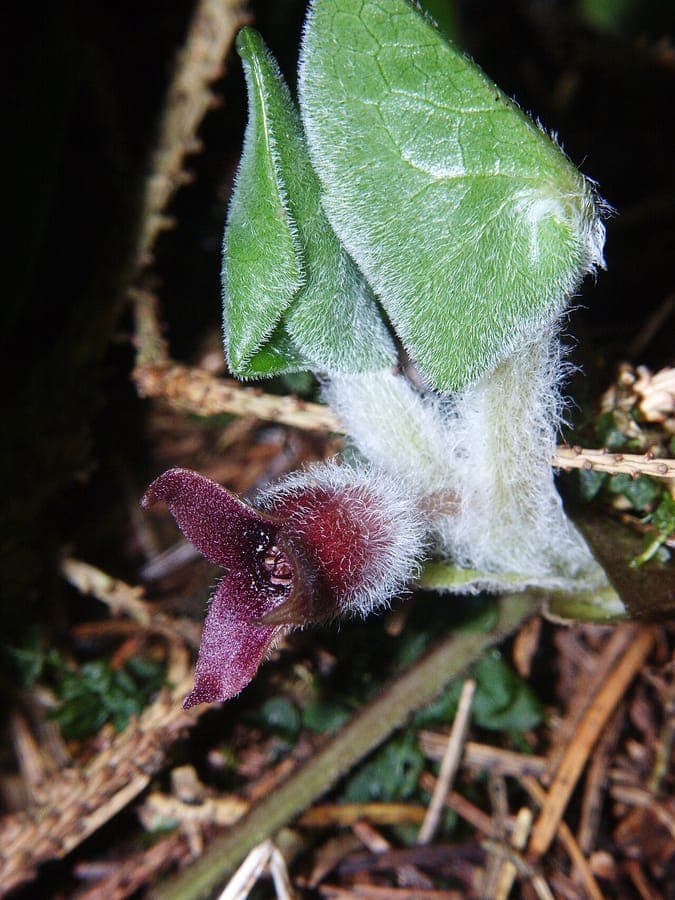
Bernd Haynold / CC BY 2.5, via Wikimedia Commons
Asarabacca: complete guide
Asarum europaeum
Want to see Asarabacca: complete guide in your garden?
1 minute, no credit card
Overview
Asarabacca, or Asarum europaeum, is a tough, evergreen groundcover that thrives where other plants struggle. Native to deciduous forests across Central and Eastern Europe, it's adapted to low-light conditions and makes a reliable choice for gardeners dealing with dry shade under trees or north-facing walls. With a height of just 10–15 cm, it spreads slowly but steadily via underground rhizomes, forming a dense carpet over time. It's fully hardy in USDA zones 5 to 8, making it suitable for most of the UK, US Northeast, and much of Europe.
This plant doesn't demand attention, but it rewards patience. Once established, it suppresses weeds and stays fresh throughout the year. On gardenworld.app, you can design a shade-tolerant layout that highlights Asarabacca's quiet elegance.
Appearance & bloom cycle
The foliage consists of rounded, leathery leaves about 5–8 cm wide. They're deep green, glossy, and marked with subtle veins that catch the light in spring and autumn. From April to June, small, maroon-brown flowers emerge close to the ground, hidden beneath the leaves. These aren't showy, but they add a natural, woodland charm. The flowers give way to small, egg-shaped fruit, though this is rarely seen in garden settings.
Growth is moderate: a single plant covers about 30 cm in diameter over two to three years. For faster coverage, space plants 25 cm apart. Leaves may bronze in winter during cold snaps but rebound quickly in spring.
Ideal location
Choose a spot with minimal sun exposure. Asarabacca thrives in light to full shade (light level 3/10). Ideal spots include under beech or hornbeam trees, along north-facing fences, or in shaded corners of mixed borders. Avoid hot, sunny areas-direct afternoon sun scorches leaves and slows growth.
It performs poorly under dense evergreens like pines, where the soil is dry and acidic. Instead, pair it with ferns, hellebores, or wood anemones for a naturalistic look. Use gardenworld.app to simulate how light levels shift across your garden and find the perfect spot for this understated performer.
Soil requirements
Soil should be moist but well-drained, rich in organic matter. Asarum europaeum prefers a neutral to slightly alkaline pH of 7.0–7.5. Heavy clay soils work if they don't waterlog. Improve sandy soils with compost, leaf mould, or well-rotted manure. Avoid highly acidic conditions-common under conifers.
Test your soil with a kit from a garden centre. If pH is too low, amend with a light application of ground limestone, but don't overdo it. Too much lime can lock out nutrients and stunt growth.
Free design
Want to see Asarabacca: complete guide in your garden? Make a free design now.
Watering
Once established, Asarabacca is moderately drought-tolerant but prefers consistent moisture. In normal conditions, rainfall is sufficient. During dry spells in July and August, water deeply once a week. Use rainwater if possible-this plant dislikes hard, alkaline tap water.
Avoid waterlogged soil. Mulch with leaf litter or well-rotted compost to retain moisture and reduce temperature fluctuations. A 5 cm layer is ideal, but keep it away from the crown to prevent rot.
Pruning
No pruning is needed. Occasionally remove damaged or tatty leaves in early spring to keep the patch looking fresh. Use clean, sharp snips and avoid cutting into rhizomes. Winter-browned foliage can be left in place-it protects new growth and breaks down naturally.
If leaves collect debris, a gentle brush with a soft garden broom keeps the area tidy without disturbing the plant.
Maintenance calendar
January: Dormant. No action required. February: Check for damaged leaves. Light tidy-up if needed. March: Monitor soil moisture. Begin light feeding if soil is poor. April: New shoots emerge. Let flowers develop undisturbed. May: Watch for dryness. Replenish mulch as needed. June: Check for weeds. July–August: Monitor for drought. Water weekly during dry periods. September: Stop feeding. Let fallen leaves accumulate. October: Inspect for pests or disease. Rare issues. November: Leave everything. Protective layer builds. December: Dormant. No care needed.
Winter hardiness
Hardy to -25°C (USDA zone 5), Asarabacca survives harsh winters with ease. Foliage may bronze or curl slightly in cold weather, but the rhizomes stay protected underground. A natural mulch of fallen leaves offers insulation without smothering the plant.
Companion plants
Pair with ferns (Dryopteris filix-mas), hellebores (Helleborus orientalis), wood anemones (Anemone nemorosa), or epimediums. It works well under deciduous shrubs like hazel or hawthorn. Avoid aggressive spreaders like ground elder or ivy.
In a woodland garden, combine with wild garlic (Allium ursinum) or barren strawberry (Potentilla sterilis) for a layered effect. Use height and texture contrasts to add depth.
Closing
Asarabacca is a quiet achiever-unspectacular but dependable. It fills challenging spots with minimal care, staying evergreen and weed-suppressing for years. Plant it in shade, give it humus-rich soil, and you'll enjoy its subtle beauty season after season.
Find it at garden centres across the UK and US. Look for healthy plants in 9–11 cm pots for faster coverage. Combine with other shade lovers to create a full, natural look. And remember: on gardenworld.app, you can visualise your planting scheme and ensure Asarabacca fits perfectly into your garden's ecosystem.
Want to see Asarabacca: complete guide in your garden? Make a free design now.
Upload a photo, pick a style, and get a photorealistic design with plant list in under a minute.
No credit card required


Similar plants
Pistolochia Birthwort: complete guide
Aristolochia pistolochia
Full profile of Aristolochia pistolochia, the Pistolochia birthwort: unusual pipe-shaped flowers, care, soil, and garden use in dry borders.
Aristolochia gigantea: complete guide
Aristolochia gigantea
Aristolochia gigantea, the giant dutchman's pipe or duckflower, is a spectacular tropical climbing vine with colossal, intricately patterned flowers. Dramatic addition to warm regions and glasshouses.
Duckflower: Complete Guide
Aristolochia grandiflora
Learn everything about Aristolochia grandiflora: care, growing conditions and tips for this spectacular ornamental climber.