
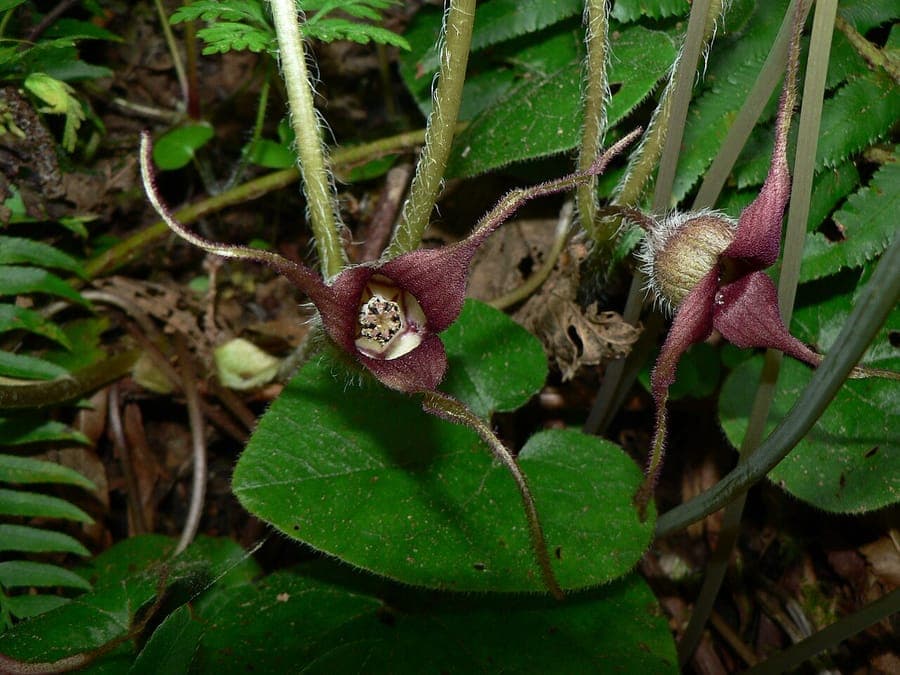
Walter Siegmund / CC BY 2.5, via Wikimedia Commons
Wild Ginger: complete guide
Asarum caudatum
Want to see Wild Ginger: complete guide in your garden?
1 minute, no credit card
Overview
Asarum caudatum, commonly known as wild ginger or Western wild ginger, is a modest yet attractive groundcover native to western North America from British Columbia to central California. This evergreen plant slowly forms dense mats of heart-shaped leaves and produces hidden, burgundy-brown flowers positioned close to ground level. Perfectly hardy in USDA zones 4 to 9, Asarum caudatum is an ideal choice for shady borders, beneath trees, and in moist, woodland-like situations.
The plant is treasured by native plant enthusiasts and shade gardeners for its elegant foliage and preference for challenging sites beneath trees where many other plants struggle. With minimal maintenance, Asarum caudatum provides long-lasting groundcover effectiveness.
Appearance and bloom
Asarum caudatum grows as a low mat, typically 20 to 30 cm tall, expanding slowly through underground rhizomes. Leaves are heart-shaped to kidney-shaped, approximately 8 to 12 cm wide, with matte dark green coloration. They remain green year-round in milder climates but may suffer winter damage in harsh cold.
Flowers are small, inconspicuous, and hidden close to ground level beneath the foliage. They appear from April to May with distinctive burgundy-brown coloration and pronounced, tail-like lobes. The flowers emit subtle fragrance and are primarily pollinated by flies. After flowering, small seed capsules develop.
Ideal location
Asarum caudatum thrives in deep shade to partial shade. The plant grows best beneath dense tree canopies or at the base of north-facing walls with minimal direct sun. This is actually advantageous since many gardens have large shaded areas that are difficult to plant.
The plant tolerates moist to moderately wet conditions well and grows in woodland-like, humus-rich environments. Positioning in sheltered sites promotes growth better than exposed windy locations.
Soil
Asarum caudatum requires nutrient-rich, humus-laden soil with good moisture-holding capacity. Amend soil with mature compost or leaf mold before planting. The plant prefers slightly acidic soil (pH 5.5 to 6.5) but accepts neutral conditions as well.
Heavy clay soil can be improved with leaf mold addition. Unlike many plants, Asarum caudatum performs well with limited drainage because it naturally grows in moist forest pockets. Complete waterlogging should be avoided. Applying thick mulch layer (10-15 cm) helps maintain proper moisture balance.
Free design
Want to see Wild Ginger: complete guide in your garden? Make a free design now.
Watering
Asarum caudatum requires consistently moist soil, especially during the growing season. Water regularly during dry periods, particularly in the first year after planting. Once well-established, the plant can tolerate longer dry spells, especially in shade where evaporation is minimal.
Summer watering is important during dry spells. In winter, well-established plants require minimal supplemental water. Ensure soil never completely dries out but also avoid standing water.
Pruning
Asarum caudatum requires virtually no pruning. Remove only clearly damaged or dead leaves in spring. The plant self-regulates through slow rhizome expansion.
When refreshing the site, extra leaf mulch can be applied in autumn or spring. This helps the plant feel at home in a woodland environment.
Maintenance calendar
March-April: Check for winter damage, apply leaf mulch, begin watering. May-June: Flowering period, ensure consistent soil moisture, remove damaged leaves. July-October: Growth phase, regular watering during dry spells, replenish mulch. November-February: Winter rest, minimal watering, clear frost damage.
Winter hardiness
Asarum caudatum is hardy in USDA zones 4 to 9, making it extremely suitable for European climates. The plant tolerates snow and ice well. In zones 3 and colder, protection with thick leaf mulch may be beneficial.
The plant does not perform well in very warm, dry climates (zone 10+). In warm regions, plants need more shade and regular watering. Container specimens can be overwintered indoors in cold conditions.
Companion plants
Asarum caudatum combines well with other forest floor groundcovers such as Helleborus, Epimedium, and Carex species. Also pair with ferns, hostas, and other moisture-loving shade plants.
In woodland gardens, blooming trees and shrubs like Ilex, Sambucus, and understory shrubs complement beautifully. For structure, small conifers or ferns can be incorporated.
Closing
Asarum caudatum is an underappreciated gem for those seeking an effective groundcover for moist, shady sites. This plant requires minimal care and offers elegant green visible year-round. In woodland gardens, beneath trees, and in sheltered corners, this plant forms an essential component of successful shade design.
Find this plant at specialized nurseries and online. Visit gardenworld.app for plant combinations and design suggestions.
Want to see Wild Ginger: complete guide in your garden? Make a free design now.
Upload a photo, pick a style, and get a photorealistic design with plant list in under a minute.
No credit card required


Similar plants
Pistolochia Birthwort: complete guide
Aristolochia pistolochia
Full profile of Aristolochia pistolochia, the Pistolochia birthwort: unusual pipe-shaped flowers, care, soil, and garden use in dry borders.
Aristolochia gigantea: complete guide
Aristolochia gigantea
Aristolochia gigantea, the giant dutchman's pipe or duckflower, is a spectacular tropical climbing vine with colossal, intricately patterned flowers. Dramatic addition to warm regions and glasshouses.
Duckflower: Complete Guide
Aristolochia grandiflora
Learn everything about Aristolochia grandiflora: care, growing conditions and tips for this spectacular ornamental climber.