
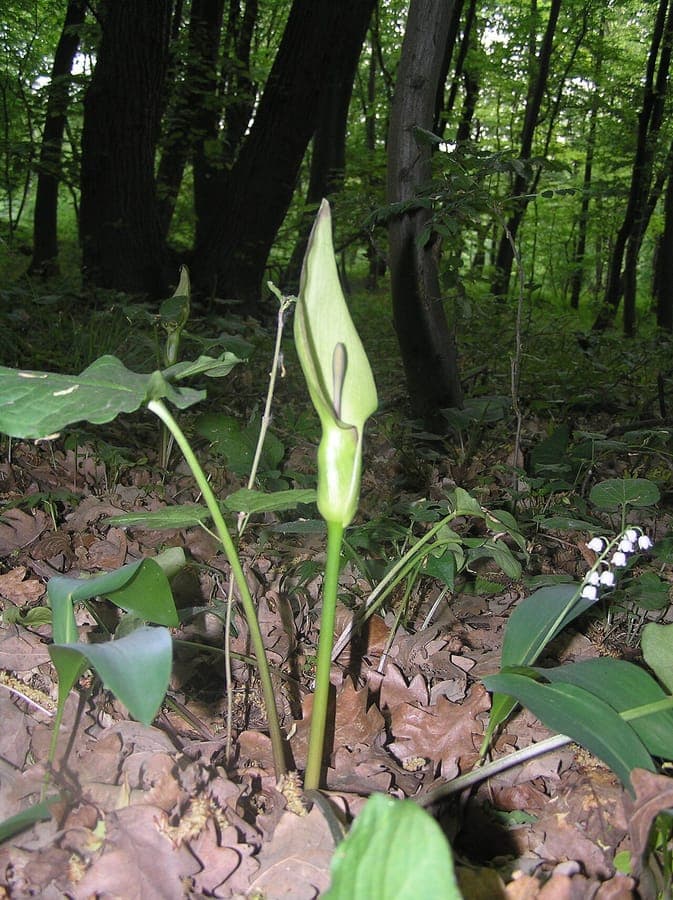
Petr Filippov / CC BY-SA 3.0, via Wikimedia Commons
Arum cylindraceum: complete guide
Arum cylindraceum
Want to see Arum cylindraceum: complete guide in your garden?
1 minute, no credit card
Overview
Arum cylindraceum, known as the southeastern arum or alpine arum, is a European plant from the Araceae family. This fascinating plant grows from Italy and Portugal to Turkey and Cyprus. Despite its toxic nature, it is valued in shaded gardens for its structure and seasonal interest. The plant combines elegance with exotic charm.
Appearance & Bloom
Arum cylindraceum typically reaches 20 to 40 centimeters in height. The leaves are narrow-ovate to arrow-shaped, with attractive green color. In spring, from April to May, the characteristic inflorescence appears: a purple to cream-colored spathe that wraps around a spadix. This spathe has a distinctive cylindrical shape that gives the plant its scientific name. After flowering, bright red berries develop in the same location where the flower was.
Ideal Location
Arum cylindraceum thrives best in half shade to full shade. The plant cannot grow well in full sun, especially in warm climates. Protected locations with filtered sunlight are preferred. The plant appreciates protection from strong winds.
Soil
This plant grows best in well-draining soils enriched with humus. Neutral to slightly acidic terrain is preferred. Ensure good drainage as waterlogging can cause root rot. Regular application of leaf mold improves soil structure.
Watering
Arum cylindraceum needs regular water especially during growth. The soil must not dry out, but waterlogging must be avoided. During the growing season water regularly. During the rest phase give less water.
Free design
Want to see Arum cylindraceum: complete guide in your garden? Make a free design now.
Pruning
Minimal pruning is needed. Remove damaged or withered leaves. Dead flowers and fruit stalks can be removed for neatness, but many gardeners leave them as they are decorative. Gloves recommended due to toxicity.
Maintenance Calendar
Spring: Watch seeds germinate; water as growth occurs. Summer: Plant withdraws; less water needed. Fall: Enjoy red berries. Seed collection possible. Winter: Plant rests. Remove rotted material.
Winter Hardiness
Arum cylindraceum is hardy in USDA zones 6-10. The plant can tolerate temperatures down to -15 degrees Celsius. In very cold areas, mulch protection is beneficial. The above-ground parts die back in winter.
Companion Plants
This plant combines well with:
- Helleborus (Christmas rose)
- Hosta species
- Brunnera (Siberian bugloss)
- Heuchera (coral bells)
- Polystichum (male fern)
Closing
Arum cylindraceum is a special plant that adds character to shaded areas. Its unusual inflorescence and bright red berries make it botanically fascinating. Care for this plant well and it will give you years of beautiful foliage and autumn fruit display. Treat it with respect for its toxic nature, but many gardeners find the beauty worth the caution.
For purchase options in English-speaking regions:
- Local garden centers
- Specialty shade plant nurseries
- Online plant retailers
Gardenworld.app helps you find the best place for this shade specialist in your garden. Explore our guide for more inspiration.
Want to see Arum cylindraceum: complete guide in your garden? Make a free design now.
Upload a photo, pick a style, and get a photorealistic design with plant list in under a minute.
No credit card required


Similar plants
Arrowhead vine: complete guide
Syngonium auritum
Everything about Syngonium auritum, the tropical five-fingers houseplant. Care, location, watering, and pruning explained clearly for beginners and enthusiasts.
Minute duckweed: complete guide to Lemna perpusilla
Lemna perpusilla
Everything about Lemna perpusilla, the minute duckweed: ecology, pond management, water quality and care in garden water features.
Dead horse arum lily: complete guide
Helicodiceros muscivorus
Everything about the dead horse arum lily (Helicodiceros muscivorus): growing conditions, spectacular bloom, thermogenesis, and care for this Mediterranean aroid.