
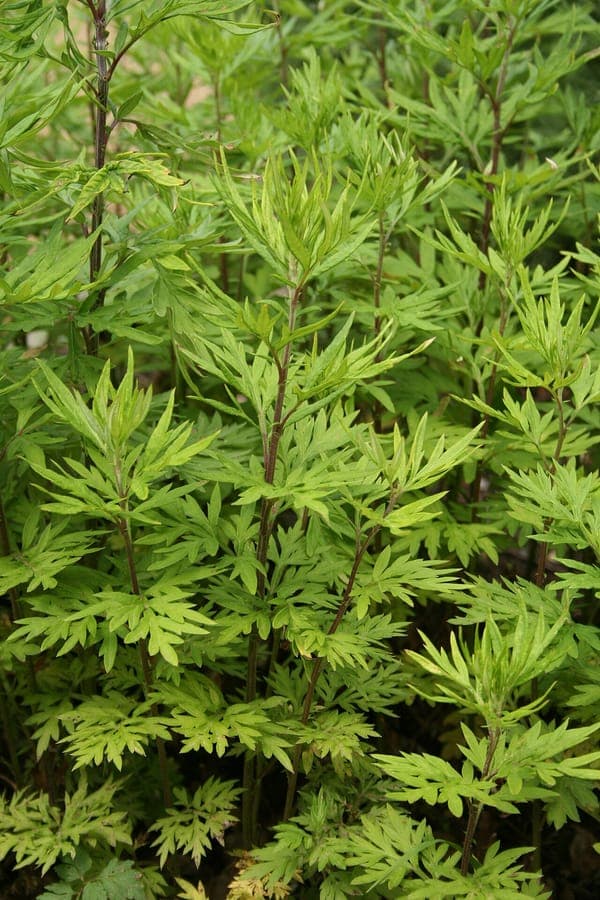
Oceancetaceen - Alice Chodura / CC BY-SA 3.0, via Wikimedia Commons
Chinese mugwort: complete guide
Artemisia verlotiorum
Want to see Chinese mugwort: complete guide in your garden?
1 minute, no credit card
Overview
Chinese mugwort, or Artemisia verlotiorum, is a resilient perennial that brings texture and subtle beauty to sunny garden beds. Native to regions across China, Assam, and the eastern Himalayas, this member of the Asteraceae family thrives in well-drained soils and full sun. It's not the kind of plant that shouts for attention - instead, it quietly earns its place with silvery foliage, upright form, and late-season structure. Hardy in USDA zones 5 to 8, it's a smart choice for gardens dealing with dry spells or rocky terrain. On gardenworld.app, you can design a planting scheme tailored to your garden's light and soil conditions, ensuring Chinese mugwort integrates seamlessly.
Appearance & bloom cycle
Chinese mugwort grows 80–120 cm tall with a spread of about 60 cm. It features deeply lobed, silvery-green leaves covered in fine hairs, giving the plant a soft, almost felt-like texture. From July through September, small purple, button-like flower heads appear at the tips of stiff, upright stems. These aren't flashy, but they add visual interest and attract pollinators like bees and hoverflies. The overall look is airy and architectural, making it ideal for adding depth to the mid-to-back of a border.
Ideal location
This plant thrives in full sun - aim for a 7/10 or higher on the light scale. It tolerates light afternoon shade but performs best where it gets at least 6–8 hours of direct sunlight. Plant it in a spot with good air circulation to prevent fungal issues. It works well in gravel gardens, dry slopes, or xeriscapes. Avoid low-lying or damp areas, as poor drainage leads to root rot. It's not suited for heavy shade or overly sheltered corners where humidity builds up.
Soil requirements
Chinese mugwort prefers neutral to slightly alkaline soil, with a pH between 7.0 and 7.5. It does well in sandy or loamy soils but struggles in heavy clay unless amended with grit or coarse sand. Avoid enriching the soil with compost or manure - this plant actually grows better in poor to moderately fertile conditions. Rich soil encourages leggy growth and weak stems. If your soil is acidic, consider adding a bit of lime to raise the pH gradually.
Watering
Once established, Chinese mugwort is highly drought-tolerant. During the first growing season (spring to early summer), water weekly during dry spells. After that, it rarely needs supplemental watering. Overwatering is a bigger risk than underwatering - soggy roots can cause the plant to collapse. Let the soil dry out completely between waterings. In most UK and US climates, natural rainfall is sufficient after the first year.
Free design
Want to see Chinese mugwort: complete guide in your garden? Make a free design now.
Pruning
Prune in early spring, just as new growth begins to emerge. Cut back the previous year's stems to 10–15 cm above ground level. This keeps the plant compact and prevents it from becoming woody or hollow in the center. Deadheading isn't necessary, but you can trim spent flower heads for a tidier look. Avoid cutting back in fall - leaving the stems intact helps protect the crown during winter.
Maintenance calendar
- Jan: Check for crown damage, leave old stems for winter protection
- Feb: Prepare tools for pruning, inspect root zone
- Mar: Cut back to 10–15 cm, lightly loosen topsoil
- Apr: Monitor new growth; water if no rain
- May: Watch for aphids or mildew; ensure good airflow
- Jun: Plant enters pre-bloom phase; reduce watering
- Jul–Sep: Blooming period; no feeding or extra water needed
- Oct: Leave standing for birds and winter structure
- Nov–Dec: Dormant; avoid wet mulch or heavy coverings
Winter hardiness
Chinese mugwort is hardy in USDA zones 5–8. In zone 5, it may benefit from a light winter mulch of dry leaves or straw if temperatures drop below -20°C. In milder zones, it usually survives without protection. The key threat isn't cold, but wet soil during winter. Ensure the planting site drains well. Avoid using moisture-retaining mulches like bark - they can trap water against the crown.
Companion plants
Pair Chinese mugwort with other drought-tolerant perennials. Good companions include Echinacea, Sedum 'Autumn Joy', Stachys byzantina, and ornamental grasses like Miscanthus. Its silvery foliage contrasts beautifully with purple, yellow, or red-toned blooms. Avoid moisture-loving plants like ferns or astilbe. On gardenworld.app, you can visualize companion planting layouts that maximize texture and bloom timing.
Closing
Chinese mugwort isn't flashy, but it's dependable - the kind of plant that holds a border together when others fade. It asks for little and gives back with structure, texture, and late-season interest. If you're designing a low-maintenance, ecologically sound garden, it's a strong contender. Available at garden centres across the UK and US, often sold under its botanical name. Be sure to check the label - it's sometimes confused with common mugwort (Artemisia vulgaris), which is more invasive.
Want to see Chinese mugwort: complete guide in your garden? Make a free design now.
Upload a photo, pick a style, and get a photorealistic design with plant list in under a minute.
No credit card required


Similar plants
Calendula stellata: complete guide
Calendula stellata
Complete guide to Calendula stellata, the star-flowered marigold from Sicily: location, soil, watering and companion planting tips.
Korean chrysanthemum: complete guide
Chrysanthemum x rubellum
Chrysanthemum x rubellum is a hardy autumn perennial with single pink to copper flowers from August to November. Care and combinations.
Helianthus divaricatus: complete guide
Helianthus divaricatus
Helianthus divaricatus is a North American woodland sunflower with yellow summer blooms, ideal for naturalistic borders and shady edges.