
Wikimedia Commons / CC BY-SA 3.0, via Wikimedia Commons
Artemisia schmidtiana: complete guide
Artemisia schmidtiana
Want to see Artemisia schmidtiana: complete guide in your garden?
1 minute, no credit card
Overview
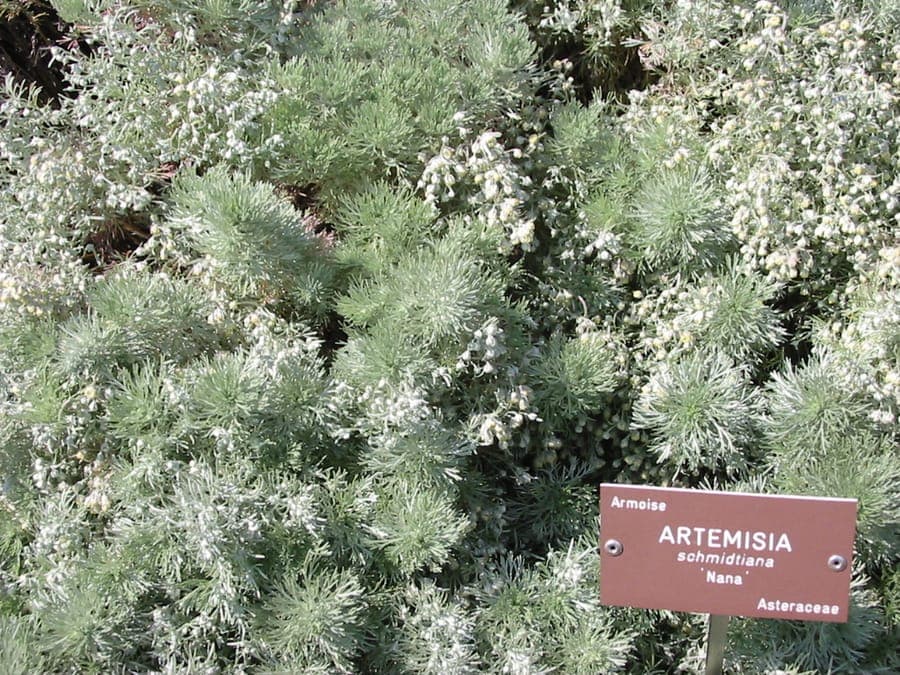
Artemisia schmidtiana, commonly known as Angel's Hair or Kurilen-Beifuss, is an elegant herb from the Asteraceae family. This East Asian plant, originating from Russia's Far East, Japan, and the Kuril Islands, is renowned for its fine, silvery-white foliage and graceful growth habit. The plant forms compact, silver nests creating striking contrast with dark stones, paths, and darker plant species.
The foliage of Artemisia schmidtiana is truly unique and deserves all attention. The fine, hair-like leaves display a deep silvery-white color that shimmers and glows in sunlight. This foliage remains attractive year-round, making this plant ideal for sustained garden interest.
Appearance and Bloom
Artemisia schmidtiana grows as a compact, bushy mound typically reaching 20-30 centimeters in both height and width. The foliage is extremely fine, almost hair-like, giving rise to the popular name "Angel's Hair". This delicate texture creates an ethereal, almost cloud-like appearance.
The plant produces small yellow flowers in summer, though these are rather inconspicuous and many gardeners remove them, as they're less attractive than the silvery-white foliage. Following bloom, small seeds form, dispersed by wind.
The herbaceous fragrance of the foliage is characteristic of many Artemisia species. Some people find this pleasantly spicy, while others appreciate its subtle charm.
Ideal Location
Artemisia schmidtiana thrives best in warm, sunny locations. The plant minimizes moisture in dry, full-sun environments. This makes it perfect for sunny gardens, Mediterranean gardens, and dry slopes where other plants struggle.
While the plant can grow in partial shade, the silvery-white color will be far less pronounced, with foliage taking on a more green cast. For best effect, plant Artemisia schmidtiana in full sun.
The plant tolerates strong wind well, making it suitable for windy locations. Despite its delicate appearance, it's actually a strong, resilient plant.
Soil
Artemisia schmidtiana requires excellent drainage. This is crucial: wet soil in winter leads to root rot and plant death. The ideal soil composition is sandy loam with substantial amounts of gravel or perlite for drainage.
The plant thrives in poor soils and requires minimal feeding. Excessive fertility sometimes leads to lax, less compact growth. A pH of approximately 7 to 7.5 is ideal.
In areas with heavy clay, it's important to use raised beds or containers. This gives you complete drainage control and ensures optimal plant growth.
Free design
Want to see Artemisia schmidtiana: complete guide in your garden? Make a free design now.
Watering
Watering should be approached carefully. Although Artemisia schmidtiana may seem delicate, it's truly drought-tolerant once established. During the first year, water regularly until roots are well-developed.
Following establishment, water sparingly. Once established, the plant thrives with natural rainfall. During very dry periods, you can water, but wait until the soil feels noticeably dry.
Winter watering must be minimized. Too much water is the greatest risk for this plant, especially in regions with wet winters.
Pruning
Artemisia schmidtiana responds well to pruning and can even tolerate severe cutting back. In spring, remove damaged portions and cut the plant to approximately half its size if it becomes overgrown.
Some gardeners prefer cutting away yellow flowers for a neater appearance, especially when abundant. This also promotes more compact growth.
While formal pruning isn't necessary, light trimming helps maintain shape and prevents uneven growth.
Maintenance Calendar
Spring (March-May): Light pruning or removal of dead parts from previous winter. First watering of the year.
Summer (June-August): Minimal watering in normal rainfall. Yellow flowers optionally removed. Plant thrives in warm, dry weather.
Autumn (September-October): Water carefully if needed. Limit plant and prepare for winter.
Winter (November-February): Practically no watering. Plant may shed foliage; leaves may become grayer.
Winter Hardiness
Artemisia schmidtiana is extremely hardy, tolerating temperatures down to -20 degrees Celsius or even lower in suitable conditions. This makes it suitable for most European climates.
The greatest winter danger is wet, waterlogged conditions rather than cold. Ensure excess water drains effectively. Mulching provides additional protection in very severe winters.
In Mediterranean climates, the plant grows outdoors without protection. In very wet regions, container cultivation may be beneficial, especially in winter.
Companion Plants
Artemisia schmidtiana works well in combination with other drought-loving Mediterranean plants. Lavandula stoechas (Spanish Lavender), Rosmarinus officinalis (Rosemary), and Santolina chamaecyparissus (Cotton Lavender) are excellent companions.
The contrasting silvery-white of Artemisia looks striking with darker plants like Salvia nemorosa (Wood Sage) or dark-purple Sedum species.
In containers, it combines well with other silver-foliaged plants or grasses like Festuca glauca (Blue Fescue).
Conclusion
Artemisia schmidtiana offers gardeners the opportunity to add texture, color, and structure to their designs. Whether you're having a gardenworld.app design created or gardening independently, this plant certainly deserves a place. With its unique silvery-white foliage and low-maintenance nature, it's perfect for modern and classic garden schemes alike.
Want to see Artemisia schmidtiana: complete guide in your garden? Make a free design now.
Upload a photo, pick a style, and get a photorealistic design with plant list in under a minute.
No credit card required


Similar plants
Calendula stellata: complete guide
Calendula stellata
Complete guide to Calendula stellata, the star-flowered marigold from Sicily: location, soil, watering and companion planting tips.
Korean chrysanthemum: complete guide
Chrysanthemum x rubellum
Chrysanthemum x rubellum is a hardy autumn perennial with single pink to copper flowers from August to November. Care and combinations.
Helianthus divaricatus: complete guide
Helianthus divaricatus
Helianthus divaricatus is a North American woodland sunflower with yellow summer blooms, ideal for naturalistic borders and shady edges.