
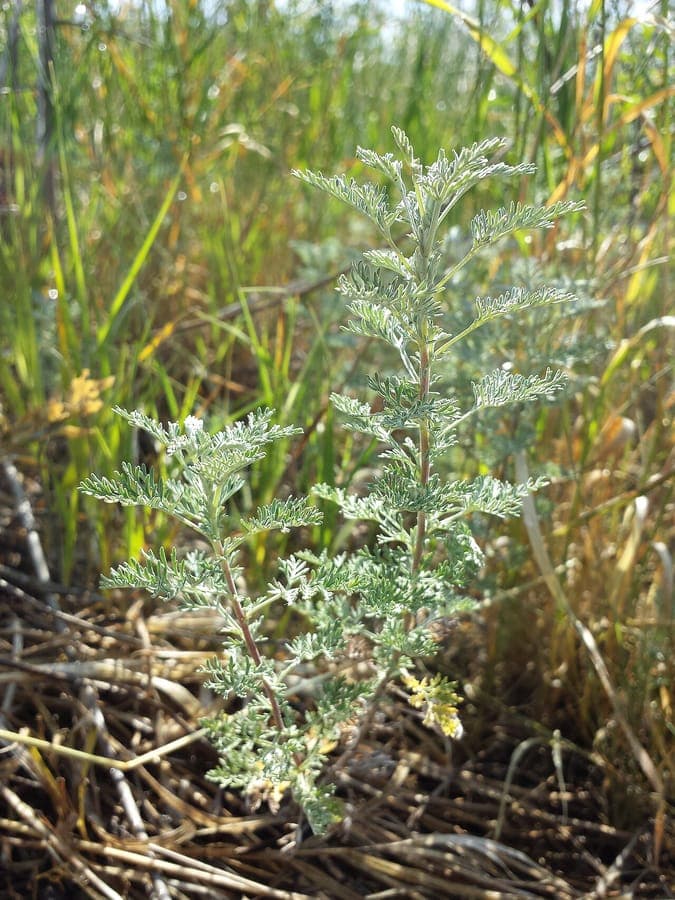
Stefan.lefnaer / CC BY-SA 3.0 at, via Wikimedia Commons
Roman wormwood: complete guide
Artemisia pontica
Want to see Roman wormwood: complete guide in your garden?
1 minute, no credit card
Overview
Roman wormwood (Artemisia pontica) is a compact, aromatic subshrub that brings texture and year-round interest to the garden. A member of the Asteraceae family, it's native to regions across Eastern Europe, Central Asia, and parts of Siberia. Unlike its more aggressive relative, common wormwood (Artemisia absinthium), this species stays well-behaved, rarely spreading beyond its intended space. It's perfect for gardeners who want structure without fuss.
Often overlooked in UK and North American gardens, Roman wormwood thrives in dry, well-drained spots where other plants struggle. Its silvery foliage adds contrast in borders, and its subtle scent-a mix of camphor and herbs-emerges when brushed against. On gardenworld.app, you can design a low-water garden scheme featuring this plant alongside drought-tolerant perennials for a cohesive, sustainable look.
Appearance & bloom cycle
Roman wormwood grows 30–50 cm tall with a spread of about 40 cm. It has upright, woody stems covered in finely divided, silvery-green leaves that give the plant a soft, feathery texture. The foliage remains attractive from spring through autumn, turning slightly greyer as summer heat intensifies.
In late summer, from August to September, small greenish-yellow flower clusters appear. These aren't showy, but they add a delicate touch and attract beneficial insects like hoverflies. The real value lies in the foliage, which provides consistent visual interest long after flowering ends. In milder climates, some leaves may persist through winter, especially if you leave the plant standing.
Ideal location
Full sun is non-negotiable. Roman wormwood needs at least 6–8 hours of direct sunlight daily to maintain its compact form and vibrant leaf color. In shade, it becomes leggy and pale. It's ideal for gravel gardens, rockeries, or sunny borders with minimal competition.
South- or southwest-facing slopes work best. The plant also adapts well to containers as long as drainage is excellent. If you're planning a xeriscape or Mediterranean-style garden, Roman wormwood fits right in. Use gardenworld.app to map your sun exposure and see how this plant integrates into your garden layout with complementary textures and colors.
Soil requirements
Well-drained soil is critical. Sandy, loamy, or chalky soils are ideal. Avoid heavy clay unless amended with grit or coarse sand to improve drainage. The plant tolerates a pH range of 6.5 to 8.0 and actually prefers slightly alkaline conditions.
It doesn't need rich soil-infertile, lean ground is better. Overly fertile soil leads to floppy growth and weak stems. Never add compost or manure at planting time. This plant evolved in poor soils and thrives where others fail.
Free design
Want to see Roman wormwood: complete guide in your garden? Make a free design now.
Watering
Water only during the first 6–8 weeks after planting. Once established, Roman wormwood is highly drought-tolerant and rarely needs supplemental watering. Overwatering is the fastest way to kill it.
When watering, apply at the base-never wet the foliage, as this can encourage fungal diseases. Only water if the top 5 cm of soil is completely dry. In average UK or US climates, rainfall is usually sufficient, even during dry spells.
Pruning
Cut back hard in early spring, between February and March, to about 10 cm above ground level. This encourages bushy new growth from the base and prevents the plant from becoming woody and sparse. Remove any dead or damaged stems at the same time.
Avoid pruning in summer or autumn. Let the plant stand through winter for visual interest and to shelter beneficial insects. Cut it back just before new growth begins in spring.
Maintenance calendar
- January – February: Inspect for winter damage
- March: Hard prune to 10 cm, clear debris
- April – May: Monitor for slumped growth; no feeding
- June – July: Check drought stress; ensure good air circulation
- August – September: Flowers appear; inspect for aphids
- October – December: Leave standing; protect only in extreme wet winters
Winter hardiness
Roman wormwood is hardy in USDA zones 4–8. It can survive temperatures down to -30°C when the soil is well-drained. In zone 7 and above, it often retains partial foliage. The main threat isn't cold, but wet soil in winter. Raised beds or sloped areas help prevent root rot.
In areas with heavy winter rainfall, consider light mulching with gravel to keep the crown dry. Avoid organic mulches like bark, which hold moisture.
Companion plants
Pair Roman wormwood with plants that share its sun and soil needs. Lavender (Lavandula angustifolia), Russian sage (Perovskia atriplicifolia), sedums (Hylotelephium telephium), and catmint (Nepeta faassenii) are excellent choices. The silver foliage contrasts beautifully with purple, blue, or yellow blooms.
Avoid moisture-loving plants like hostas or astilbes. Also steer clear of invasive spreaders like mint, which can overwhelm the root zone.
Closing
Roman wormwood is a quiet achiever-no flashy flowers, no dramatic height, but unbeatable for texture and resilience. It's a smart pick for low-maintenance, eco-friendly gardens. You'll find it at independent garden centres or online nurseries, often labelled as Artemisia pontica or small absinthe.
For best results, plant it where it gets full sun and stays dry. Combine it with other drought-tolerant perennials for a sustainable, beautiful border. And don't forget: on gardenworld.app, you can visualise how this plant fits into your garden design, season by season.
Want to see Roman wormwood: complete guide in your garden? Make a free design now.
Upload a photo, pick a style, and get a photorealistic design with plant list in under a minute.
No credit card required


Similar plants
Calendula stellata: complete guide
Calendula stellata
Complete guide to Calendula stellata, the star-flowered marigold from Sicily: location, soil, watering and companion planting tips.
Korean chrysanthemum: complete guide
Chrysanthemum x rubellum
Chrysanthemum x rubellum is a hardy autumn perennial with single pink to copper flowers from August to November. Care and combinations.
Helianthus divaricatus: complete guide
Helianthus divaricatus
Helianthus divaricatus is a North American woodland sunflower with yellow summer blooms, ideal for naturalistic borders and shady edges.