
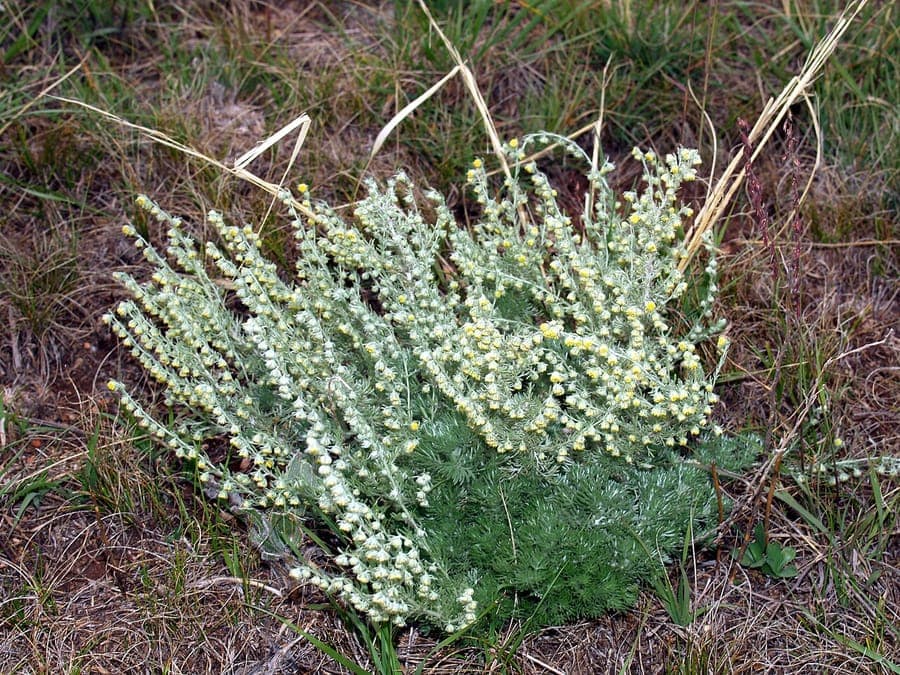
Jim Pisarowicz / Public domain, via Wikimedia Commons
Fringed Sage: Complete Guide
Artemisia frigida
Want to see Fringed Sage: Complete Guide in your garden?
1 minute, no credit card
Overview
Artemisia frigida, commonly known as Fringed Sage, Prairie Sagewort, or Estafiata, is a versatile and hardy herb found across much of the Northern Hemisphere. This plant belongs to the Asteraceae family and grows from Eastern Europe through Asia to North America. Artemisia frigida is resilient, low-maintenance, and offers years of interest with its silvery-gray, fine foliage.
This herb plant is perfect for those seeking a maintenance-free plant that tolerates various growing conditions. It grows as a compact subshrub, making it ideal for borders, rocky areas, or as a groundcover. The primary charm of Artemisia frigida lies in its texture and color, not in showy flowers.
Appearance and Bloom
Artemisia frigida is a subshrub with fine, silvery-gray leaves that are highly aromatic. The leaves are narrow, feathery and densely packed, giving the plant an airy, fluffy texture. This silvery-gray foliage provides year-round interest, even without spectacular flowers.
The flowers are small, yellow, inconspicuous plumes appearing in late summer. They're not known for beauty but rather for appearing as part of the plant narrative. After blooming, small seeds form that spread naturally, making this plant self-seeding in ideal conditions.
Ideal Location
Artemisia frigida grows best in a sunny location with at least 6 hours of direct sunlight daily. The plant can tolerate some partial shade, but foliage becomes lighter and less silvery in shaded spots. A fully sunny location is ideal.
The plant is very tolerant of local conditions. It grows in open prairies, mountain sides, and dry steppes in its natural habitat, meaning it adapts to diverse conditions as long as it's sunny and well-drained.
Soil
Artemisia frigida grows best in poor, well-draining soil. This plant is actually tolerant of nutrient-poor soil and grows better in lean ground than in rich garden soil. Sand, gravel, and skeletal soils work well. pH preference is neutral to slightly alkaline (pH 7.0-8.0), though it adapts to mild acidity.
Water retention is undesirable - this plant prefers dry, well-draining growing conditions. If you have heavy clay, add sand or gravel to improve drainage.
Free design
Want to see Fringed Sage: Complete Guide in your garden? Make a free design now.
Watering
Artemisia frigida is very drought-tolerant and requires minimal watering once established. This plant can survive even months without supplemental water. Drought is normal for this species and indicates that it's a xerophytic plant - designed to survive in dry conditions.
Water newly planted specimens regularly until rooted (first growing season), then gradually reduce watering. Excessive water is harmful and can damage roots.
Pruning
Pruning is simple for Artemisia frigida. A light pruning in early spring helps keep the plant compact and full. Remove all dead material from the previous season. Always prune back to living green foliage.
For more dramatic shaping, more aggressive pruning can be done, cutting back one-third of the plant. This stimulates bushy growth. Avoid pruning in late fall or winter, as this can trigger tender new growth that frost may damage.
Maintenance Calendar
Spring: Prune in early spring. No feeding needed. Check drainage.
Summer: Minimal maintenance. No watering needed in normal rainfall. Check for pests.
Fall: No feeding. Leave dead flowers for seed setting.
Winter: Hardy. No protection needed in temperate to cold climates.
Winter Hardiness
Artemisia frigida is extremely hardy and among the hardiest artemisias. It can tolerate temperatures down to -40 degrees Celsius! This makes it perfect for areas with very cold winters. In fact, it thrives better in cold climates where mild winters give it fewer advantages.
No special winter protection is needed. Leave dead foliage until spring, as frozen leaves provide protection against winter winds.
Companion Plants
Artemisia frigida works well with other drought-tolerant, hardy plants:
- Sedum: Other succulents for texture contrast.
- Allium: Ornamental onion adds structure and bloom.
- Lavender: French and English lavender share the same drought tolerance.
- Russian sage: Perovskia provides height and more silvery-gray foliage.
- Thyme: Low-growing creeping types work well together.
Conclusion
Artemisia frigida is a valuable addition to any front garden, especially for those in drought or cold winter regions. With its silvery-gray foliage, hardiness, and minimal maintenance requirements, this plant offers year-round interest. Whether you want to create a prairie-inspired garden or simply seek a hardy plant that tolerates drought well, Artemisia frigida is an excellent choice.
For more information about creating a drought-friendly front garden, visit gardenworld.app. Both local retailers stock Artemisia frigida, usually in small pots that grow quickly.
Want to see Fringed Sage: Complete Guide in your garden? Make a free design now.
Upload a photo, pick a style, and get a photorealistic design with plant list in under a minute.
No credit card required


Similar plants
Calendula stellata: complete guide
Calendula stellata
Complete guide to Calendula stellata, the star-flowered marigold from Sicily: location, soil, watering and companion planting tips.
Korean chrysanthemum: complete guide
Chrysanthemum x rubellum
Chrysanthemum x rubellum is a hardy autumn perennial with single pink to copper flowers from August to November. Care and combinations.
Helianthus divaricatus: complete guide
Helianthus divaricatus
Helianthus divaricatus is a North American woodland sunflower with yellow summer blooms, ideal for naturalistic borders and shady edges.