
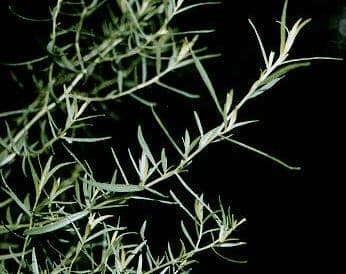
No machine-readable author provided. Ies assumed (based on copyright claims). / Public domain, via Wikimedia Commons
Russian tarragon: complete guide
Artemisia dracunculus
Want to see Russian tarragon: complete guide in your garden?
1 minute, no credit card
Overview
Artemisia dracunculus, commonly known as Russian tarragon, is a hardy perennial herb in the Asteraceae family. Unlike its more flavourful cousin, French tarragon, this variety is grown primarily for its ornamental appeal. It's a staple in cottage gardens, gravel beds, and herb borders, valued for its silvery foliage and upright, airy form. Native to regions stretching from Afghanistan to British Columbia, it's adapted to tough conditions and thrives where many plants struggle.
Russian tarragon reaches 2 to 4 feet (60–120 cm) in height with a spread of 1.5 to 2 feet (45–60 cm). It's not the go-to for culinary use - its anise-like flavour is weak, and some find it slightly bitter. But as a garden plant? It's a winner. Use it to add texture, contrast, and movement to your planting schemes.
On gardenworld.app, you can design a border that balances Russian tarragon with bold-leaved plants like Russian sage or upright sedums for visual rhythm.
Appearance & bloom cycle
The plant features narrow, lance-shaped leaves that are silvery-green, finely textured, and arranged alternately along upright stems. The foliage emits a faint licorice scent when brushed, though it's not as pronounced as in true tarragon. From late summer into early autumn (August to September), small, yellowish-white flower clusters appear. They're not particularly showy but attract hoverflies, bees, and other beneficial insects.
Growth is vertical and somewhat leggy if grown in shade, so full sun is crucial for compactness. In winter, the dried stems persist, offering structural interest in the dormant garden - leave them standing until early spring cleanup.
Ideal location
Full sun is non-negotiable. Russian tarragon needs at least 6 to 8 hours of direct sunlight daily. It performs best in south- or southwest-facing beds. It's perfect for xeriscaping, rock gardens, or as a background plant in mixed borders. It also grows well in containers on patios or balconies, as long as the pot gets ample sun.
Avoid shady, damp corners. In less light, the plant stretches, loses density, and becomes prone to fungal issues. If you're planning a drought-tolerant layout, use gardenworld.app to visualize spacing and plant pairings that maximize sun exposure and airflow.
Soil requirements
Well-drained soil is the golden rule. Russian tarragon hates wet feet. It tolerates poor soils, including sandy or gravelly types, but struggles in heavy clay unless amended. Ideal pH ranges from 6.5 to 7.5 (neutral to slightly alkaline). If you have clay, mix in grit, perlite, or coarse sand to improve drainage. Raised beds or slopes are ideal in wet climates.
Mulch lightly with gravel or crushed stone to suppress weeds and keep the crown dry - organic mulches like bark can hold too much moisture and lead to rot.
Free design
Want to see Russian tarragon: complete guide in your garden? Make a free design now.
Watering
Once established, Russian tarragon is highly drought tolerant. Water deeply but infrequently during the first growing season - about once a week with 5–10 litres per plant. After that, rely on rainfall except during prolonged dry spells (3+ weeks without rain).
Overhead watering should be avoided. Water at the base to prevent fungal diseases. In containers, ensure pots have drainage holes and never let them sit in saucers full of water.
Pruning
Minimal pruning is needed. In early spring (March to early April), cut back last year's stems to about 15 cm (6 inches) above ground. This encourages bushier growth and prevents the plant from becoming woody and sparse. Avoid pruning in fall - it can stimulate tender new growth that won't survive winter.
Remove any dead or damaged stems as you see them. You can also lightly trim in midsummer to maintain shape, but don't overdo it.
Maintenance calendar
- January: Check for winter damage. Keep crown dry.
- February: Prepare tools for spring pruning.
- March: Cut back old growth. Begin light feeding.
- April: Monitor for aphids or slugs on new shoots.
- May: Apply gravel mulch if not already done.
- June–July: Water only if soil is dry. Avoid fertilizing.
- August–September: Flowers appear. Enjoy pollinator activity.
- October: Leave stems intact for winter interest.
- November–December: Protect from wet soil. No watering needed.
Winter hardiness
Russian tarragon is hardy in USDA zones 4 to 7. It can survive temperatures down to -30°F (-34°C). In zone 7 and above, it typically overwinters with no protection. The key is dry soil - wet winter conditions are its biggest threat. In colder zones, a light mulch of straw or gravel after the ground freezes can help, but avoid covering the crown.
In containers, move pots to a sheltered spot or wrap them to prevent root freeze-thaw cycles.
Companion plants
Pair Russian tarragon with other sun-loving, drought-tolerant perennials. Good companions include lavender, Russian sage (Perovskia atriplicifolia), yarrow (Achillea), and ornamental grasses like blue fescue. The silvery foliage contrasts beautifully with purple coneflowers or bold sedums.
Avoid moisture-loving plants like hostas or ferns. Stick to a dry, gravelly theme for best results.
Closing
Russian tarragon is a low-fuss, high-reward plant that brings texture and resilience to the garden. It's ideal for beginners and seasoned gardeners alike. Available at most garden centres in the UK and North America, especially during spring planting season. Look for it in the herb or perennial section.
Remember: it's not the best for cooking, so don't rely on it for salads or sauces. But as a structural plant with year-round appeal? It's a standout. For layout ideas, visit gardenworld.app and plan a drought-resistant garden that thrives with minimal intervention.
Want to see Russian tarragon: complete guide in your garden? Make a free design now.
Upload a photo, pick a style, and get a photorealistic design with plant list in under a minute.
No credit card required


Similar plants
Calendula stellata: complete guide
Calendula stellata
Complete guide to Calendula stellata, the star-flowered marigold from Sicily: location, soil, watering and companion planting tips.
Korean chrysanthemum: complete guide
Chrysanthemum x rubellum
Chrysanthemum x rubellum is a hardy autumn perennial with single pink to copper flowers from August to November. Care and combinations.
Helianthus divaricatus: complete guide
Helianthus divaricatus
Helianthus divaricatus is a North American woodland sunflower with yellow summer blooms, ideal for naturalistic borders and shady edges.