
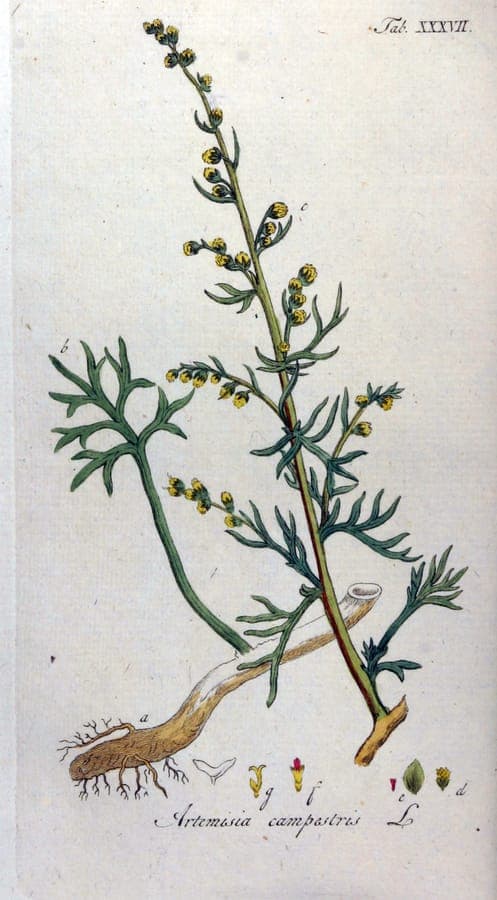
Wikimedia Commons / Public domain, via Wikimedia Commons
Field sagewort: complete guide
Artemisia campestris
Want to see Field sagewort: complete guide in your garden?
1 minute, no credit card
Overview
Field sagewort (Artemisia campestris) isn't the kind of plant that shouts for attention, but once you've grown it, you'll wonder why it's not in every sunny border. Native to alpine and subalpine regions across Europe, North Africa, and parts of North America, this hardy perennial thrives where others struggle. Found naturally on rocky slopes, sandy fields, and dry meadows, it's built for tough conditions - and that's exactly where it shines in the garden.
Growing between 20 and 40 cm tall, field sagewort forms a low, spreading mound of finely divided, silvery-gray foliage. It's not a fast spreader, nor does it run aggressively - it gently expands by seed, making it easy to manage. That controlled growth habit makes it a reliable performer in structured designs. If you're planning a drought-resistant garden, you can use gardenworld.app to map out a layout that includes field sagewort alongside other xeriscaping favorites.
One of the quiet strengths of this plant is its resilience. It doesn't need pampering, resists most pests, and handles heat and wind like a champ. It's fully winter hardy in USDA zones 4 to 8, which covers most of the UK, northern Europe, and large parts of the US and Canada. No special winter protection needed - the plant dies back modestly and returns with fresh growth each spring.
Appearance & bloom cycle
The leaves are the star here. Covered in fine, downy hairs, they reflect sunlight and create a shimmering effect, especially in full sun. Each leaf is pinnately divided, about 3–8 cm long, and gives off a faint aromatic scent when brushed. The overall texture is soft yet structured - like a whisper of silver in the border.
From July through September, thin, wiry stems rise above the foliage, reaching 30–40 cm. These carry small, yellow-green flower clusters in elongated spikes. The flowers aren't flashy, but they add movement and delicate contrast. After blooming, the stems persist into winter, catching frost and fog - a subtle but powerful presence in the off-season.
Ideal location
Full sun is non-negotiable. You'll get the tightest growth and brightest foliage when the plant gets at least 6–8 hours of direct sunlight daily. Partial shade leads to leggy, floppy stems and duller color. That said, field sagewort handles reflected heat well, so it's excellent for rock gardens, gravel beds, or dry retaining walls.
It's also a strong candidate for container gardening - just make sure the pot has excellent drainage. Pair it with other sun-lovers like sedum, thyme, or dwarf lavender for a low-water display. You can experiment with these combos on gardenworld.app, where you can preview how textures and heights play together over time.
Soil requirements
This plant thrives in poor, well-drained soils. Sandy, gravelly, or chalky substrates are ideal. Avoid heavy clay or water-retentive soils - they'll spell trouble, especially in winter. A pH between 6.0 and 7.5 works best. No need for compost or rich organic matter; in fact, too much fertility makes the plant weak and prone to flopping.
If you're amending soil, mix in sharp sand or small gravel to improve drainage. A top dressing of grit helps prevent crown rot.
Free design
Want to see Field sagewort: complete guide in your garden? Make a free design now.
Watering
Once established, field sagewort is extremely drought tolerant. Water regularly during the first growing season, especially in containers or hot, exposed sites. After that, it can survive on rainfall alone in most climates. Only water during prolonged dry spells - and when you do, water deeply but infrequently to encourage deep roots.
Overwatering is the fastest way to kill this plant. Let the soil dry out completely between waterings.
Pruning
Pruning isn't essential, but a light trim keeps the plant looking tidy. In early spring (March), cut back last year's growth to about 5 cm above the crown. This removes dead stems and makes room for fresh foliage. You can also deadhead spent flower spikes if you want to limit self-seeding.
If you prefer winter interest, leave the stems standing until early spring. They add structure and catch morning frost beautifully.
Maintenance calendar
- January: Dormant. Check for winter damage.
- February: Begin clearing old growth.
- March: Prune back. Apply gritty mulch if needed.
- April: New shoots emerge. No feeding required.
- May: Water only in dry spells.
- June: Plant fills out. Watch for early blooms.
- July: Bloom period begins. Full sun essential.
- August: Peak flowering. Trim seed heads to prevent spread.
- September: Flowers fade. Stems can be left for winter.
- October: No maintenance needed.
- November: Optional cleanup.
- December: Fully dormant. No action required.
Winter hardiness
Field sagewort is reliably hardy in USDA zones 4–8. It tolerates cold, wind, and snow without issue. The crown survives freezing temperatures, and new growth emerges from the base in spring. In wet winters, crown rot can occur - so drainage is critical. No mulch needed, though a light gravel top dressing helps in heavy soils.
Companion plants
Choose companions with similar needs: full sun, low water, sharp drainage. Top picks include:
- Lavandula angustifolia – for color and scent
- Sedum 'Matrona' – for height and late-season interest
- Nepeta racemosa – for soft blue blooms and texture
- Festuca glauca – for contrast in form and color
These combinations work especially well in gravel gardens or sloped beds where moisture runs off quickly.
Closing
Field sagewort is a quiet achiever - unsung, but indispensable in the right setting. It brings light, texture, and resilience to dry, sunny areas where few plants thrive. Low maintenance, pest-free, and long-lived, it's a smart choice for sustainable gardens. Look for it at garden centres across the UK and North America, especially in rock garden or drought-tolerant sections. Once planted, it asks for little - and gives back all season long.
Want to see Field sagewort: complete guide in your garden? Make a free design now.
Upload a photo, pick a style, and get a photorealistic design with plant list in under a minute.
No credit card required


Similar plants
Calendula stellata: complete guide
Calendula stellata
Complete guide to Calendula stellata, the star-flowered marigold from Sicily: location, soil, watering and companion planting tips.
Korean chrysanthemum: complete guide
Chrysanthemum x rubellum
Chrysanthemum x rubellum is a hardy autumn perennial with single pink to copper flowers from August to November. Care and combinations.
Helianthus divaricatus: complete guide
Helianthus divaricatus
Helianthus divaricatus is a North American woodland sunflower with yellow summer blooms, ideal for naturalistic borders and shady edges.