
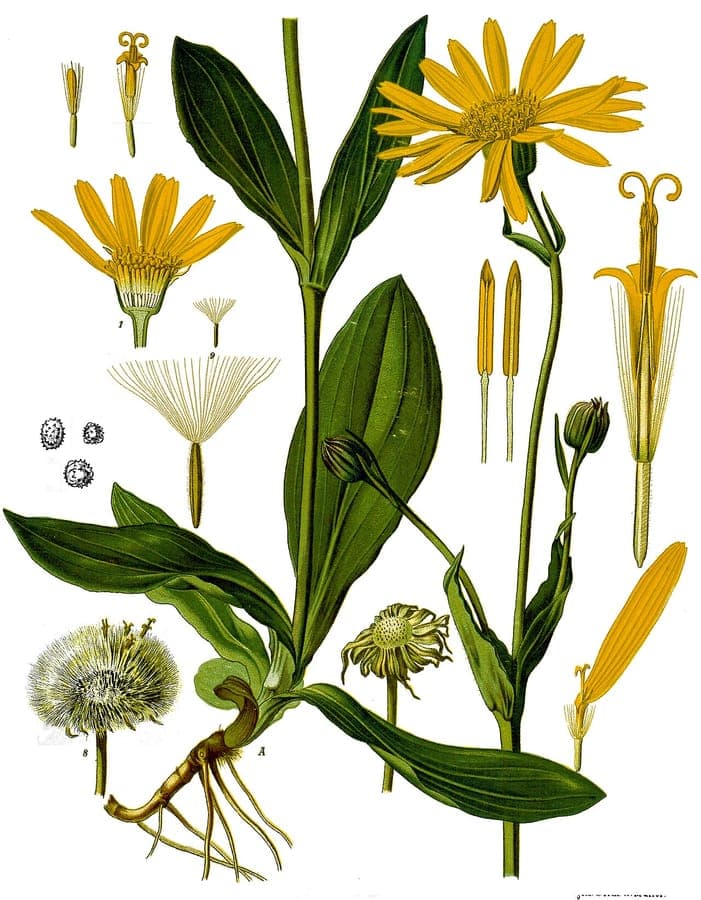
Franz Eugen Köhler, Köhlers Medizinal-Pflanzen / Public domain, via Wikimedia Commons
European arnica: complete guide
Arnica montana
Want to see European arnica: complete guide in your garden?
1 minute, no credit card
Overview
European arnica, also known as mountain arnica, is a hardy perennial herb native to the alpine meadows and forest clearings of central and western Europe. With bright yellow daisy-like flowers and a long history in herbal medicine, it's a plant that combines beauty with utility. Though not commonly found in UK or North American gardens, it thrives in the right conditions-especially in alpine beds, rock gardens, or naturalised wild areas. It's not an aggressive spreader, but once established, it can persist for years.
On gardenworld.app you can design a garden layout that suits European arnica's needs, perfect for creating a low-maintenance, ecologically sound planting scheme.
Appearance & bloom cycle
Arnica montana grows 20–50 cm tall and forms basal rosettes of rough, oval leaves in its first year. In the second year, upright, hairy stems rise to carry a single golden-yellow flower head per stem, blooming from late June through July, occasionally into early August. The flowers are 4–6 cm wide, with a prominent central disc and ray florets that attract bees, hoverflies, and butterflies.
After blooming, the flowers develop feathery seed heads that disperse on the wind. If you want natural reseeding, avoid cutting back the stems until seeds have dropped. The plant dies back in autumn, and new growth emerges from the rootstock in spring.
Ideal location
European arnica prefers full sun to light shade. A south- or east-facing slope works best, offering morning sun and afternoon airflow. Avoid deep shade or heavily wooded areas, as these reduce flowering and encourage fungal issues. Good air circulation is essential-stagnant, humid conditions promote powdery mildew and root rot.
It's well-suited to rock gardens, alpine troughs, or the front of a herbaceous border. In urban gardens, a terracotta pot on a sunny patio works if drainage is excellent. Use gardenworld.app to assess your garden's microclimate and see if it matches arnica's alpine preferences.
Soil requirements
This plant demands well-drained, acidic to slightly acidic soil with low fertility. Ideal pH ranges from 4.5 to 6.5. Avoid heavy clay or rich composted soils-these lead to lush foliage but poor flowering and shorter lifespan. Sandy or gravelly loam is best.
When planting, amend the soil with coarse sand, grit, or crushed granite to improve drainage. Do not add fertiliser. A light mulch of pine needles helps retain moisture without raising pH or encouraging rot.
Free design
Want to see European arnica: complete guide in your garden? Make a free design now.
Watering
European arnica is drought-tolerant once established. In average UK rainfall, supplemental watering is rarely needed. During prolonged dry spells in June and July, water deeply every 7–10 days, soaking the root zone. Avoid overhead watering to prevent leaf wetness and fungal disease.
In containers, check soil moisture down to 3 cm weekly. Let the top layer dry slightly between waterings. Never leave pots sitting in saucers of water.
Pruning
Arnica requires little pruning. After flowering, cut back spent stems if you don't want self-seeding. Otherwise, leave them intact for winter interest and natural propagation. Remove any yellowed or diseased leaves with clean secateurs.
In early spring, clear away old foliage to make space for new growth. Do not cut into the crown-this can damage emerging shoots.
Maintenance calendar
- Jan: Check root crowns for frost heave; top up mulch if needed
- Feb: Remove old leaves; protect young shoots from slugs
- Mar: Plant new specimens in prepared beds
- Apr: Inspect for aphids on new growth
- May: Keep soil weed-free and well-aerated
- Jun: Flowers emerge; monitor for drought stress
- Jul: Peak bloom; water during dry periods
- Aug: Allow seeds to mature or deadhead
- Sep: No intervention; plant enters dormancy
- Oct: Transplant seedlings if overcrowded
- Nov: Leave dead stems for winter protection
- Dec: Minimal care; ensure good drainage
Winter hardiness
European arnica is hardy in USDA zones 4–7. In the UK (zone 8), it typically survives winters without protection. In colder zones, a light mulch of pine needles or dry bracken offers insulation without moisture retention. Avoid straw or manure-these hold too much water and can cause crown rot.
In containers, wrap pots with hessian or bubble wrap and place against a sheltered wall. Alternatively, move to an unheated greenhouse.
Companion plants
Pair with other acid-loving, low-nutrient plants: heather (Calluna vulgaris), alpine strawberries (Fragaria vesca), wood anemone (Anemone nemorosa), or lady fern (Athyrium filix-femina). Dwarf conifers or sedums also complement its alpine character.
Avoid vigorous feeders like lupins or comfrey that enrich the soil. Steer clear of plants that create dense shade or retain ground moisture.
Closing
European arnica isn't for every garden-it's particular about soil and drainage. But for gardeners who appreciate its medicinal legacy and wild charm, it's worth the effort. Grow it where conditions mimic its native habitat: cool, well-drained, and open.
Purchase plants from reputable garden centres that specialise in alpine or medicinal species. Look for healthy, nursery-grown stock rather than wild-collected specimens. For layout ideas and planting plans, visit gardenworld.app and create a custom design that works with arnica's unique needs.
Want to see European arnica: complete guide in your garden? Make a free design now.
Upload a photo, pick a style, and get a photorealistic design with plant list in under a minute.
No credit card required


Similar plants
Calendula stellata: complete guide
Calendula stellata
Complete guide to Calendula stellata, the star-flowered marigold from Sicily: location, soil, watering and companion planting tips.
Korean chrysanthemum: complete guide
Chrysanthemum x rubellum
Chrysanthemum x rubellum is a hardy autumn perennial with single pink to copper flowers from August to November. Care and combinations.
Helianthus divaricatus: complete guide
Helianthus divaricatus
Helianthus divaricatus is a North American woodland sunflower with yellow summer blooms, ideal for naturalistic borders and shady edges.