
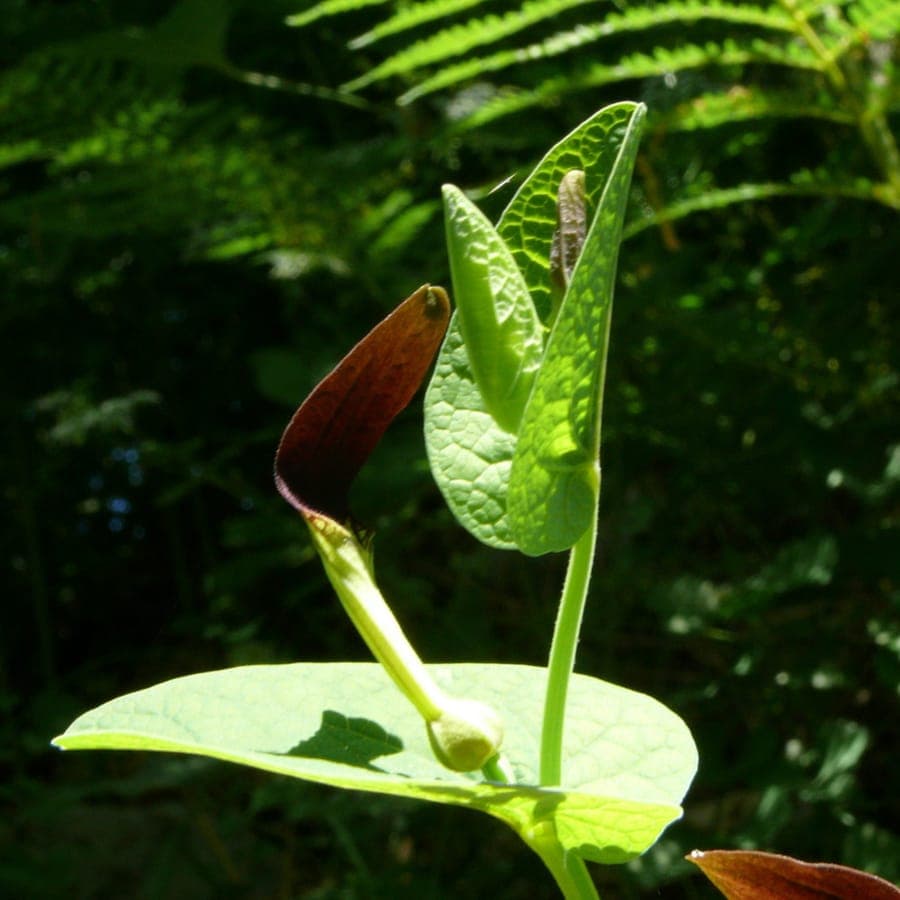
User:Haplochromis / CC BY 2.5, via Wikimedia Commons
Birthwort: complete guide
Aristolochia rotunda
Want to see Birthwort: complete guide in your garden?
1 minute, no credit card
Overview
Aristolochia rotunda, commonly known as Birthwort, is a resilient climber native to the Mediterranean basin. You won't find it often in UK or North American gardens, but it's gaining traction among gardeners who value low-maintenance, wildlife-supporting plants. Found in the wild across southern Europe - from Spain and Italy to Greece and southern France - this plant thrives in rocky, sun-baked slopes and dry scrubland. It's not flashy, but it's tough, elegant in its simplicity, and plays a vital role in supporting specialist insects.
On gardenworld.app, you can design a garden layout that integrates Birthwort into dry, sunny corners where few other climbers succeed. Its compact growth and subtle blooms fit perfectly into naturalistic schemes.
Appearance & bloom cycle
Birthwort has round to heart-shaped leaves, typically 5–10 cm across, with a fresh green hue. The stems climb upright to 1.5–2 m, using tendrils to latch onto supports. The bloom period runs from April through June, with small, tubular flowers appearing at the leaf axils. These flowers are yellowish to brownish-yellow, shaped like miniature curved trumpets - classic for the Aristolochiaceae family. They emit a faint, slightly unpleasant odour resembling decaying matter, which attracts pollinating flies.
Though the flowers aren't large or showy, their timing in early spring makes them valuable for early-emerging insects. The plant dies back in winter but returns reliably in milder climates.
Ideal location
Birthwort needs full sun - a light level of 8 means it requires 6–8 hours of direct sunlight daily. Plant it on a south- or southwest-facing wall, fence, or trellis. It performs best in sheltered spots with good air circulation. In cooler zones like the UK (USDA 8a), a microclimate against a warm wall can make all the difference. Avoid shady or damp areas - this plant won't thrive there.
Use the sun exposure planner on gardenworld.app to confirm your chosen spot gets enough light. It's a quick way to avoid planting in a location that's too dark.
Soil requirements
Well-drained soil is non-negotiable. Birthwort grows naturally on limestone-rich, sandy, or gravelly soils with a pH of 7.0–7.5. Acidic soils (below pH 6.5) should be avoided. If your soil is too acidic, amend with ground limestone. Heavy clay that retains water is unsuitable.
A mix of loam, sharp sand, and small stones works well. Ideal for rock gardens, dry walls, or gravel beds. Don't enrich the soil with compost - this plant prefers poor, lean conditions.
Free design
Want to see Birthwort: complete guide in your garden? Make a free design now.
Watering
Once established, Birthwort is highly drought-tolerant. During the first growing season, water weekly to help roots settle. After that, rainfall is usually sufficient, even during dry summers. Only water during prolonged droughts (3+ weeks without rain), and always at the base to avoid wetting foliage.
Overwatering leads to root rot. This plant is adapted to dry conditions - think Mediterranean summers. Use drip irrigation if planting in containers or very sandy soils.
Pruning
Pruning is rarely needed. Birthwort grows steadily but not aggressively. In early spring (March), remove any dead or damaged stems. Use clean, sharp secateurs and disinfect between cuts. Wear gloves - the plant contains aristolochic acids, which are toxic if ingested.
If the plant becomes too dense, thin out older stems to improve air flow. Avoid heavy pruning - it can delay flowering. Cut material should not go into compost; dispose of it separately.
Maintenance calendar
- January: Check root zone for frost damage
- February: Prepare tools, sterilise secateurs
- March: Light pruning, remove winter dieback
- April: Flowers emerge, monitor for pests
- May: Peak bloom, no intervention needed
- June: Bloom ends, remove spent flowers if desired
- July: Check for drought stress, water if needed
- August: Minimal care, no feeding
- September: Observe growth, no action required
- October: Clear fallen leaves
- November: Stop feeding, plant enters dormancy
- December: Mulch young plants if harsh winter expected
Winter hardiness
Hardy to USDA zone 7 (-15°C). In zone 8a (UK, Pacific Northwest), it survives most winters with no protection. Young plants or those in pots benefit from a dry mulch of straw or leaf litter. In colder zones, grow in containers and move to a cold greenhouse in winter.
Avoid wet mulches like bark - they can trap moisture. Use dry, airy materials instead.
Companion plants
Pair Birthwort with other drought-tolerant, sun-loving plants:
- Eryngium giganteum – spiky blue flowers, architectural form
- Stachys byzantina – soft silver foliage contrasts well
- Sedum spectabile – late-season blooms, ground cover
- Cistus × dansereaui – rockrose, adds height and texture
- Nepeta faassenii – attracts bees, long bloom period
These combinations create a low-water, pollinator-friendly garden. Use gardenworld.app to visualise how these plants work together in your space.
Closing
Birthwort is an underrated gem. It's not fragrant, not flamboyant, but it's resilient and ecologically valuable. It fits perfectly in gravel gardens, on dry walls, or climbing through shrubs. While the scent may not win over everyone, its role in supporting biodiversity is undeniable. Buy from garden centres like Wyevale or Dobbies - sometimes listed under 'round-leaved birthwort'. Start small, give it sun and drainage, and let it surprise you with its quiet charm.
Want to see Birthwort: complete guide in your garden? Make a free design now.
Upload a photo, pick a style, and get a photorealistic design with plant list in under a minute.
No credit card required


Similar plants
Pistolochia Birthwort: complete guide
Aristolochia pistolochia
Full profile of Aristolochia pistolochia, the Pistolochia birthwort: unusual pipe-shaped flowers, care, soil, and garden use in dry borders.
Aristolochia gigantea: complete guide
Aristolochia gigantea
Aristolochia gigantea, the giant dutchman's pipe or duckflower, is a spectacular tropical climbing vine with colossal, intricately patterned flowers. Dramatic addition to warm regions and glasshouses.
Duckflower: Complete Guide
Aristolochia grandiflora
Learn everything about Aristolochia grandiflora: care, growing conditions and tips for this spectacular ornamental climber.