
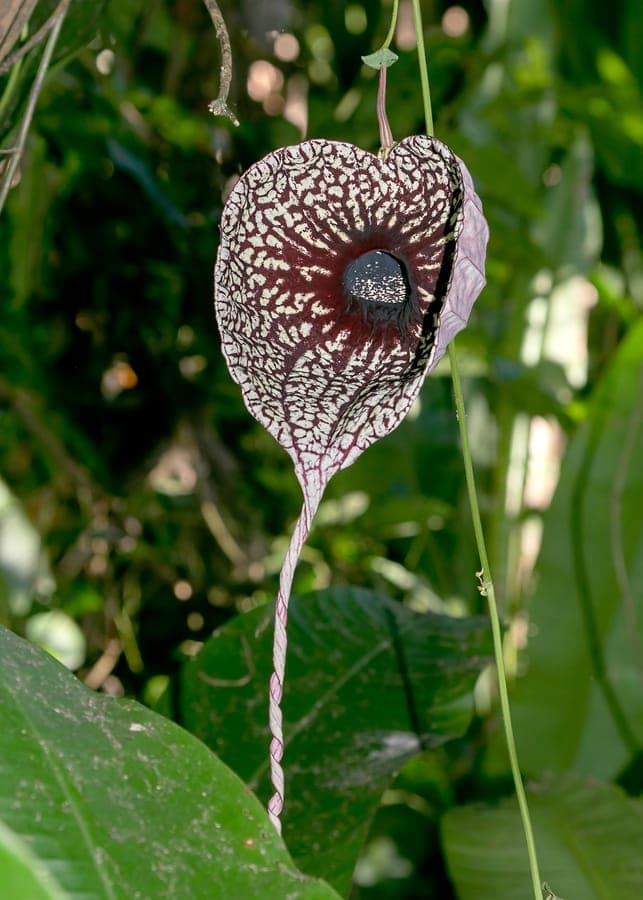
Charlie Jackson / CC BY 2.0, via Wikimedia Commons
Duckflower: Complete Guide
Aristolochia grandiflora
Want to see Duckflower: Complete Guide in your garden?
1 minute, no credit card
Overview
Aristolochia grandiflora, better known as Duckflower or Pelicanflower, is one of the most spectacular climbing plants from the tropical world. This vine belongs to the Aristolochiaceae family and originates from Mexico to Ecuador and Trinidad. The plant is famous for its unusually large, characteristic flowers that closely resemble a duck or pelican - hence the common names. This plant makes a strong visual impression and transforms any garden into an exotic oasis.
The Duckflower is a fast-growing, deciduous vine that can persist in the same location for years, forming increasingly large volumes of vines. In ideal conditions, this plant can grow more than one meter per season, making it an excellent choice for those wanting rapid results.
Appearance and Bloom
Aristolochia grandiflora is a deciduous climber with heart-shaped leaves that can reach 10-25 centimeters long. The leaves are soft, dark green with distinct veins. What makes this plant famous, however, are its enormously large, characteristic flowers.
The flowers can reach up to 30 centimeters in diameter and have a unique shape that indeed resembles a duck or pelican. They consist of a greenish-brown base and a long, wavy flap that is white with purple spots. Flowers typically appear in summer and can maintain their characteristic appearance for months. They also produce a strong smell that is musty - important for attracting pollinators in their natural habitat.
Ideal Location
Aristolochia grandiflora thrives best in a warm, sunny to partially shaded location. The plant can be planted in full sun, though in very hot climates it prefers some afternoon shade. A location with at least 4-6 hours of direct sunlight daily will ensure optimal growth and flowering.
The plant needs sturdy support - a strong wall, pergola, or trellis works well. The vine grows quickly and becomes heavy, especially when fully grown with abundant foliage and flowers.
Soil
Aristolochia grandiflora thrives best in nutrient-rich, well-draining soil. A mixture of garden soil, organic material and sand works well. The plant is fairly tolerant of various soil types, as long as it's not waterlogged, which is destructive.
It's helpful to add organic material such as compost or leaf mold when planting, which helps water retention and nutrient content. The plant is not fussy about pH, though slightly acidic to neutral (pH 6.0-7.0) is ideal.
Free design
Want to see Duckflower: Complete Guide in your garden? Make a free design now.
Watering
Aristolochia grandiflora needs regular watering, especially during the growing season. Ensure the soil stays evenly moist, though not waterlogged. During extremely hot periods you may need to water daily. In winter, when the plant loses its leaves, water can be greatly reduced.
Mulch around the base of the plant helps retain moisture and regulate temperature fluctuations. Ensure water drains well, as waterlogging can damage roots.
Pruning
Pruning is less critical for Aristolochia grandiflora than for some other plants, but regular maintenance pruning helps keep the plant in shape and stimulates flowering. Remove dead or damaged vines as soon as you notice them. After flowering you can remove excess vines to maintain desired form.
If the plant becomes too large or grows out of bounds, you can cut back larger sections. The plant grows quickly enough to recover rapidly from pruning.
Maintenance Calendar
Spring: Start monthly feeding as new growth begins. Remove dead branches. Check for pests.
Summer: Regular watering, especially in dry periods. Monthly feeding. Focus on flowering.
Fall: Gradually reduce watering as plant declines. Stop feeding.
Winter: Minimal water. Plant loses leaves. No feeding needed. Protect from frost.
Winter Hardiness
Aristolochia grandiflora is not winter-hardy outdoors in temperate climates. The plant cannot tolerate frost and dies at temperatures below 5 degrees Celsius. In areas with winters, the plant must be kept in a greenhouse or warm location, or as an outdoor plant in warm regions only.
The good news is that if the above-ground part of the plant is damaged by frost, the underground root system can often regenerate in the next growing season.
Companion Plants
Aristolochia grandiflora works well with other tropical climbers and vines:
- Passionflower: These elegant bloomers share the same love for warmth and sun.
- Bougainvillea: Their bright colors provide nice contrast with the large Pelicanflower.
- Clematis: Some tropical species can be planted together.
- Jasmine: Night-blooming varieties add a pleasant fragrance.
Conclusion
Aristolochia grandiflora is a truly dramatic floral addition to any subtropical or tropical front garden. With its spectacular flowers, rapid growth, and elegant foliage, this plant offers a unique window into the plant world. While it has special care requirements, particularly regarding temperature and warmth, those who can provide these conditions will be rewarded with years of fascination and wonder.
For more information about creating a tropical front garden full of exotic flowers, visit gardenworld.app. Local retailers often have special orders available for this unique plant.
Want to see Duckflower: Complete Guide in your garden? Make a free design now.
Upload a photo, pick a style, and get a photorealistic design with plant list in under a minute.
No credit card required


Similar plants
Pistolochia Birthwort: complete guide
Aristolochia pistolochia
Full profile of Aristolochia pistolochia, the Pistolochia birthwort: unusual pipe-shaped flowers, care, soil, and garden use in dry borders.
Aristolochia gigantea: complete guide
Aristolochia gigantea
Aristolochia gigantea, the giant dutchman's pipe or duckflower, is a spectacular tropical climbing vine with colossal, intricately patterned flowers. Dramatic addition to warm regions and glasshouses.
Pale Birthwort: complete guide
Aristolochia pallida
Discover the Pale Birthwort, an elegant Mediterranean climbing vine with distinctive pipe-shaped flowers. Learn care instructions, planting tips, and ideal growing conditions.