
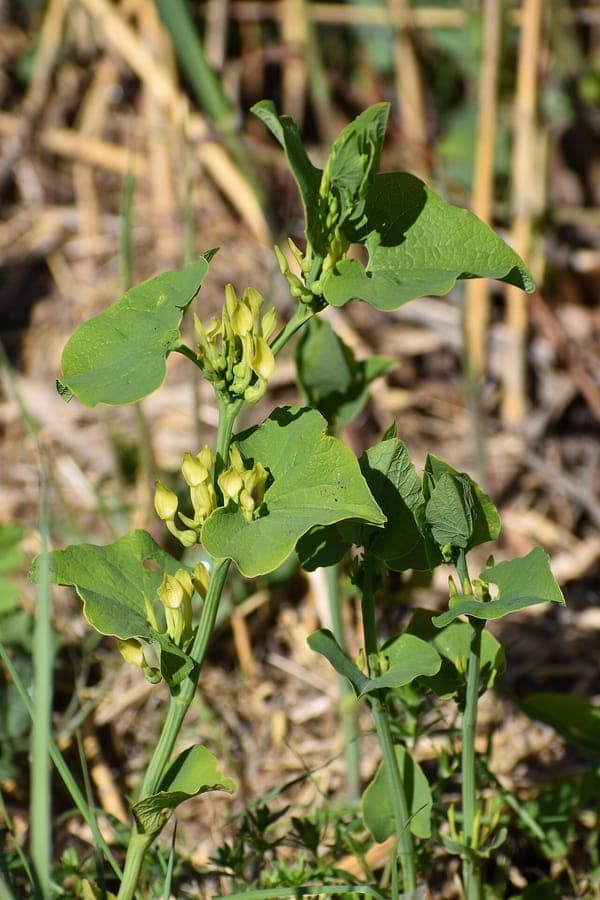
Tylwyth Eldar / CC BY-SA 4.0, via Wikimedia Commons
Birthwort: complete guide
Aristolochia clematitis
Want to see Birthwort: complete guide in your garden?
1 minute, no credit card
Overview
Birthwort, or Aristolochia clematitis, is a herbaceous climber with a quiet presence but undeniable character. Native to central and southeastern Europe, it thrives in partial shade and alkaline soils, making it a fitting choice for cottage gardens, woodland edges, and low-maintenance borders. Reaching 60–100 cm in height, it grows as a vine-like forb, using nearby plants or small supports to climb. While not flashy, its unusual flowers and reliable growth cycle earn it a spot in ecologically minded gardens.
On gardenworld.app, you can design a garden layout that works with birthwort's natural spread and light needs, especially if you're blending it with native perennials.
Appearance & bloom cycle
Aristolochia clematitis produces heart-shaped leaves, 4–8 cm wide, in a soft green hue. The foliage is simple but effective, forming a light, airy backdrop. The flowers are the real standout: yellow to greenish-yellow, shaped like curved pipes or small pouches, with a maroon or brownish interior. This unusual form attracts flies, which act as pollinators.
Flowering runs from May through September, peaking in June and July. Blooms emerge from leaf axils and last several weeks. They have a faint, musty scent - not unpleasant, but noticeable on still, warm days. The plant doesn't bloom heavily all at once, but rather trickles flowers over the season, giving it a natural, unforced rhythm.
Ideal location
This plant prefers a light level of 6 out of 10 - meaning partial shade to light sun. A spot under open tree canopies, along a north-facing wall, or at the base of shrubs works well. Full sun, especially in hot afternoon conditions, can dry out the leaves and reduce flowering. Deep shade, on the other hand, leads to leggy growth and fewer blooms.
In the UK and Western Europe, it performs best in zones with mild summers and consistent moisture. Avoid south-facing, baking spots unless the soil stays reliably moist. If you're planning a shaded border, consider gardenworld.app to map out shade patterns and avoid planting conflicts with taller neighbors.
Soil requirements
Birthwort grows best in well-drained, calcareous soils with a pH between 7.5 and 8.0. It tolerates clay-loam and sandy loam as long as drainage is adequate. Avoid acidic soils - it won't survive long-term in peat-rich or pine needle-covered ground.
It's adapted to average fertility, so don't enrich the soil with compost or manure. Over-fertilisation can lead to excessive leafy growth at the expense of flowers. If planting in heavy clay, mix in coarse sand or fine grit to improve drainage. A light mulch of leaf litter in autumn mimics its natural habitat.
Free design
Want to see Birthwort: complete guide in your garden? Make a free design now.
Watering
After planting, water weekly for the first six weeks to help roots establish. Once settled, birthwort is drought-tolerant and rarely needs supplemental watering in temperate climates. During prolonged dry spells (three weeks or more without rain), give a deep soak every 10–14 days, especially if foliage starts to droop.
Water at the base to avoid wetting leaves, which can encourage fungal issues. Rainwater is preferred, as it's free of chlorine and less alkaline than tap water in soft-water areas.
Pruning
Pruning isn't required for flowering or shape. In early spring, you can cut back any dead or damaged stems to ground level using clean secateurs. This encourages fresh growth and keeps the plant looking tidy.
If it spreads too vigorously via rhizomes, install a root barrier 30 cm deep to contain it. Always wear gloves when handling - all parts of the plant are toxic. Wash hands thoroughly afterward, especially before eating.
Maintenance calendar
- Jan: Check for rhizome spread; plan containment
- Feb: Prepare for division or transplanting if needed
- Mar: Cut back old growth; inspect for new shoots
- Apr: Monitor emergence; apply light mulch if desired
- May: Flowering begins; watch for pollinator activity
- Jun: Peak bloom; maintain even moisture
- Jul: Flowers continue; avoid fertiliser
- Aug: Late blooms; check for pests
- Sep: Flowering winds down; collect seed if wanted
- Oct: Allow seed dispersal or gather for sowing
- Nov: Foliage dies back; no action needed
- Dec: Dormant period; ensure good drainage
Winter hardiness
Birthwort is hardy to at least -15°C (USDA zone 5b). It dies back completely in winter, but the rhizomes survive underground. In most of the UK and Western Europe, it requires no winter protection. A natural layer of fallen leaves is often enough to insulate the roots.
In areas with heavy winter wetness, improve drainage or plant on a slight slope. Potted plants should be moved to a sheltered spot or have their root zone protected with horticultural fleece.
Companion plants
Pair birthwort with shade-tolerant perennials like Alchemilla mollis, Geranium phaeum, or Digitalis purpurea. It blends well with ferns in woodland gardens or with tall grasses in naturalistic plantings.
Avoid aggressive spreaders like ground elder or mint - they'll overwhelm birthwort quickly. Use low edging stones or wooden borders to define its space. In mixed borders, plant it behind mid-height perennials so its flowers peek through.
Closing
Aristolochia clematitis isn't a show-off, but it has a quiet charm that grows on you. Its pipe-shaped blooms, subtle presence, and ecological value make it a thoughtful addition to the right garden. Just remember: it's toxic, so keep it away from children and pets. And if you're mapping out a new planting scheme, try gardenworld.app to see how birthwort fits into your long-term garden vision.
Want to see Birthwort: complete guide in your garden? Make a free design now.
Upload a photo, pick a style, and get a photorealistic design with plant list in under a minute.
No credit card required


Similar plants
Pistolochia Birthwort: complete guide
Aristolochia pistolochia
Full profile of Aristolochia pistolochia, the Pistolochia birthwort: unusual pipe-shaped flowers, care, soil, and garden use in dry borders.
Aristolochia gigantea: complete guide
Aristolochia gigantea
Aristolochia gigantea, the giant dutchman's pipe or duckflower, is a spectacular tropical climbing vine with colossal, intricately patterned flowers. Dramatic addition to warm regions and glasshouses.
Duckflower: Complete Guide
Aristolochia grandiflora
Learn everything about Aristolochia grandiflora: care, growing conditions and tips for this spectacular ornamental climber.