
B.navez / CC BY-SA 3.0, via Wikimedia Commons
Bermuda thistle: complete guide
Argemone mexicana
Want to see Bermuda thistle: complete guide in your garden?
1 minute, no credit card
Overview
Bermuda thistle (Argemone mexicana), also known as Mexican prickly poppy, is a striking annual plant from the Papaveraceae family. This exotic plant grows 60-120 cm tall and stands out with vibrant yellow flowers and characteristic prickles on stems and leaves.
The plant originates from Mexico and Central America and now grows as naturalization in many warm regions. The flowers attract numerous pollinators and the seed capsules are uniquely adorned with spines.
Appearance and Bloom Cycle
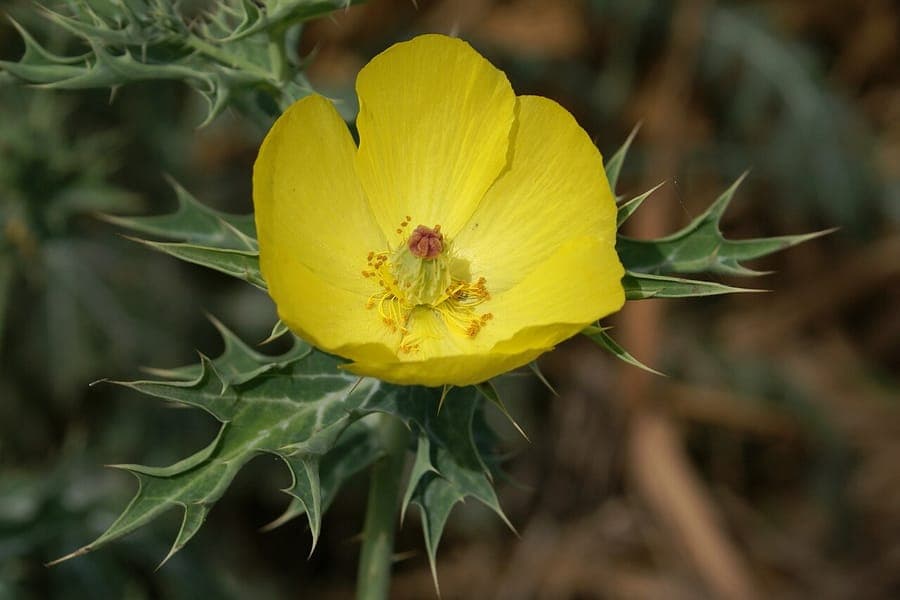
Bermuda thistle forms blue-green leaves with yellow prickles along the veins, and the stem is equally equipped with yellow, numerous spines. This gives the plant a very characteristic appearance.
The flowers are spectacular: large, papery yellow blooms (4-6 cm diameter) with five ruffled petals and delicate pink stamens. Flowers appear from July to October, usually solitary or in small groups at shoot tips.
After blooming, unique, spine-covered seed capsules form with 50-100 seeds each.
Ideal Location
Bermuda thistle requires:
- Full sun (minimum 6 hours direct sun daily)
- Warm location (grows as annual in warmer zones)
- Well-drained site
- Protection from strong winds (plant can topple)
The plant is very thermophilic and performs poorly in cold climates. In northern regions, grow as annual under warm cultivation.
Soil Requirements
Bermuda thistle is not fussy:
- Tolerates dry to mixed soils
- Preference for well-draining, sandy soils
- Poor to moderately rich soils suitable
- pH between 6.0 and 8.0
Avoid heavy, water-holding soils. Mix sand and compost can help on clay soils.
Watering
Bermuda thistle is drought-tolerant once established. Regular watering during dry periods and growth helps flower production.
Young plants must be kept more moist until rooted. Avoid waterlogging.
Free design
Want to see Bermuda thistle: complete guide in your garden? Make a free design now.
Pruning and Maintenance
Bermuda thistle requires minimal maintenance:
- No pruning needed
- Remove faded flowers to stimulate flower production
- Let some flowers remain for seed set
- Annual plant dies with first frost
Protect yourself from prickles when touching - wear gloves.
Maintenance Calendar
March–May: Sowing indoors or directly outside after last frost danger.
May–June: Thin seedlings to 45 cm apart.
June–July: Plant hardening, start bloom preparation.
July–October: Full bloom, water regularly.
October–November: Seed formation, watch for natural seed dispersal.
December: Plant dies with first cold.
Winter Hardiness
Bermuda thistle is very frost-sensitive. The plant dies at first frost. In warm areas (USDA zone 9+), it can overwinter and behave as a perennial, especially in protected locations.
The plant grows as annual in all cooler climates.
Companion Plants
Bermuda thistle grows well with:
- Other tropical annuals: Zinnia, Cosmos, Sunflower
- Heat-loving plants: Lavender, Santolina, Thyme
- Pollinator attractors: Butterfly daisy, Marigold, Alyssum
- Drought-tolerant plants: Sedum, Echeveria, Santolina
Avoid moisture-loving plants.
Closing Thoughts
Bermuda thistle is a spectacular choice for sunny, warm gardens. The plant brings exotic beauty, pollinator food, and interesting forms. The spines protect against leaf-eating insects.
Tip: For more information on tropical plants in your front yard, visit gardenworld.app. Upload a photo of your garden and receive a warm-climate garden design. Visit gardenworld.app for more inspiration.
Where to Buy
- USA: Local nurseries, garden centers (seasonal)
- UK: Specialty plant suppliers (summer)
- Online: Tropical plant retailers
Want to see Bermuda thistle: complete guide in your garden? Make a free design now.
Upload a photo, pick a style, and get a photorealistic design with plant list in under a minute.
No credit card required


Similar plants
Papaver gorodkovii: complete guide
Papaver gorodkovii
Papaver gorodkovii, the arctic poppy, thrives from Alaska to Russia's Far East. Discover how to grow this rare, extremely cold-hardy rock garden treasure.
Papaver setiferum: complete guide
Papaver setiferum
Papaver setiferum is a hardy giant Caucasian poppy with fiery red blooms. Discover siting, soil, deadheading and winter hardiness.
Pale Poppy: complete guide
Papaver alboroseum
Discover pale poppy (Papaver alboroseum) - rare alpine poppy with white-pink flowers. Precious beauty from Kamchatka. Cultivation in alpine and rock gardens.